
- HF RFID uses magnetic near-field inductive coupling, enabling efficient energy transfer in compact, short-range applications.
- UHF RFID employs far-field electromagnetic communication, supporting longer ranges and bulk tag reading but faces miniaturization limits.
- Miniaturization challenges differ: HF is limited by antenna coil inductance; UHF experiences reduced coupling efficiency and system complexity.
- Choosing HF or UHF must consider application demands including range, environment, and energy availability rather than just frequency band.
Physical Fundamentals, Antenna Principles, and Power Transmission in Industrial Applications
Context: Why “HF or UHF?” Is Too Simplistic
The question “HF or UHF?” is frequently asked when it comes to the miniaturization of RFID transponders. From a technical perspective, however, this comparison is too simplistic. The decisive factor is not the frequency band alone, but the interplay of frequency, antenna principles, and energy transmission—and, above all, their adaptation to the specific application.
HF RFID at 13.56 MHz and UHF RFID in the 860 to 960 MHz range are based on fundamentally different physical principles. These differences directly affect range, antenna size, energy availability, and robustness against environmental conditions.
While HF enables stable and comparatively energy-efficient coupling in the near field, UHF’s strength lies in long read ranges and the simultaneous detection of many transponders. The choice of technology is therefore always a matter of physical constraints—not frequency alone.


RFID Pioneer: The Inventor of One of the First Miniaturized Transponders
Monolithic integration of coil antennas and non‑volatile memory on silicon made practical, battery‑free miniaturized RFID transponders possible and established Microsensys as an innovation leader in contactless identification.
HF RFID: Inductive Coupling and the Limits of Miniaturization
HF RFID operates at 13.56 MHz with a wavelength of approximately 22 meters. Nevertheless, conventional radio waves play hardly any role here. Instead, the system is based on inductive coupling in the magnetic near field.
The reader generates a magnetic field that induces a voltage in the transponder’s coil. This principle resembles a transformer with an air gap: the reader coil acts as the primary winding, and the tag coil as the secondary winding. The energy generated is rectified within the transponder and powers the electronics.
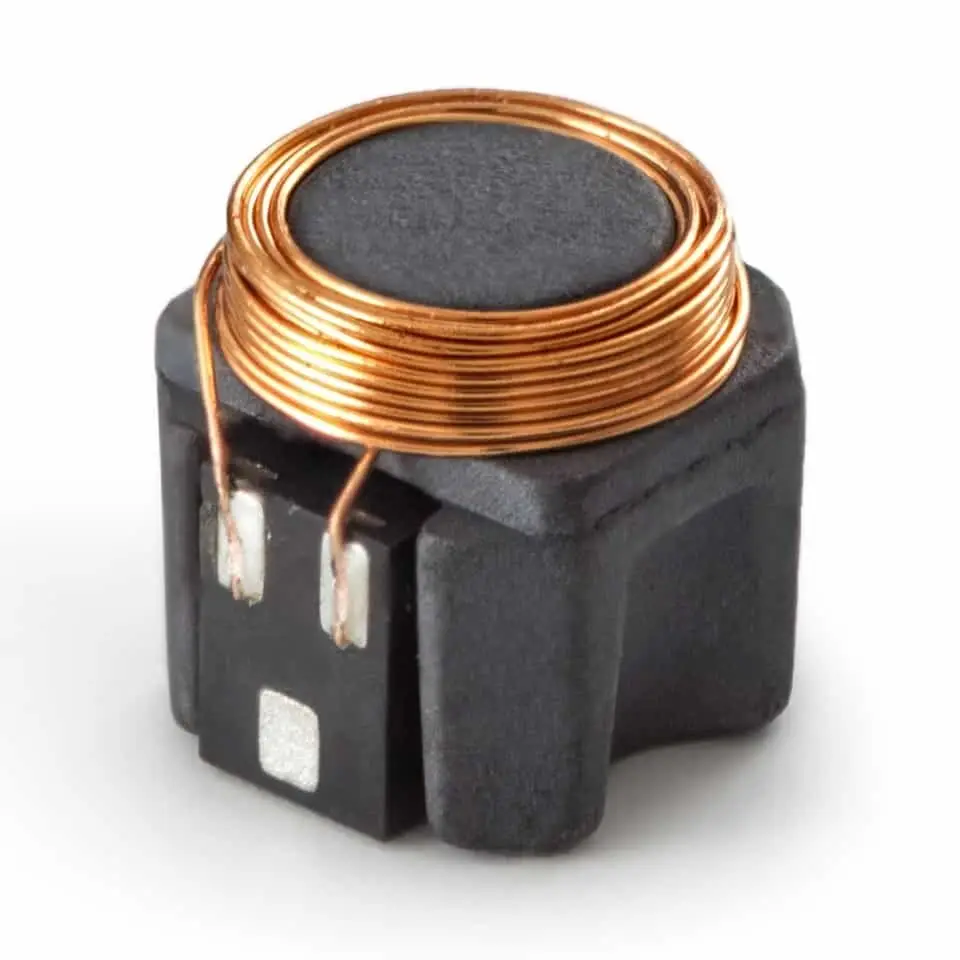
Sufficient antenna inductance is required for the system to function. This is determined by the coil’s geometry, particularly the number of turns, conductor routing, and surface area. This is precisely where the central challenge of miniaturization lies.
The smaller the antenna becomes, the more difficult it is to maintain the necessary inductance. The result is a significantly reduced energy transfer. The miniaturization of RF transponders is therefore limited not only by the antenna design but by the system’s overall energy balance. This includes the chip’s power consumption, the reader’s field strength, and regulatory EMC limits.
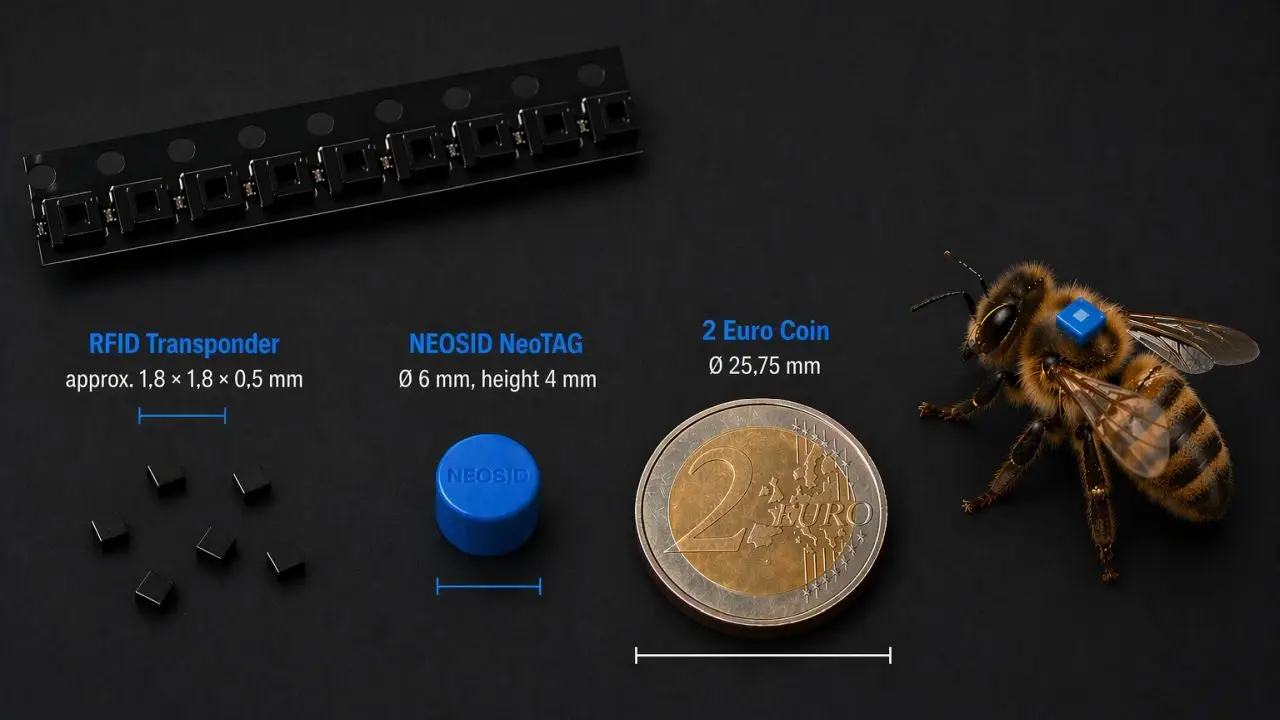
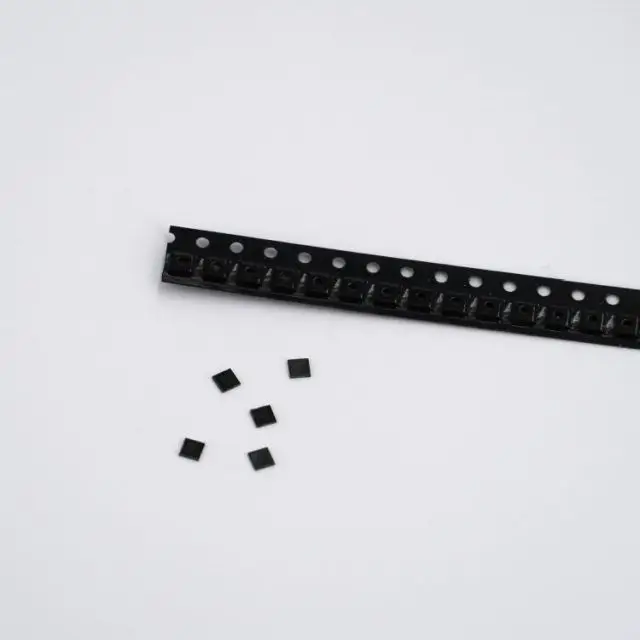
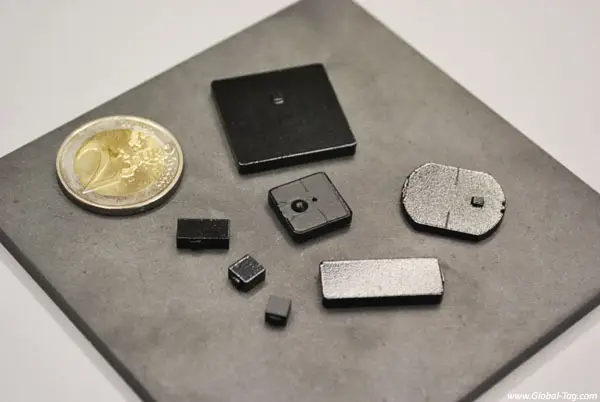
In practice, RF transponders in the millimeter range are possible today, for example with dimensions around 1.8 × 1.8 × 0.5 mm. Such solutions demonstrate how far the physical limits can be pushed. However, the interplay between coil geometry, chip design, and available energy is always decisive. Miniature RF is therefore not purely an antenna problem, but a systemic optimization problem.
Related Hardware

UHF RFID: Far-field communication and scalable range
UHF RFID operates in the frequency range of approximately 860 to 960 MHz. The wavelength here is around 33 centimeters, making it significantly shorter than that of HF. Unlike HF, communication takes place predominantly via electromagnetic waves in the far field.
The reader transmits a radio signal, a small portion of which the transponder uses for power. The response occurs via backscatter modulation, in which the signal is specifically reflected.
For efficient radiation, the classic antenna rule applies: the antenna length should be on the order of half a wavelength. For UHF, that would be about 16 centimeters. In practice, however, significantly smaller antennas are realized by utilizing resonance effects and specifically shortening or folding structures.
Typical UHF tags therefore consist of printed or etched antennas in the centimeter range. Despite this miniaturization, the physical challenge remains: the smaller the antenna, the poorer the coupling and the lower the available energy.
One important aspect is often overlooked: UHF can also operate in the near field. Special antenna designs enable short, defined read ranges, for example in metallic environments or in controlled applications. This blurs the clear distinction between near and far fields in certain application scenarios.
Comparison of the physical fundamentals
Aspect | HF RFID | UHF RFID |
|---|---|---|
Frequency range | 13.56 MHz | 860–960 MHz |
Wavelength | approx. 22 m | approx. 33 cm |
Physical principle | magnetic near-field coupling | Electromagnetic far-field communication |
Antenna principle | Coil | Dipole, patch, meander |
Energy transfer | Inductive | via radio waves and backscatter |
Typical range | Short distance | Short to several meters |
Behavior during miniaturization | Limited by coil inductance | Limited by decreasing coupling efficiency |
Miniaturization in the UHF range: Physical limits
The miniaturization of UHF transponders inevitably leads to a loss of efficiency in electromagnetic coupling. Developers address this problem with complex antenna designs, matching networks, and specialized materials for field guidance.
While these measures allow for smaller form factors, they often result in the need for additional structures. This increases system complexity, and the transponder moves further away from being a simple, minimalist component.
A particularly relevant effect occurs with extremely small UHF tags: they increasingly lose their far-field properties and behave more like near-field systems. This negates the actual advantage of UHF—its long range.
The often-cited claim that UHF automatically enables smaller antennas due to the shorter wavelength is therefore not entirely correct from a physical standpoint. What matters is not the wavelength alone, but the type of coupling and the available energy.
Energy Transmission: The Crucial Difference
The key difference between HF and UHF lies in the type of energy transmission.
With HF, this occurs in the magnetic near field. Energy transmission is very efficient and stable over short distances. This allows even more complex chips with higher energy requirements to be operated. At the same time, HF is relatively insensitive to water, plastics, or human tissue, as magnetic fields are less strongly attenuated in these materials.
UHF, on the other hand, operates using electromagnetic waves. The available energy per transponder is significantly lower, but this is compensated for by higher transmission power, antenna gains, and directional antennas. This enables ranges of several meters.
A clear example: A UHF inlay can be designed to be extremely thin and flat, as it requires very little energy and works over long distances. An HF transponder of the same size, on the other hand, would receive barely enough energy and would be usable only over the shortest distances.


Heroes in Deep Pressure: How Neosid RFID Makes Copenhagen Subsea's Thrusters Unique
Embedding pressure-resistant RFID transponders into vacuum-cast ring thrusters provides enduring identification and enables data-driven maintenance and quality control for extreme-depth marine propulsion systems.
Comparison of typical application profiles
Criterion | HF-RFID | UHF RFID |
|---|---|---|
Miniaturized sensor tags | Very well suited | Only partially suitable |
Smartcards / NFC | Very well suited | not typical |
Applications near metal | often more robust | Special tag design often required |
Water-containing media / proximity to the body | usually less critical | more sensitive |
Logistics and Supply Chain | Limited | Very well suited |
Bulk read of many tags | limited | Very well suited |
Defined short reading distance | Very well suited | Possible with near-field design |
Long reading ranges | Limited by design | Clear strength |
Typical applications and operational limits
The choice between HF and UHF depends directly on the application requirements.
HF is particularly suitable for short distances, stable power supply, and complex environments. Typical examples include smart cards, NFC systems, or industrial applications in metallic environments. Miniaturized sensor tags also benefit from reliable power transmission in the near field.
UHF demonstrates its strengths in logistics. Long read ranges and the ability to detect many transponders simultaneously make the technology ideal for tracking, gate applications, and inventory management in retail.
However, in challenging environments, particularly near metal or water, UHF’s higher sensitivity becomes apparent. Special antenna designs are often required here, whereas HF typically performs more robustly in such scenarios.
Related Suppliers



Conclusion: Asking the Right Question
The question “HF or UHF?” falls short when it comes to the miniaturization of RFID transponders. Both technologies follow different physical principles and are optimized for different applications.
HF excels with stable energy transmission in the near field and is suitable for compact, energy-intensive applications at short distances. UHF, on the other hand, enables long ranges and scalable systems, but reaches physical limits when it comes to extreme miniaturization and in complex environments.
The crucial question is therefore: Which combination of frequency, antenna principle, and energy transmission is best suited to the specific application?
Companies that master both technologies can develop systems precisely tailored to their operating conditions—from millimeter-sized HF sensor transponders to ultra-thin UHF logistics labels.