
Swedish R&D Project DECIDE Targets Circular Vehicle Logistics

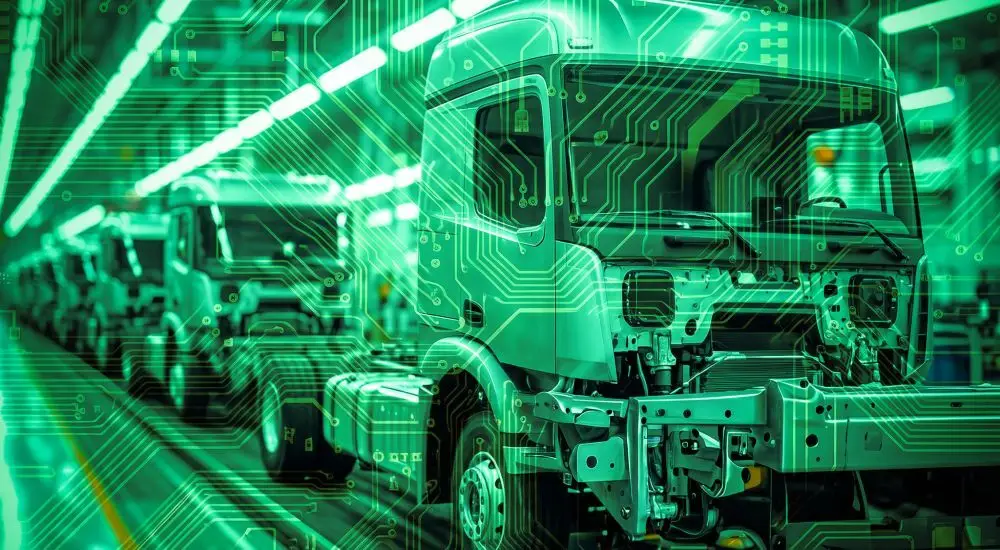
Wittra has joined KTH, RISE, Scania, Volvo Construction Equipment, Autocirc and Nida Tech in DECIDE, a Swedish R&D project running from June 2026 to May 2030. The project will use industrial IoT data to support circular logistics, digital twins and decision support in vehicle manufacturing.
National R&D Project Under FFI Circularity
DECIDE stands for Digital and Flexible Logistics Enabling Climate Neutral and Circular Production of Automotive Value Chains. The project is funded under Sweden’s FFI Circularity programme.
According to Vinnova, DECIDE has the reference number 2026-00811, runs from June 2026 to May 2030 and receives SEK 8,692,000 in funding from Vinnova.
The FFI Circularity programme focuses on reducing the climate and environmental impact of vehicle manufacturing, service and decommissioning across the full vehicle lifecycle, including components. This includes production, reuse, remanufacturing and eventual decommissioning.
Circular Logistics for Automotive Production
DECIDE will develop and demonstrate new approaches to digital, flexible and circular internal logistics in vehicle manufacturing. The project addresses challenges that are becoming more relevant as automotive production systems change.
These include high product variety, parallel production of internal combustion engine and electric vehicles, and increasing remanufacturing flows. In such environments, material handling becomes more complex and must support both production efficiency and circularity requirements.
The project aims to reduce cost, complexity and CO₂ emissions from internal material handling. For OEMs and suppliers, this makes logistics data, traceability and planning stability important elements of circular manufacturing.
Wittra Provides the Industrial IoT Data Layer
Wittra, a Swedish industrial IoT company providing hybrid wireless networks for real-time localisation and monitoring, has been selected as a technology partner in DECIDE. The company will contribute its industrial IoT hybrid network for real-time localisation and monitoring of materials and assets.
Within the project, this infrastructure will serve as the data layer for decision support, digital twin and analytics environments. Key use cases include dynamic routing, improved planning stability and traceable circular flows on the shop floor.
For system integrators and solution providers, this is technically relevant because circular production depends on continuous visibility of material location, status and movement. Without reliable real-world data, digital twins and decision-support systems cannot accurately represent production conditions.
Learning Factory Demonstrator at KTH
KTH Royal Institute of Technology is Sweden’s largest technical university, based in Stockholm. In the DECIDE project, KTH acts as the project coordinator through its Department of Production Development.
A full-scale Learning Factory demonstrator at KTH will serve as the primary test environment. It will combine physical experiments with digital twins under realistic brownfield conditions.
This is important because circular logistics concepts must work in existing industrial environments, not only in greenfield automation scenarios. Brownfield settings often include legacy systems, changing material flows, mixed product variants and constraints in layout, connectivity and data availability.
For end users, the demonstrator can provide practical insights into how digital and flexible logistics concepts can be validated before industrial rollout.
Relevance for Wireless IoT and Physical AI
DECIDE illustrates the growing role of Wireless IoT in circular production systems. Real-time localisation and asset monitoring provide the operational data needed for dynamic logistics, shop-floor analytics and digital twins.
Wittra positions its role in the project as enabling Physical AI by supplying real-world data infrastructure for complex industrial environments. In practical terms, intelligent systems need reliable information about where materials, assets and tools are located before they can optimise routes, planning or automation processes.