
- Real-time data combined with AI can increase supply chain decision-making speed by up to 90%.
- RFID technology enhances inventory accuracy to between 93% and 99%, forming the backbone of asset transparency.
- Bluetooth Low Energy (BLE) complements RFID by adding real-time location and sensor data, such as temperature and movement.
- Implementation success depends on scalable infrastructure, security measures, and integration across departments.
Real-time data is becoming a strategic factor for the modern supply chain. McKinsey points out that digital technologies, combined with product data and real-time tracking, create an integrated database for better inventory planning and enable teams to make faster and more informed decisions.
Yet this is precisely where the challenge lies: historical or delayed data is increasingly insufficient in complex, omnichannel-driven supply chains. Real-time visibility is now considered a key prerequisite for managing inventory more precisely, reducing shrinkage, and responding more quickly to discrepancies. GS1 reports that, in practice, RFID enables inventory accuracy of 93 to 99 percent.
Ashley Burkle, Director of Sales and Business Development at Identiv, focuses precisely on this intersection of AI, IoT, and digital identity. In this interview, she discusses why data quality and data timeliness are becoming the very foundation of AI in the supply chain, how RFID and BLE together create scalable transparency, and why real-time capability is now far more than just a convenient technological feature. It is about operational control, reliable decision-making, and the question of how companies can turn physical flows of goods into actionable, context-aware intelligence.
According to studies, supply chains using AI and real-time data can increase decision-making speed by up to 90 percent. At the same time, AI-powered applications in distribution and the supply chain could reduce inventory by 20 to 30 percent if data quality, forecasts, and operational control align. In practice, this inventory accuracy, combined with AI intelligence, can unlock revenue and efficiency potential.
How exactly does data quality influence the performance of AI systems in the supply chain, and what are the limitations of purely historical datasets?
Ashley Burkle: In the past, supply chains were heavily reliant on periodic data collection. Information was often only available after an event had already occurred. As a result, the ability to react in real time was very limited.
Today, that is no longer enough.
Supply chains must be agile and flexible, and that requires continuous, reliable real-time data. This is precisely where IoT technologies like RFID and BLE are changing the game, because they continuously capture data on the movement and status of goods.
When this data is fed into AI systems, it can be analyzed at scale and at high speed. Companies can then make decisions based on what is actually happening in the supply chain, and not solely on historical trends or past forecasts. This is precisely where the limitations of purely historical or predictive datasets lie. In an increasingly complex supply chain landscape, they are often not fast, precise, or robust enough on their own.
How do you define a slow supply chain, and what specific consequences does it have for companies, products, and production? Why is this situation still accepted as a given?
Ashley Burkle: I think anyone who has been involved in retail, consumer goods, and supply chains in general for years knows how a supply chain typically functions and reacts. We have seen that supply chains are essentially point-to-point processes. Goods move from manufacturing to a distribution center warehouse and then to the final destination, a retail store.
As we began to see the concept of omnichannel e-commerce emerge, supply chains became much more complex because they were no longer just delivering to stores, but also to individual households. That created significantly more complexity in terms of how distribution centers need to respond. We have also seen that, as technology has become more widely available to consumers, their expectations have risen more quickly. That is why we now expect real-time information from retail operations and supply chains, because we can get it in so many other places, and it is right there on our phones.
All of this has created new demands and pressures on the supply chain. So when I talk about a supply chain being slow, I am basically referring to the standard model of how it looked for decades, perhaps even centuries: goods were methodically transported from A to B based on traditional ordering and forecasting methods. Then we, as consumers, turned that on its head and said, “No, we want it in real time. We want it when we want it, and the way we want it.”
We all know that certain retailers have raised expectations by showing they can deliver goods within two hours, or within 24 hours. All of these developments have led to the perception that supply chains are slow when, frankly, they are just operating the way they traditionally have.
What role does real-time IoT data play as input for AI models, and how do technologies like BLE, RFID, and digital identities create scalable transparency in the supply chain?
Ashley Burkle: Real-time IoT data shows what is actually happening in the supply chain at this very moment. It replaces the traditional reliance on delayed or historical data, enabling faster, more informed operational decisions.
Technologies like RFID and BLE play a central role here because they assign digital identities to physical objects. This allows products, assets, and inventory to be tracked consistently throughout the entire supply chain.
RFID enables the fast and scalable identification of large quantities of items, thereby forming the foundation for inventory transparency. BLE complements these capabilities with real-time location tracking and sensor technology, such as temperature, movement, or environmental conditions.
Together, these technologies provide a complete picture of the supply chain by answering three key questions: What is it, where is it, and what is happening to it?
When this data is continuously collected and fed into AI systems, a system emerges that can process large amounts of data in real time and translate it into concrete recommendations for action.
This gives companies the transparency and flexibility they need to actively manage their processes, rather than merely reacting to developments.
What exactly does “what happens to it” mean in this context? Are we talking about sensor data here, that is, the status of a product in the supply chain?
Ashley Burkle: Yes, exactly. By “what happens to it?” I primarily mean the additional layer of status and environmental data. So it is not just about uniquely identifying a product or asset and knowing its location, but also understanding what is actually happening to it in the supply chain.
For example, this could mean: Is a product getting warmer even though it should remain cool? Is it exposed to light even though that should be avoided? Is it being moved, stored incorrectly, or leaving a defined area? It is precisely this information that provides the additional context.
This creates a whole new level of transparency. You no longer see just a static data point, but gain a better understanding of its condition, usage, and potential deviations. This is particularly valuable when it comes to reusable assets or sensitive goods.
And this is precisely where one of BLE’s greatest strengths lies: the technology adds another dimension to the data inputs, thereby supplementing the classic questions “What is it?” and “Where is it?” with the crucial question, “What is happening to it?”
How do RFID and BLE complement each other in practice?
Ashley Burkle: RFID and BLE are often used together in practice because they have different strengths and therefore complement each other very well.
RFID is particularly efficient when it comes to quickly and scalably identifying large quantities of items. It lays the foundation for inventory transparency and enables companies to know exactly which products are located where.
BLE adds an extra dimension to this view. In addition to simple identification, the technology provides real-time information on the location and status of objects, such as movement data or environmental values like temperature.
Together, this creates a significantly more complete picture of the supply chain. While RFID answers the question “What is it?”, BLE provides additional information on “Where is it?” and, above all, “What is happening to it?”
Especially when combined with AI, this creates a system that not only provides transparency but also offers context and enables active control of processes.
Why is real-time so important?
Ashley Burkle: Real-time is so important because companies can only truly control what happens in their supply chain if they understand the situation at the moment it occurs. Delayed data only shows what has already happened. It helps with analysis, but not with immediate response.
Many traditional backend systems primarily process data as transactions. They indicate that something has been recorded, but do not yet provide real context. This is exactly where AI comes in: it can analyze incoming data in real time and derive immediately actionable insights from it.
The real added value, therefore, comes not only from the speed of data collection, but from the ability to interpret this data immediately and translate it into action. This enables companies to react faster, adapt processes, and make informed decisions.
I think this will also play a major role in the context of the Digital Product Passport. After all, the same data must be presented differently depending on the target audience, once for operational decisions within the company and once for the end consumer. AI can provide the necessary context here and bridge the gap between these perspectives.
How is real-time AI transforming operational processes, from gaining insights to automated actions, in areas such as inventory management, loss prevention, compliance, logistics optimization, and exception handling?
Ashley Burkle: Modern supply chains have become significantly more complex, primarily due to omnichannel models and rising consumer expectations. This is precisely why traditional, delayed data is no longer sufficient today. Real-time IoT data provides transparency regarding inventory, goods movements, and status at a level that was previously impossible.
AI transforms operational processes by processing these continuous data streams in real time and deriving actionable insights from them. As a result, companies can see not only what is happening in their supply chain, but also where deviations, risks, or bottlenecks arise. This includes, for example, incorrectly stored inventory, cold chain issues, lost assets such as machinery or reusable containers, and other disruptions that slow down processes.
The key difference is that real-time AI goes beyond transparency. It lays the groundwork for responding faster, reprioritizing, and managing processes more effectively. This is precisely where its value lies for inventory management, loss prevention, logistics optimization, and exception handling. In certain environments, this can also lead to automated actions, such as alerts, escalations, or system-driven follow-up actions as soon as defined deviations are detected.
Industry leaders like Amazon and Lululemon have already demonstrated how data-driven transparency can transform market expectations. AI helps supply chains keep pace with these expectations by translating real-time operational data into actionable insights.
What infrastructural, technical, and organizational prerequisites are necessary to successfully implement real-time data solutions and make the transition from pilot projects to scalable enterprise solutions?
Ashley Burkle: When we look at real-time data solutions from the end-user’s perspective, the first requirement is an infrastructure capable of continuously capturing, transmitting, and processing data. The specific requirements depend heavily on the chosen technology and the particular use case.
With RFID, the focus is primarily on an infrastructure capable of quickly and reliably identifying large quantities of items, such as compatible tags, readers, defined reading points, and integration with higher-level systems. With BLE, another layer comes into play. Here, you also need an environment where location or sensor data, such as temperature, motion, or humidity, can be captured in real time and fed into existing systems.
However, it is not just the hardware that matters. Companies also need systems that integrate, process, and make this data usable. This is often where the real challenge lies today: not in the technology itself, but in the integration and coordination between the departments involved.
Which solution is best suited depends on what a company aims to achieve. When large inventories need to be tracked at high speed, RFID is often the right choice. When conditions such as cold chain requirements need to be monitored or reusable assets need to be tracked in real time, BLE is often more suitable.
Successful implementation therefore requires not only the right technical infrastructure, but also a clearly prioritized use case, a realistic assessment of the expected ROI, and a solution designed to be scalable from the outset. In practice, companies often find that after implementation, they tap into more data and use cases than originally planned. This is often where additional value lies.
And finally, the human factor should not be underestimated: training, monitoring, feedback loops, and clean operational processes remain an essential part of any successful implementation.
How can companies protect themselves from security-related risks when real-time AI intelligence drives processes?
Ashley Burkle: When we talk about the role of AI in the supply chain, the primary focus is on deriving actionable insights from large volumes of operational data, not on AI making autonomous decisions without oversight. Responsibility for interpretation, evaluation, and operational actions remains with humans.
A key protective factor is, first and foremost, the quality of the data. The better, more reliable, and more up-to-date the data inputs are, the more robust the insights derived from them will be. Real-time data from IoT technologies such as RFID and BLE helps to significantly improve this foundation.
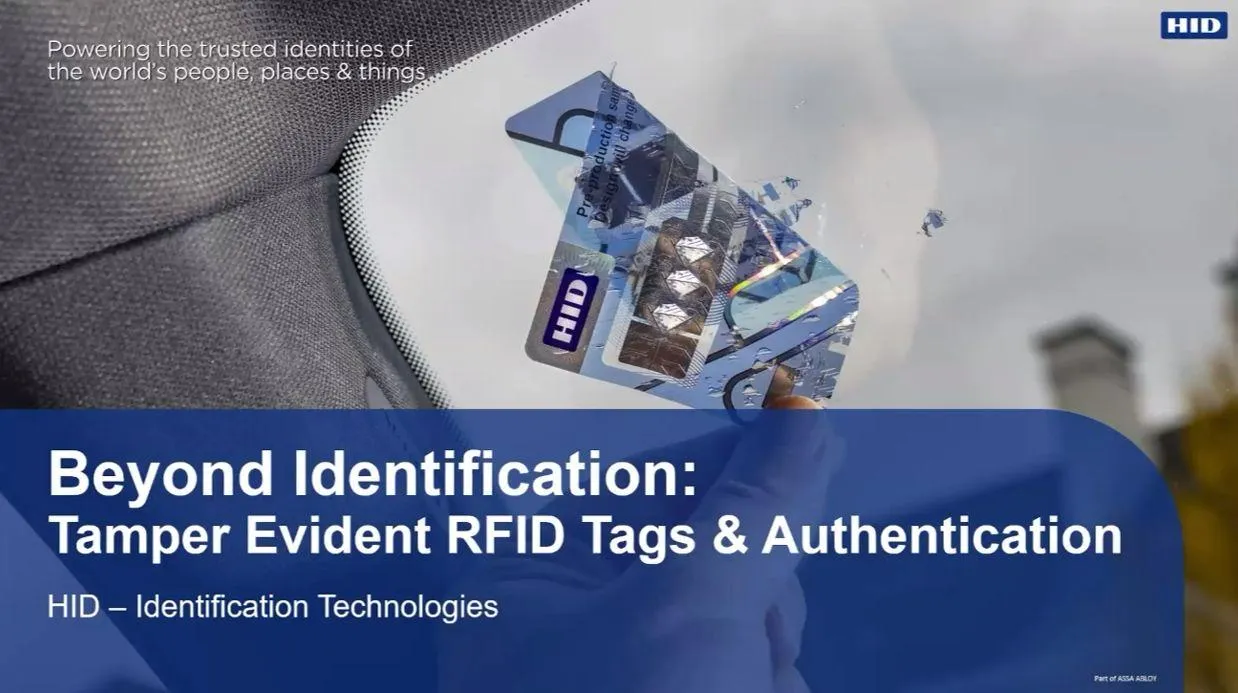
At the same time, security must be considered on multiple levels. This includes protection at the tag and chip level, authentication, encryption, and the secure handling of data once it is transferred to corporate systems and processed there. Data security and data protection are just as important here as securing the underlying IoT infrastructure.
A multi-layered approach is therefore crucial: secure data collection, protected transmission, reliable system architectures, and human oversight during evaluation and implementation. It is precisely this combination that helps companies minimize security-related risks, even when AI supports processes in real time.
But I think we have reached a very good point where the chip itself and the data coming from this IoT sensor are very secure.