

- Helen uses OPC UA to standardize data exchange and automate energy infrastructure management.
- The IoT-TICKET platform serves as a central data hub aggregating data securely from distributed energy units.
- Lifecycle updates have introduced microservices for improved scalability, cloud integration, and fault tolerance.
- OPC UA’s built-in security features enable reliable data sharing essential for market automation and operational agility.
OPC UA as the foundation for a connected, data-driven energy system
Helen, one of Finland’s largest energy companies, owned by the City of Helsinki, is building a decentralized, secure, and automated energy infrastructure. With OPC UA as its digital backbone, Helen ensures transparent data flows, scalable systems, and a carbon-neutral energy supply for the future.
How Helen is decentralizing, automating, and securing with OPC UA
Helen is consistently breaking new ground in the digitalization of energy infrastructure. With OPC UA, the company is relying on scalable, secure architecture for the connected energy supply of tomorrow. The story of OPC UA and Helen started over a decade ago. At that time, Helen operated fewer but larger energy production units, all connected to a centralized data collection platform using multiple and differing technologies.
This setup was not optimal in terms of performance, maintenance, nor troubleshooting. By adopting OPC UA technology as the backbone for data collection, Helen standardized connectivity across its energy production units. This was essential for maintaining efficiency as the number of production units, and the complexity of managing them continues to grow.
Timeline of OPC UA at Helen 2014-2025
In 2014, Wapice’s IoT-TICKET platform based on OPC UA was commissioned and took on the role of a central data hub between energy production units and portfolio management systems. Since 2014, the solution has been running 24/7 in Helen’s critical OT environment, while at the same time supporting the strategic expansion of renewable energy such as wind, solar, hydro, and geothermal plants in the 2020s.
Starting in 2024, lifecycle updates of IoT-TICKET have introduced a microservice-based architecture that reduces obsolescence risks and provides better support for modern energy architectures.
District heating from Helen for Helsinki
Helen is one of Finland's largest energy companies. Founded in 1909, the company is owned by the City of Helsinki, the capital of Finland, and supplies energy services to more than 90 percent of all buildings in Helsinki and a large customer base across Finland.
Helen is undergoing a profound transformation of its energy production system in response to global climate challenges, national energy policy, and the evolving expectations of customers and stakeholders. The company is proactively phasing out coal and investing in clean, distributed energy solutions to meet its ambitious goal of achieving a balanced CO₂ footprint by 2035.
This transition is not only environmentally necessary, but also strategically sound. Helen’s transition supports Finland’s carbon neutrality goals by replacing coal with clean, distributed energy. It strengthens energy independence, reduces fossil fuel reliance, and enhances economic resilience.
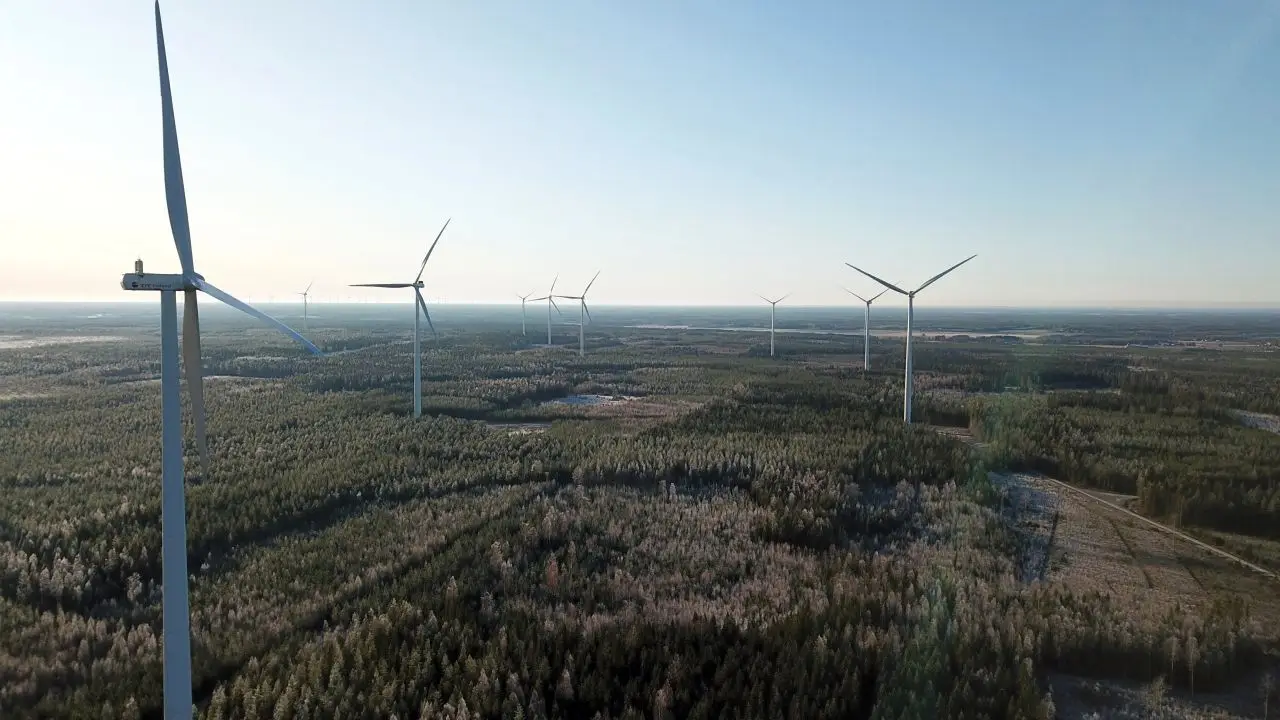
A central component of this strategy is the shift to distributed, emission-free energy production. Helen is focusing on a massive expansion of wind energy, with installed capacity expected to reach nearly 1 gigawatt by the end of 2025.
In addition, Helen is investing in other renewable sources such as award-winning circular economy-based heat pump solutions, bio-based energy generation, and hydroelectric power, as well as innovative storage solutions, like underground water reservoirs for seasonal heat storage.
Helen is also testing forward-looking technologies: a pilot plant for green hydrogen is planned for 2026. In addition, the possible use of small modular reactors (SMRs) for long-term heat supply is being evaluated as a potential building block for a stable and CO₂-neutral energy future.
With these forward-thinking investments, Helen is setting the benchmark for intelligent and sustainable energy solutions in Europe.
Helen decided to launch a digitalization offensive
The clear trend toward decentralized energy production units was identified early on and it was recognized that, while this brings benefits, it also introduces new challenges. As the number of energy production units increases, information gathering becomes more complex and more difficult to consolidate.
At the same time, participation in the energy market requires faster response times. This development makes the management and optimization of the energy infrastructure significantly more complex.
”Helen’s renewed energy production portfolio is highly flexible, which opens up new opportunities in the markets but also introduces operational challenges. Reliable and secure data flows are essential for us to deliver on our promises to customers and to remain agile in a volatile and complex environment.
The role of data management is especially critical when coordinating production capacity across multiple markets simultaneously.”
Lauri Hiekkanen, Development Lead, Helen
To meet these demands, end-to-end digitalization and automation of energy production were essential. However, Helen faced classic challenges: many existing systems were proprietary, incompatible, and sourced from different manufacturers. Before OPC UA, collecting data from diverse energy sources was complex, costly, and error-prone.
Helen decided to launch a comprehensive digitalization transformation to respond to profound changes in the energy market. The goal was to build a future-proof, secure and scalable energy management system with open interfaces, clear data architecture, and automated processes.
Why OPC UA was the right choice for Helen
In 2014, Helen evaluated its system landscape with a view to finding an open, future-proof solution that would function independently of any manufacturer. The choice fell to OPC UA, which met all requirements in several ways:
Manufacturer independence: OPC UA is vendor neutral and not tied to specific hardware or software providers, allowing maximum flexibility in system selection
Scalability and flexibility: New components and systems can be integrated easily, regardless of their size, architecture, or vendor origin
Built-in security features: OPC UA includes encryption, authentication, and access control mechanisms, meeting high security standards for critical infrastructure
Long-term viability: Continuous development and broad acceptance in industry ensure long-term investment stability
As energy production units and their SCADA systems might be from different vendors, adopting OPC UA enabled Helen to establish clear separation of responsibilities and data ownership between each unit and the centralized data collection system. Each energy production unit would be responsible for producing high-quality data and exposing it through an OPC UA interface.
This approach not only simplifies the identification and tracking of communication issues, but also helps detect poor-quality data, pinpoint where communication problems occur, and gain a clearer understanding of the entire communication chain. By defining responsibilities at the interface level, Helen ensures that each unit operates independently, while maintaining consistent and trustworthy data exchange across the energy infrastructure.
Helen and Wapice – A Partnership Driving Digital Transformation
Helen’s journey toward a decentralized, automated, and secure energy infrastructure has been strongly supported by its long-standing partnership with Wapice. Wapice has brought deep expertise in industrial systems and OPC UA technology, helping Helen build a robust foundation for data-driven energy operations.
“Using OPC UA as the standard for data collection enables real-time monitoring and operation of diverse energy assets across various markets. Our technological choices support scalability and interoperability and, while we have not yet reached all the capabilities we aim for, we are confident that our selected architecture meets current needs and is well-positioned to support future developments. This provides a solid foundation for data-driven operations and continuous improvement.”
Janne Piispanen, Head of Digital Energy Systems, Helen
At the core of this collaboration is Wapice’s IoT-TICKET platform — a powerful IoT and AI platform tailored for the energy, industrial, and critical infrastructure sectors. It enables real-time data collection, analysis, and visualization, helping companies to monitor, optimize, and automate operations. Designed for high availability, the platform ensures resilient performance with multi-level redundancy and automated fault detection.
At Helen, IoT-TICKET serves as a central data collection and integration hub. The platform ensures a steady and secure flow of data from Helen’s diverse energy production units towards internal and external data consumers.
Data flow from the power plants to data consumers
The data collection platform operates as an OPC UA aggregation server. Communication with power plants is handled by a central OPC UA client that subscribes to source servers at each site. This subscription model ensures that the system automatically receives updates whenever data changes occur.
The collected data is centrally aggregated and made available for data consumers through a unified OPC UA Server interface. A key advantage of this setup is that data consumers can connect to a single endpoint that provides access to data from all necessary Helen assets. This simplifies integration and enhances scalability.
Access rights and data consumer profiles are defined and managed by IoT-TICKET, which serves as the identity and access management layer for OPC UA. The OPC UA Server communicates with IoT-TICKET to verify credentials and enforce fine-grained access control for each data subscriber. This ensures that every data consumer can only access the information they are authorized to use.
This architecture serves both Helen’s external partners, who require access to specific datasets, and internal teams, who use the aggregated data for operational analysis. By enabling secure, role-based access to a unified data hub, Helen can support efficient collaboration while empowering internal experts to optimize asset performance and make data-driven business decisions.
“To have end-to-end visibility and to control complex energy infrastructure, a robust and reliable communication architecture is essential. Only high-quality data truly enables predictive insights, optimizes decision-making, and ensures that automation delivers real value across the entire energy ecosystem.
For this purpose, OPC UA has been a perfect fit for Helen. It creates a secure and resilient framework that drives efficiency, scalability, and smarter energy operations—critical for achieving Helen’s vision of a flexible, carbon-neutral energy system and supporting record investments in clean technologies.”
Veli-Pekka Salo, Head of AI, Analytics and Automation, Wapice
Lifecycle updates and new platform architecture
After ten years of successful 24/7 operation in a critical production environment, Helen launched lifecycle updates to modernize its data collection system. The decision was driven by aging software components and the growing need to support cloud-based analytics and AI.
A key principle was that OPC UA would continue to serve as the standard for communication between energy production units and the centralized data hub.
In today’s cloud-driven era, where more computation and artificial intelligence is deployed to cloud environments, safe and secure data-sharing mechanisms with cloud systems are needed. As the system resides in a highly isolated network environment that has no direct exposure to the public internet, new methods to provide data for cloud systems were implemented. This approach allows Helen to leverage cloud-based analytics while ensuring that core systems remain fully protected.
The updated system is built on the latest IoT-TICKET On-Premises version, featuring microservices-based architecture that provides high availability, load balancing, and simplified management across distributed environments.

The advantages of this architecture
This architecture offers Helen clear advantages across scalability, performance, and security. It enables the company to:
Support larger and more diverse energy production units
Ensure bi-directional, high-speed communication with improved data quality and health monitoring
Maintain cybersecurity and system availability in a more connected energy landscape
Integrate with cloud-based intelligence, partner analytics platforms, and legacy systems.
Future Perspective: OPC UA as the Backbone of Decentralized Energy Systems
OPC UA has also evolved into a key standard in the energy sector. At Helen, it has enabled secure, scalable, and interoperable data exchange between diverse energy assets and centralized data systems, and helped the company succeed in their digital journey.
As energy infrastructures evolve, cybersecurity remains paramount. OPC UA’s built-in security features-encryption, authentication, and access control-will continue to safeguard critical data flows against emerging threats.
Looking ahead, as energy systems become more decentralized and data-driven, OPC UA will be a critical enabler of safe, standardized communication between assets, data hubs, and consumers. Its ability to unify heterogeneous systems under a common framework makes it indispensable for building future-ready energy infrastructure and accelerating the global transition to sustainable energy.
“The whole European Union’s day-ahead electricity market has shifted from an hourly basis to a 15-minute basis. The 15-minute imbalance settlement period and 15-minute products in the intraday market, which power exchanges have been able to offer in the Finnish bidding zone since May 22, 2023, have increasingly shifted decision-making from humans to automated processes. This means that the accuracy of information related to electricity market decisions must be ensured at every stage of the chain.
Based on data coming from different systems, more and more automated decisions are being made, which directly affect electricity market trading. Inaccurate or incorrect information reflects on prices, contracts, risk management, and the financial outcomes of market participants. Therefore, the quality, timing, and reliability of data play a central role in the functionality of the entire market chain.“
Jyrki Keskinen, Director of Energy Business Line, Wapice