

Vaillant Tracks 1,600 Logistics Carts with Sensolus IoT Solution

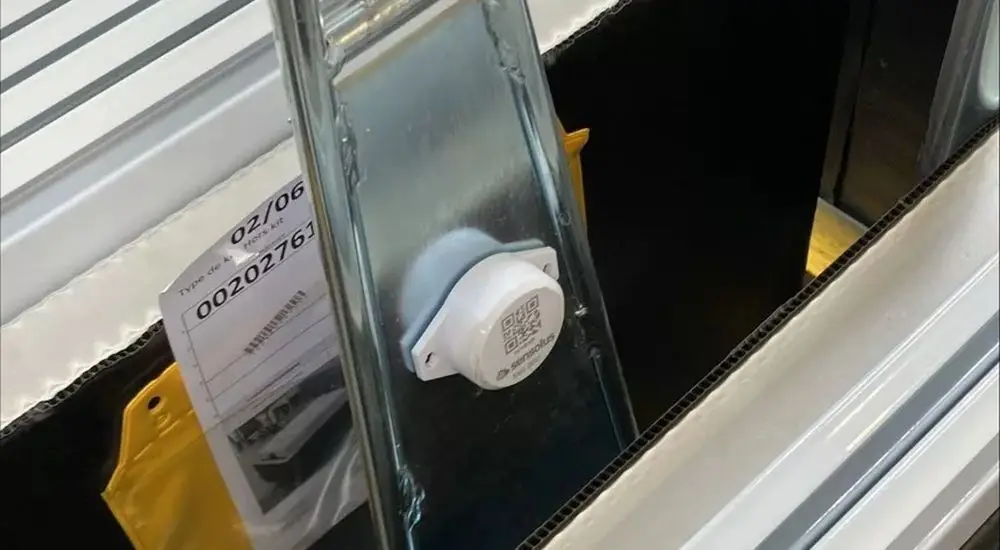
Vaillant, the internationally active German heating technology group and a leading supplier of heat pumps, gas-fired condensing boilers, and systems for heating, cooling, and hot-water supply, has digitized the management of 1,600 logistics carts and trains at its Nantes factory using Sensolus IoT trackers.
The deployment improved asset visibility, increased cart utilization by around 5 percent, and paid back the investment in just over one year.
Real-time visibility for industrial intralogistics
At Vaillant’s production site in Nantes, internal logistics are a critical factor for manufacturing performance. The 48,000 m² facility produces around 166,000 boilers and heat pumps per year and depends on logistics carts and trains to move parts through sheet metal processing, painting, assembly, and line supply.
Before the IoT deployment, fleet management relied on inventories and spreadsheets. This made it difficult to determine where carts were located, how intensively they were used, and whether shortages were caused by insufficient equipment or inefficient distribution.
For production sites with complex material flows, this is a familiar problem. Non-motorized assets such as carts, carriers, containers, and transport supports are often operationally essential, but remain largely invisible in digital systems.
Bluetooth-based tracking without heavy infrastructure
Vaillant selected Sensolus to test an IoT-based tracking approach on around 40 carts and logistics trains. The pilot used Bluetooth technology (BLE) to validate whether location and usage data could improve the daily management of internal flows.
A key requirement was ease of deployment. According to the source case, Vaillant was looking for a solution that was immediately operational, simple to install, and economically viable. The Sensolus platform provided field teams with access to cart location and usage data without requiring a complex infrastructure project.
After less than one month, the pilot delivered enough operational evidence for Vaillant to expand the deployment. In 2025, the company equipped its full fleet of 1,600 logistics carts and trains.
From asset tracking to operational decisions
The main value of the deployment lies not only in locating carts, but in turning asset data into operational decisions. Each cart is identified, located, and monitored in the platform. Operators can find available equipment more quickly, instead of spending time searching across the production site.
The data is also used to support Value Stream Mapping. This gives Vaillant a factual basis for assessing internal flows, identifying bottlenecks, and understanding where equipment is underused or unavailable.
For system integrators and solution providers, the case shows how IoT tracking can be positioned as a practical layer above existing intralogistics processes. It does not replace production systems, but adds measurable data about mobile, non-powered assets that are often missing from ERP, MES, or warehouse systems.
Measurable impact on utilization and costs
The results reported by Vaillant are concrete. The company achieved a return on investment in approximately 1.2 years and increased logistics cart utilization by around 5 percent.
The tracking data also helped identify equipment that was unused or underused. Some carts could be redirected to a storage provider, which avoided new purchases for future needs. Vaillant estimates the saving from this optimization at around €30,000 on a single project.
Alerts help teams anticipate zones where carts may become scarce. This reduces disruptions caused by missing equipment and improves the predictability of material flows. The benefit is therefore not limited to asset visibility, but extends to production continuity and the daily working conditions of operational teams.
Maintenance and continuous improvement
With historical data now available, Vaillant is using the system beyond simple location tracking. The platform supports corrective and preventive maintenance by identifying carts that require repair, routing them to dedicated zones, and helping schedule interventions.
This turns a tracking deployment into a continuous improvement tool. Manual checks can be reduced, assumptions can be replaced by measured data, and flow optimizations can be identified that would otherwise remain hidden.
For end users, the relevance is clear: low-complexity IoT deployments can generate measurable operational gains when applied to recurring intralogistics pain points. For integrators, the case highlights a scalable use case for asset tracking in industrial environments where assets move constantly but do not generate data themselves.
A European IoT use case with industrial relevance
The Vaillant project demonstrates how wireless IoT can make intralogistics assets digitally visible without overengineering the deployment. In this case, the combination of Bluetooth-based tracking, operational dashboards, and data-driven process analysis delivered measurable results in utilization, cost avoidance, and maintenance planning.
Sensolus, coming from Flanders in Belgium and represented by COT in Germany, shows with this application that industrial IoT can create value where factories often lose time quietly: in the movement, availability, and utilization of everyday logistics assets.