
- Localization technology selection is based on process information needs and cost-benefit analysis, not solely on accuracy.
- RAIN RFID is optimal for cost-effective identification and zone detection of large quantities of items without requiring batteries.
- Bluetooth Channel Sounding enhances Bluetooth precision, potentially overlapping some UWB applications in industrial localization.
- Hybrid systems combining RAIN RFID, Bluetooth, and UWB provide tailored solutions for varying accuracy and real-time tracking requirements.
Industrial localization is evolving. Companies no longer want to simply know where an object is located. They want to understand what that location means for production or logistics—and what should happen next.
In an interview with Think WIoT, Stoyan Iliev, CTO of KATHREIN Solutions, explains why localization is evolving from traditional track-and-trace toward process control, what role RAIN UHF RFID, Bluetooth, and UWB play in this evolution, and why hybrid systems are gaining importance.
When Locations Become Process Information
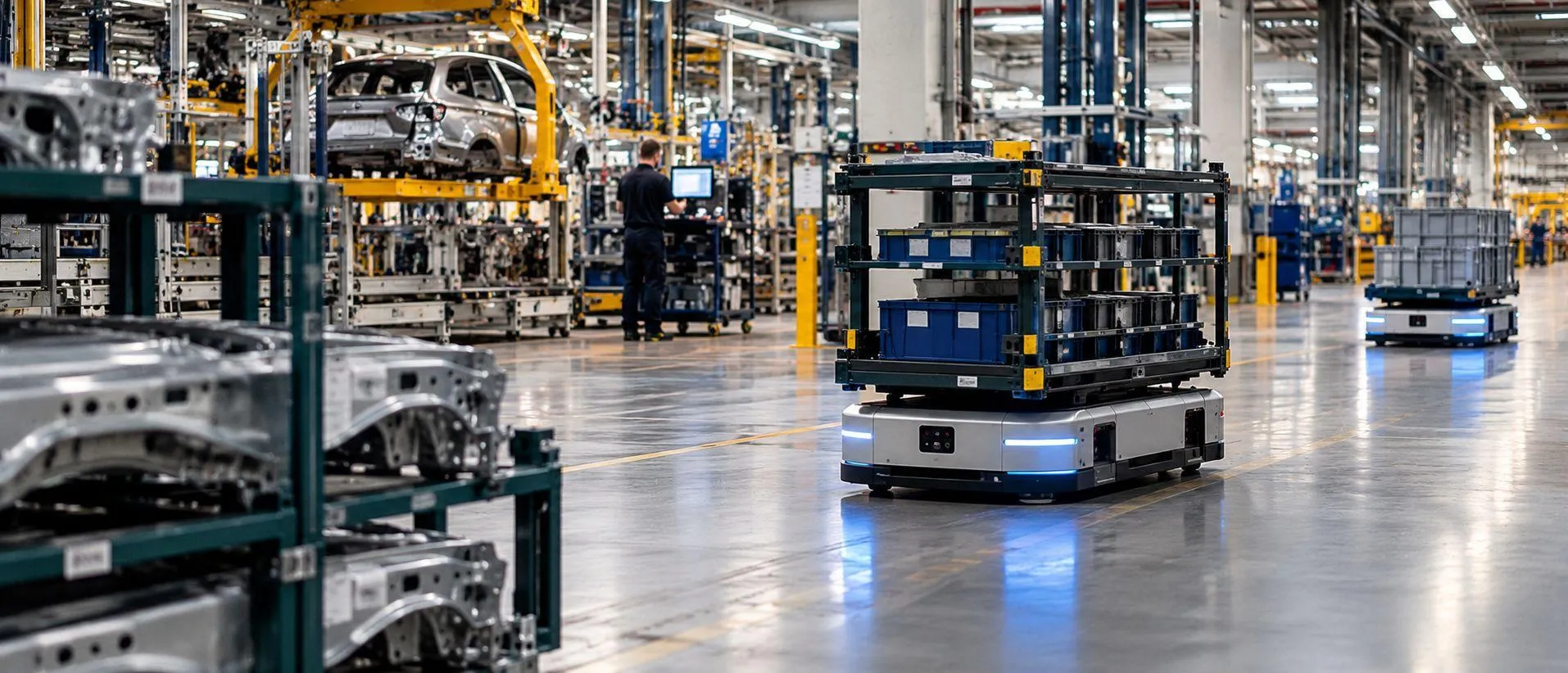
KATHREIN Solutions currently sees a high demand for localization, particularly for load carriers, tools, equipment, forklifts, and autonomous transport systems.
But the question “Where is the object?” is no longer enough. Location and motion data are intended to control and automate production and logistics processes. For Iliev, therefore, the focus is increasingly on automatic process monitoring and process optimization—with greater transparency, more flexible workflows, automated material flows, and faster responses to disruptions.
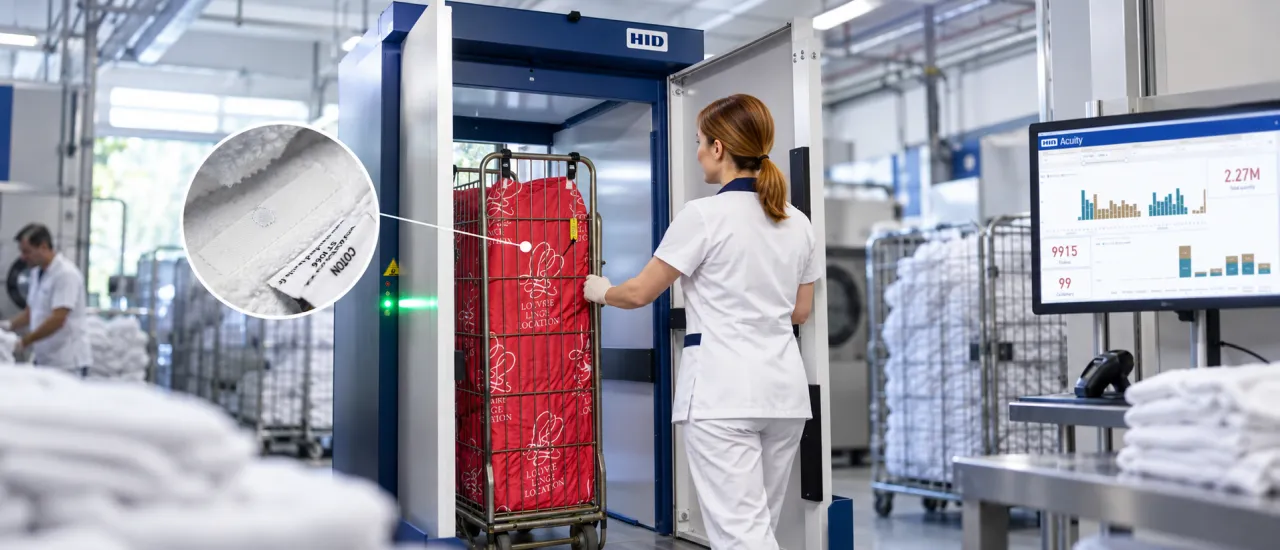
The real added value arises when location, status, and process data are combined. For example, if an RFID system detects that a component has entered or left a production area, the ERP system can update the processing status, approve the next step, or generate a notification in the event of a deviation.
A location tracking system thus becomes a process control system.
The position of an object is then no longer the goal of the application; it becomes the trigger for the next process step.
Understand the process first, then choose the technology
This is exactly where KATHREIN Solutions begins when selecting technology. The starting point is not RFID, Bluetooth, or UWB, but rather the question: What information does the process really need?
Is it enough to know that an object passes a specific point? Does the direction of movement also need to be detected? Or does the process require a precise, real-time position?
Only then can the technology decision be made.
UHF RFID is particularly well-suited for the cost-effective identification of large quantities of items as well as for defined points and zones. BLE addresses simpler proximity and location tasks. UWB comes into play where a very precise real-time position is required.
Iliev sums up the approach: not maximum location accuracy at any cost, but maximum process benefit with an economically sound investment.
RAIN RFID: Strong for Large Volumes
For KATHREIN Solutions, RAIN RFID is a key technology when many objects need to be identified cost-effectively and simultaneously located within production or logistics processes.
The passive transponder requires no battery, is cost-effective, and maintenance-free. This makes it possible to track not only high-value assets but also products, components, and load carriers in large numbers, providing them with a digital identity.
RAIN RFID provides a different type of location information than a continuous RTLS. The technology very efficiently answers questions such as: Which object is located in which zone? Which process point has it passed through? In which direction is it moving?
For many industrial processes, this is precisely the critical information.
A company does not necessarily need to know the exact coordinates of a load carrier. What may be crucial is that it has passed through a production transition point—allowing the next step in the process to begin.
In this way, a physical event is transformed into digital process information.
From the First Detection Point to Automation
RFID also offers a relatively simple entry point.
Iliev cites clearly defined process points such as goods receipt or transitions between production areas. There, it’s possible to track which object passes through such a point, when it does so, and in which direction it’s moving.
From there, the solution can expand. An initial tracking point is followed by additional production and logistics zones. The information is then integrated with ERP or other process systems. The tracking data generates statuses such as “Material arrived,” “Processing complete,” or “Approved for shipment.”
If selective or zone-based tracking is insufficient and precise real-time positioning is required, UWB can supplement the RFID solution.
The approach: start small, demonstrate the benefits, and then scale in a targeted manner—without having to replace the existing solution.
This paves the way from individual RFID events to process automation, step by step.
Zone or storage location? This is where the technology is decided
An example from the interview illustrates particularly clearly how much the choice of technology depends on the actual information needs.
In a production plant, it may be entirely sufficient to know that a vehicle is in the “rework” area. In that case, zone assignment is sufficient.
The task changes when it’s not just necessary to know that the vehicle is in rework, but also which specific parking space it’s in.
This increases the required level of precision—and with it, the question of the appropriate infrastructure.
Iliev explains that, in principle, such a task could also be solved using a suitably fine-grained RFID infrastructure. However, this might require a large number of tracking points. An UWB-RTLS, on the other hand, can cover a larger area and continuously track vehicles within that area.
This turns the question of the best technology into an economic trade-off. Iliev refers to a break-even analysis balancing infrastructure, requirements, and benefits.
If information about a zone is sufficient, passive RFID technology may be the right choice. If continuous and highly accurate real-time positioning is required within that zone, the calculation changes.
UWB Where Real-Time Positioning Is Truly Needed
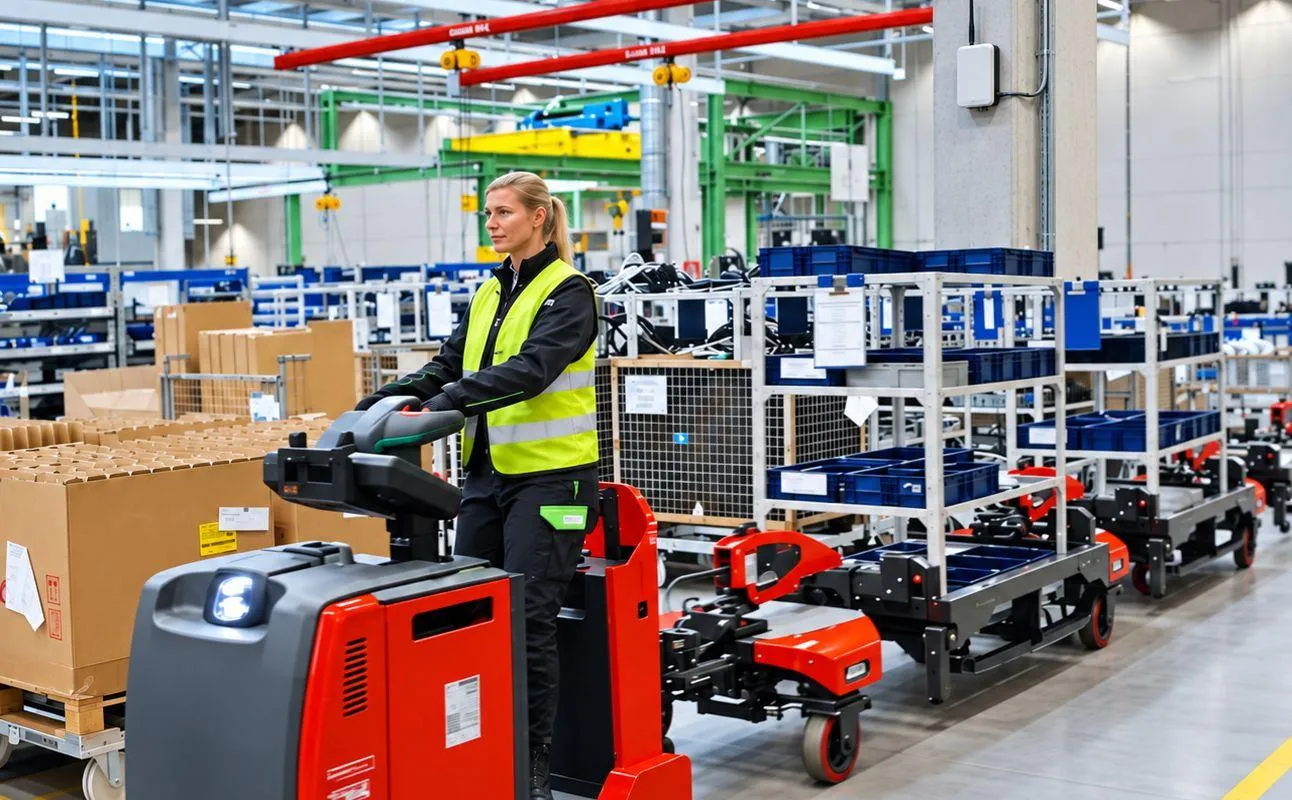
UWB demonstrates its strengths where a highly accurate real-time position is actually required—for example, for vehicles, equipment, or other assets whose location must be continuously known within a larger area.
However, the decision to use UWB is not based solely on the achievable accuracy. Installation costs, hardware, software integration, and the required information content must all align.
For Iliev, this is precisely where the economic dimension of technology selection lies: Passive RFID tags are inexpensive, maintenance-free, and can be used without batteries. Bluetooth devices may offer cost advantages over UWB on the device side. At the same time, the cost equation can be reversed if a supposedly simpler technology requires a great deal of additional infrastructure to deliver the desired information.
What matters, therefore, is not just the price of a tag or device, but the effort required to reliably generate the required information in the specific process.
This trade-off is gaining new momentum due to a recent development.
Bluetooth Channel Sounding Shifts the Line
With Bluetooth Channel Sounding, Bluetooth gains significantly in precision when it comes to distance measurement.
Iliev sees this as an important development for industrial localization. New applications could emerge for tools, load carriers, vehicles, and geofencing. At the same time, existing Bluetooth infrastructure can be utilized more effectively.
As a result, a previously relatively clear dividing line is beginning to shift. Today, BLE primarily addresses simpler proximity and location tasks, while UWB handles highly accurate real-time positioning. With Channel Sounding, Bluetooth is moving closer to applications that were previously more closely associated with UWB.
This raises a key question: Which current UWB applications could also be solved with Bluetooth in the future?
Iliev remains deliberately cautious on this point. In his assessment, Bluetooth offers economic advantages, particularly on the device side. If the accuracy in certain applications becomes comparable to that of UWB, some current UWB scenarios could be implemented with Bluetooth in the future.
However, he does not foresee a blanket replacement of UWB. Which technology is the better choice must be evaluated on a project-by-project and application-by-application basis.
It is precisely this overlap that makes channel sounding interesting: applications that were previously clearly assigned to UWB could also be viable for Bluetooth in the future.
The Future Is Hybrid
For Iliev, this development does not lead to a competition in which only one technology ultimately remains.
From KATHREIN Solutions’ perspective, the future lies in hybrid localization systems. RFID, Bluetooth, and UWB will be combined depending on the application and the required accuracy.
RAIN RFID is suitable for the vast majority of objects as well as for cost-effective identification, zone detection, and process point detection. BLE can handle proximity and location tasks. Bluetooth Channel Sounding expands the possibilities for precise distance measurement. UWB remains relevant where continuous and highly accurate real-time positioning is required.
The guiding principle is: the right technology for the right information and the right process.
Hybrid, therefore, does not mean using as many technologies as possible at the same time. Rather, what matters is where in the process which information is needed—and which technology can generate it cost-effectively.
Hardware and Embedded Software at the Core
This perspective is also reflected in the focus of KATHREIN Solutions.
According to Iliev, the company’s focus is on hardware, embedded software, and the reliable collection of identification and localization data. Software, visualization, and process integration are implemented in collaboration with specialized integration partners.
Even when partners use their own middleware, KATHREIN Solutions can support the interaction between hardware and partner software.
The division of roles is thus clear: The hardware captures the physical event. This information gains its true value when it is fed into downstream process systems.
From Tracking to a Digital Production Foundation
KATHREIN Solutions currently sees the greatest need for action in production and intralogistics, particularly in the automotive industry, mechanical engineering, and among logistics service providers.
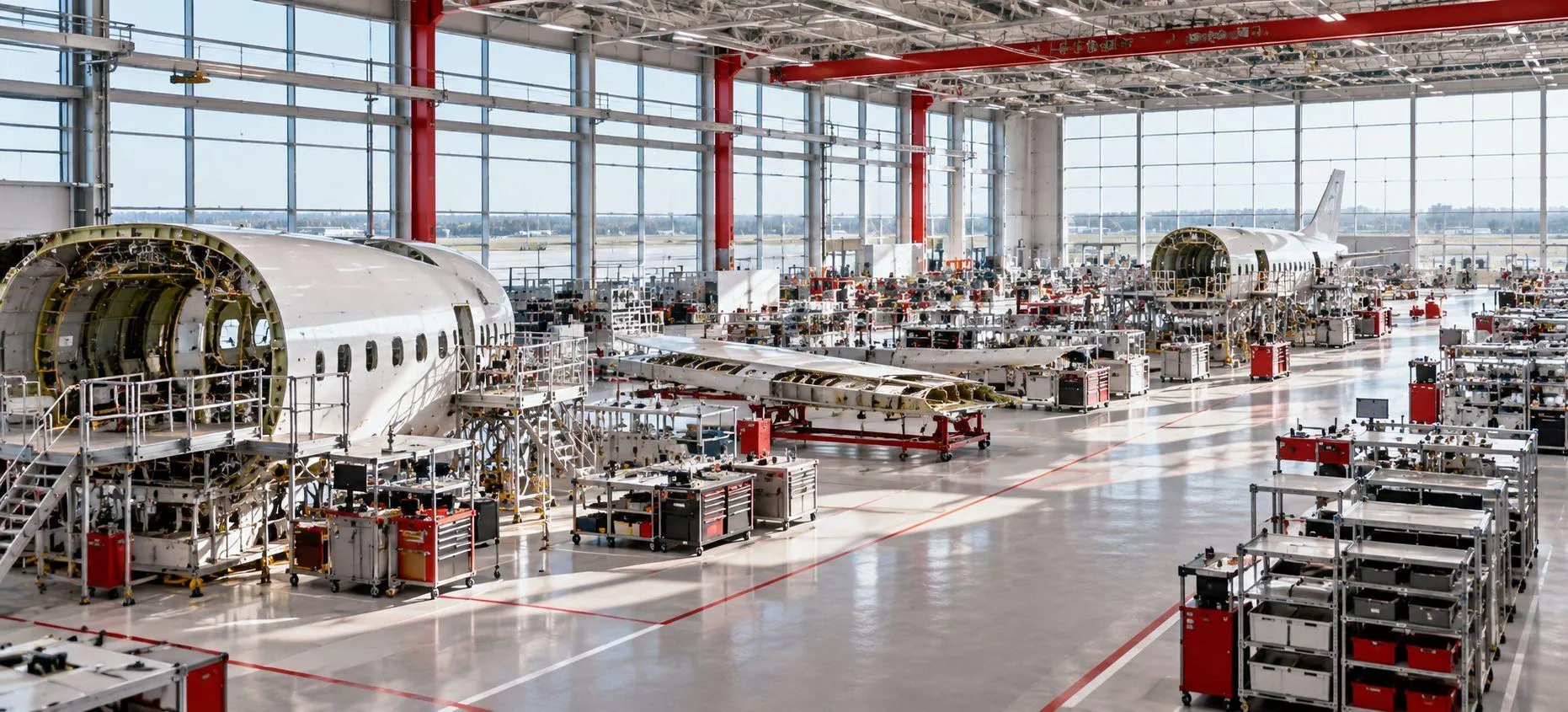
Where large quantities of materials, load carriers, or equipment are moved, a lack of transparency, search times, inventory issues, and process risks are creating a growing need for action. At the same time, a shortage of skilled workers, automation, and the desire for more resilient supply chains are driving up demand.
This is changing the role of localization.
It can begin with a single RFID event. This generates a process status. Multiple status updates create transparency. And integration with ERP and production systems can lead to automated workflows.
This is precisely the central message of the discussion with KATHREIN Solutions: Industrial localization becomes particularly valuable when it not only makes locations visible but also triggers processes.
RAIN RFID, BLE, Bluetooth Channel Sounding, and UWB are therefore not competing solutions to the same problem. They provide different types of information for different requirements.
Their intelligent combination paves the way from simple track-and-trace to automated process control.