
- Metal surfaces significantly affect RFID antenna tuning, signal propagation, and tag performance.
- On-metal RFID tag design requires balancing size, read range, environmental resistance, and cost according to the application.
- Field validation on the actual asset is critical for ensuring reliable RFID performance in real-world conditions.
- Combining RFID with optical codes and digital links enhances data accessibility and lifecycle management of metal assets.
From ultra-thin labels to rugged hard tags: Global Tag explains why reliable identification on metal starts with the real asset, not the datasheet.
Metal is not simply another mounting surface for RFID. It can change antenna behaviour, influence signal propagation and turn an apparently suitable tag into an unreliable one.
This applies across RFID technologies, although the physical effects differ. LF and HF/NFC use inductive coupling at short range, while UHF enables longer-range, automated identification through backscatter communication. Each frequency therefore needs an on-metal design that matches its reading principle and application.
But frequency is only the beginning.
For Global Tag, the decisive question is always practical: What must happen in the process? How far away must the tag be read? What does the asset look like? Where is the tag mounted? And what will it face over its lifetime?
In this interview, Fabio Mazzola, CEO of Global Tag, explains how on-metal RFID evolves from a technical promise into a reliable industrial solution.
“There is no universally better on-metal tag”
What are the most important trade-offs in on-metal RFID tag design?
Fabio Mazzola: An on-metal tag is always the result of a balance between several design parameters.
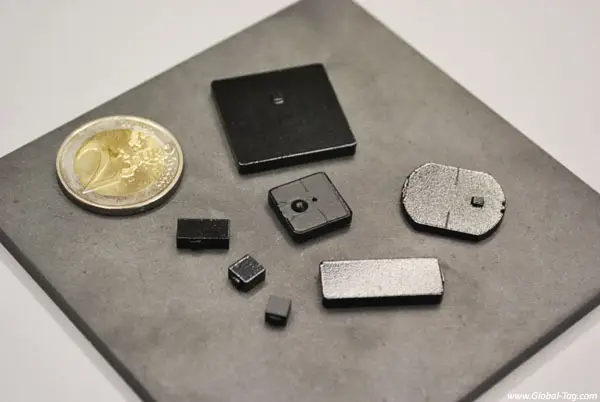
In general, a larger antenna and a greater tag thickness can support better performance and longer read distances. But that is not always compatible with the application. Available space may be limited, the tag may need to be mounted discreetly or the asset may require a very compact format.
Reducing the antenna size or tag thickness can mean accepting compromises in read range, orientation tolerance or performance stability. On the other hand, a tag designed for maximum distance normally needs more space and a more complex structure, which also affects cost.
There is no universally better solution. The right choice depends on the required read distance, the available mounting area, environmental conditions, installation method and project budget.
The asset itself can change the result
How strongly do metal type, geometry and mounting position affect performance?
Fabio Mazzola: Their impact can be very significant.
Flat metal surfaces usually provide the most predictable conditions. But industrial assets are often curved, perforated, ribbed, recessed or positioned near other metallic objects. Edges, cavities, grids and complex geometries can all influence antenna tuning and signal propagation.
Even moving a tag by a few centimetres can create a noticeable difference in read distance.
That is why we recommend testing directly on the customer’s actual asset. A datasheet is an important starting point, but it cannot fully reflect the final mounting position, the geometry of the object or the surrounding environment.
Thin label or hard tag? The environment decides
Where are the practical limits of ultra-thin on-metal labels compared with rugged tags?
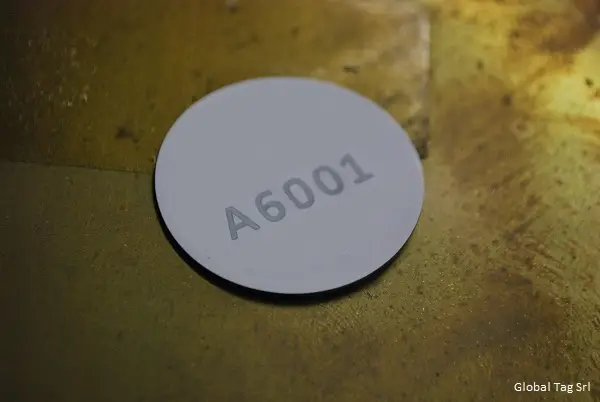
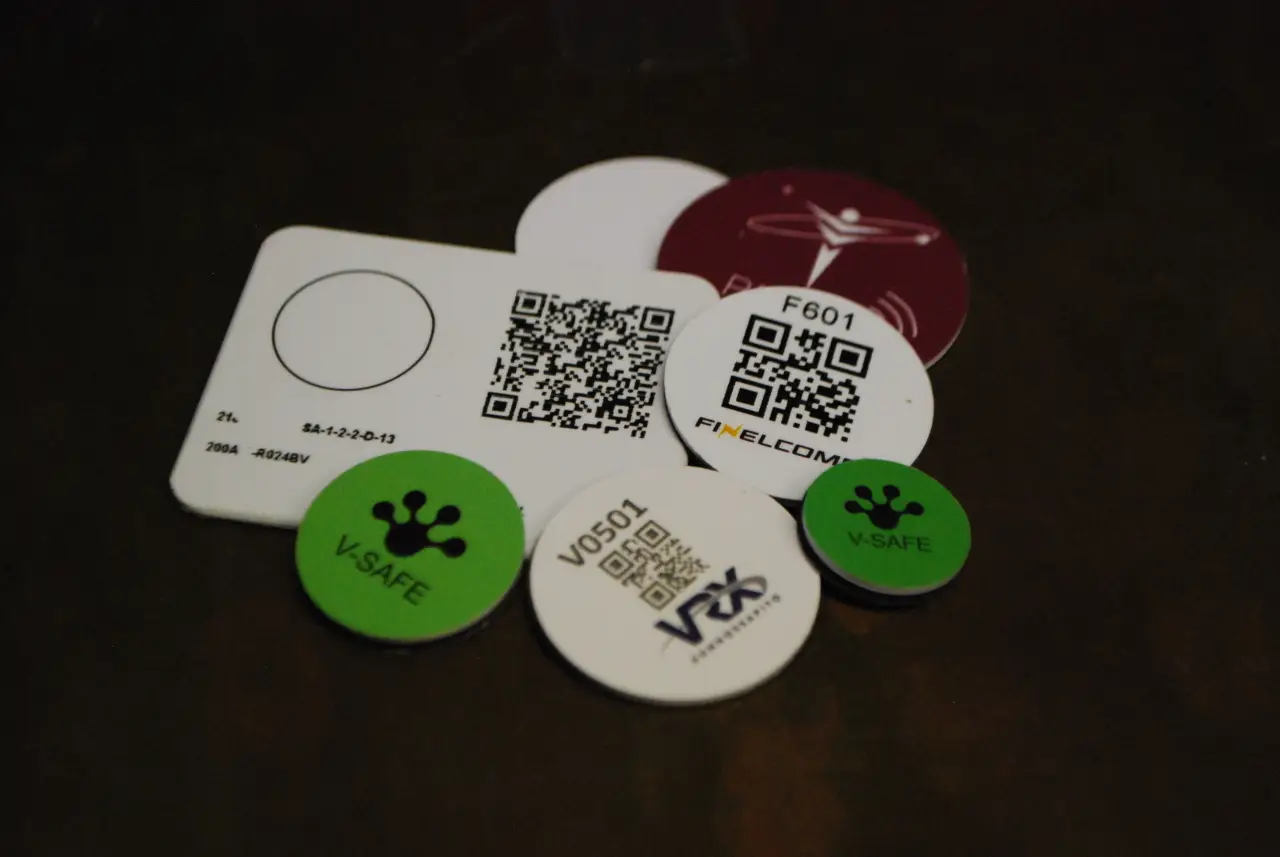
Fabio Mazzola: Ultra-thin on-metal RFID labels are very effective for many identification and traceability applications. They offer advantages in terms of cost, low profile, easy application and customization.
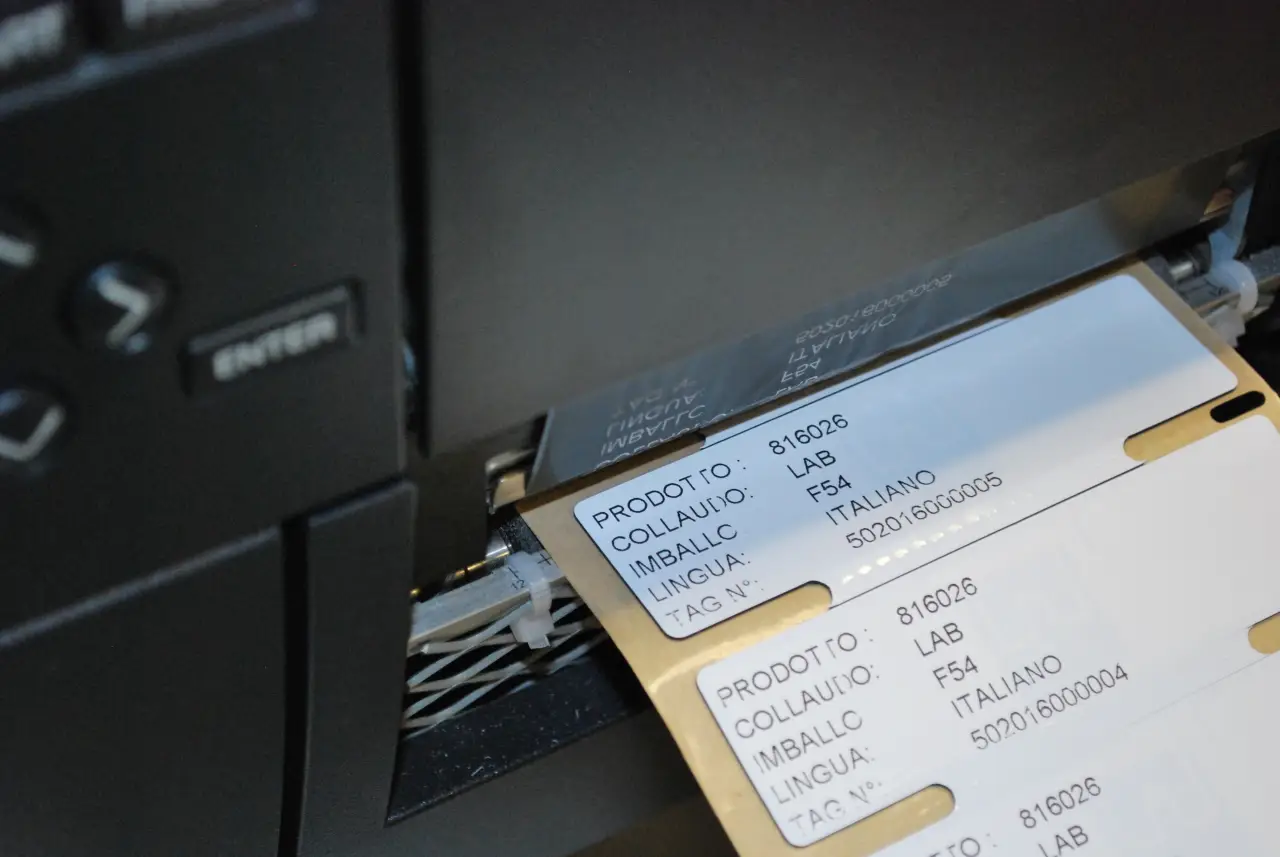
They can be supplied in different materials, sizes and configurations, with permanent laser marking, QR Codes, DataMatrix codes, barcodes, serial numbers, logos and RFID chip pre-encoding.
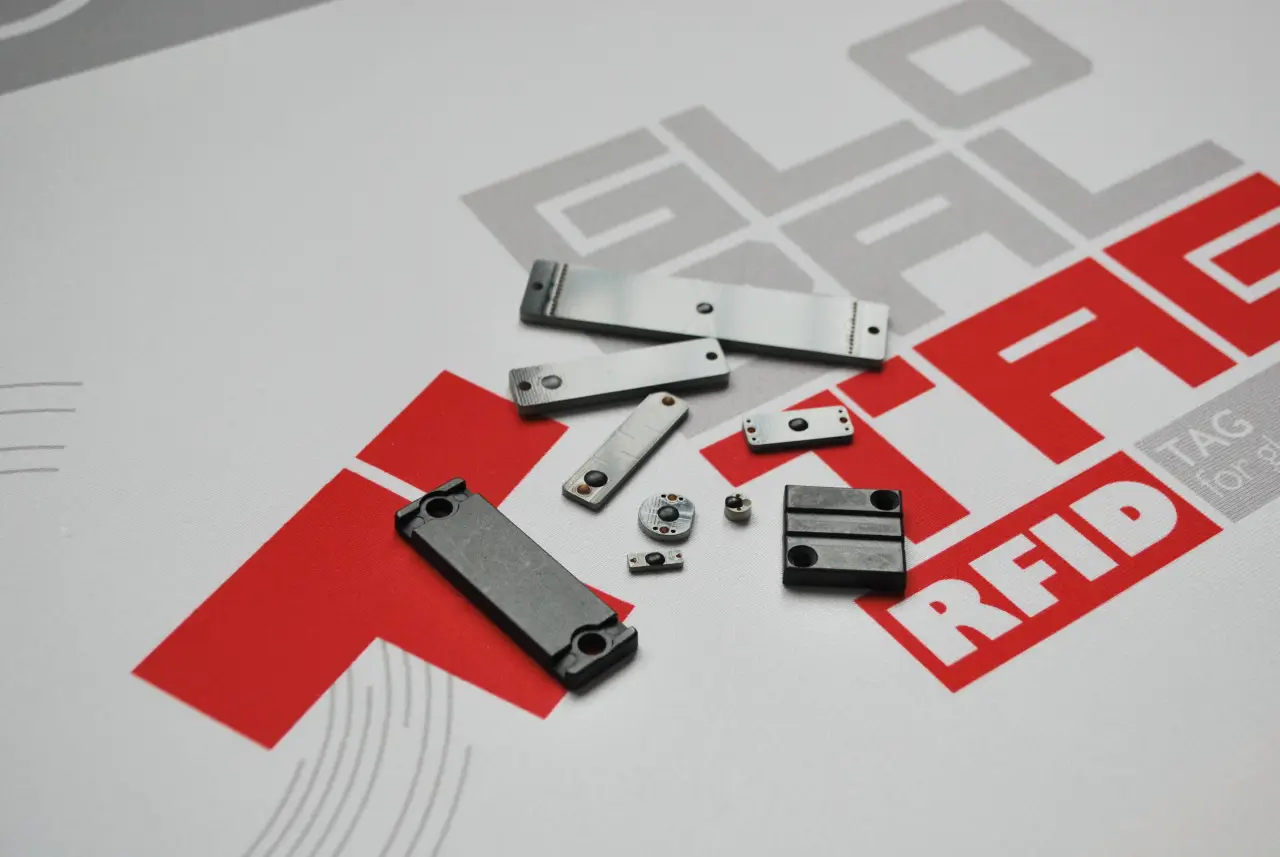
However, rugged tags are the stronger solution in demanding environments. If the tag is exposed to impacts, abrasion, aggressive chemicals, extreme temperatures, pressure washing or long operating cycles, a rigid construction can offer higher protection and greater reliability.
The decision should be based on actual operating conditions and the expected lifetime of the application. A thin label may be exactly right for a protected asset with limited mounting space. A rugged tag may be essential for a reusable tool, industrial container or outdoor component.
Related Hardware


More than an ID: choosing the right chip and memory
What role do chip selection, EPC memory, User Memory and TID play in demanding industrial applications?
Fabio Mazzola: Chip selection is often underestimated, but it can have a significant effect on the overall RFID solution.
Different chips offer different levels of sensitivity, memory capacity, processing speed and security features. EPC memory is normally used to store the unique identifier of an asset and connect it with the company’s management systems.
User Memory can be useful when additional operational information needs to be stored directly on the tag. The TID, which is linked to the chip itself, can support authentication and anti-counterfeiting applications.
For many UHF projects, chips with 128-bit EPC memory are now the most common choice. They are widely available, cost-effective and suitable for a broad range of industrial applications. But when a project requires special data, security or authentication functions, chip selection becomes an important part of the design decision.
When metal surrounds the tag
What happens in metal-dense environments such as stacked containers, tool cabinets, server racks or production lines?
Fabio Mazzola: These are among the most complex situations for RFID systems.
Multiple reflections, shielding effects and changing tag orientation can all affect readability. A tag may be close to another metal surface, partially covered by a neighbouring asset or placed in a position where the signal path changes during normal operation.
In these environments, the goal is not simply to achieve the longest possible read range. The goal is to maintain consistent and repeatable performance.
Tag design plays an important role here. Antenna construction, chip sensitivity and the tag’s ability to isolate itself from the metal surface all influence reliability. But reader placement, antenna positioning, read zones and the operational workflow also need to be considered.
Reliable RFID in a metal-rich environment is always a system task, not only a tag task.
Related Hardware

A datasheet starts the process. Field validation finishes it.
How should companies qualify an on-metal RFID tag before deployment?
Fabio Mazzola: Datasheets and development test results provide valuable guidance. They help identify suitable tag options and compare technical specifications.
But for on-metal applications, field validation is always essential.
Real operating conditions can differ considerably from laboratory conditions. Metal geometry, mounting restrictions, environmental exposure and nearby objects can all influence the result. For this reason, we recommend testing selected samples directly on the customer’s own assets and in the intended operating environment.
This allows companies to verify actual reading performance, optimize the mounting position and identify potential improvements before large-scale implementation begins.
Why a strong pilot phase prevents rollout problems
What typically causes difficulties when an RFID project moves from pilot phase to full deployment?
Fabio Mazzola: When the pilot phase has been carried out correctly under real conditions, tag-related problems are generally limited.
Customers should test samples directly on their own assets, with their own reader setup and in their own operating environment. This validates the solution early and makes the results more predictable when the project scales.
Repeatability is essential. When a tag has been properly designed and qualified, the performance observed during the test phase should also be reproducible in future deliveries.
It is also advisable to build in an operating margin. If a process requires a read distance of five metres, a solution that performs above that threshold can provide greater reliability when normal variations occur in orientation, installation or the environment.
A well-executed pilot is therefore the strongest basis for a smooth transition to large-scale deployment.
One tag, several routes to product data
How can on-metal RFID tags be combined with QR Codes, DataMatrix, NFC or GS1 Digital Link?
Fabio Mazzola: On-metal RFID tags can combine several identification technologies on the same physical support.
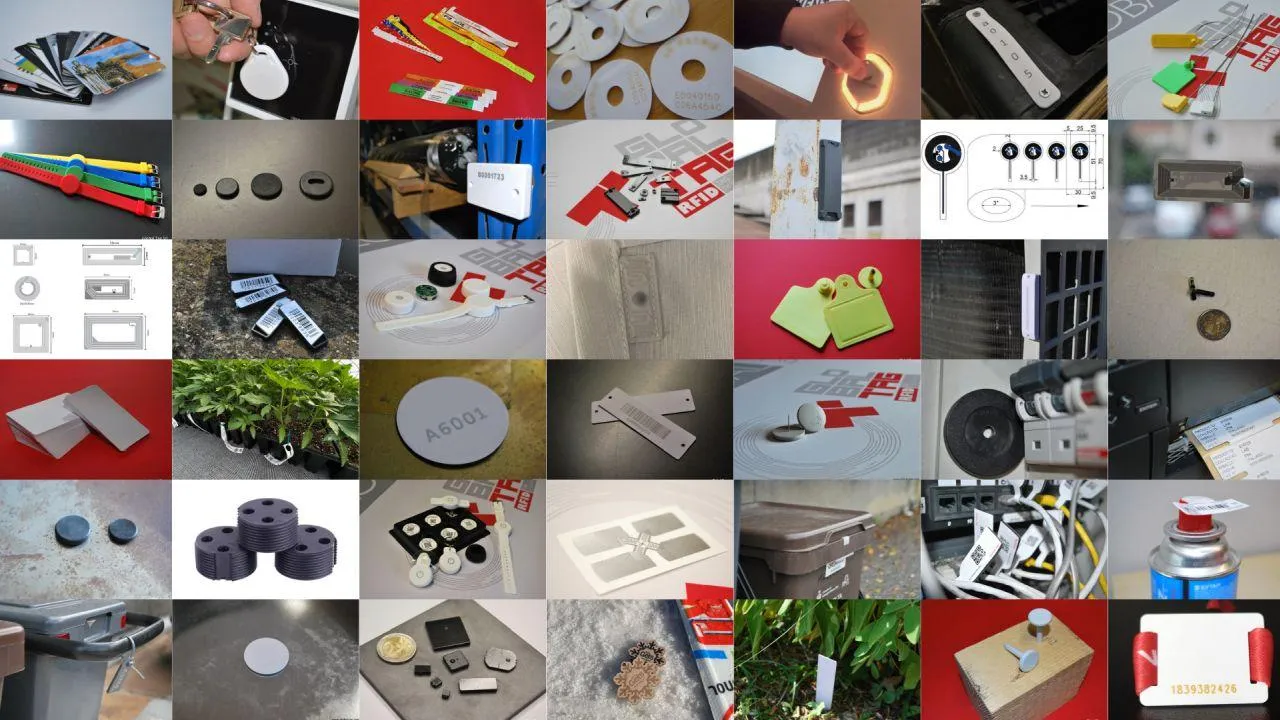
RFID enables automatic and contactless reading. QR Codes and DataMatrix codes provide optical access through smartphones or scanners. In some cases, dual-frequency tags can also combine UHF RFID and NFC in a single device.
This can be highly useful in industrial applications. UHF can support automated identification and inventory processes, while NFC enables a technician to access data directly with a smartphone or tablet.
The same tag can therefore link an asset to maintenance information, technical documentation, certificates, inspection data, authentication functions or Digital Product Passport content. A QR Code or DataMatrix code can also connect to a GS1 Digital Link, providing a further route to the same product-related information.
The tag becomes more than a carrier of an ID. It becomes a practical access point to the asset’s digital lifecycle.
Extending RFID lifecycle value to metal assets
What role do on-metal tags play in lifecycle management, traceability and the Digital Product Passport?
Fabio Mazzola: The key point is that these benefits come from RFID technology as a whole. On-metal tags make it possible to bring the same benefits to metal products and assets where conventional RFID tags would not work reliably.
A unique identifier can connect an asset with the information generated throughout its lifecycle: production, logistics, installation, maintenance, inspections, updates, repairs and end of life.
For the Digital Product Passport, RFID is one possible way to identify the product and access technical documentation, certifications, compliance data, maintenance history and information relevant to reuse or recycling.
On-metal RFID extends this lifecycle logic to many high-value industrial assets, including machinery, tools, reusable transport items, IT equipment and infrastructure components.
Mature technology, growing opportunity
What developments do you expect in on-metal RFID solutions?
Fabio Mazzola: RFID is a mature technology. High levels of reliability, miniaturization and performance have already been achieved, so we expect progressive improvement rather than radical change in the short term.
One important development will likely be continued cost reduction. As RFID is adopted in more sectors and production volumes increase, economies of scale can make reliable on-metal solutions more accessible.
This will help expand RFID into new applications where it may previously have been considered too specialised or too expensive. The combination of proven technology, increasing standardization and a stronger cost-benefit ratio will continue to drive adoption.
The practical lesson
Reliable RFID on metal is not achieved by simply choosing a tag labelled “on-metal.”
It comes from matching the tag design to the asset, the frequency to the process, the mounting method to the environment and the expected performance to real operating conditions.
Global Tag’s approach is clear: understand the application, test on the actual asset and build in sufficient performance margin before deployment.
That is how metal stops being an RFID obstacle and becomes a reliably identifiable part of the industrial process.