Video Profile
From Searching for Medical Equipment to Smarter Hospital Operations
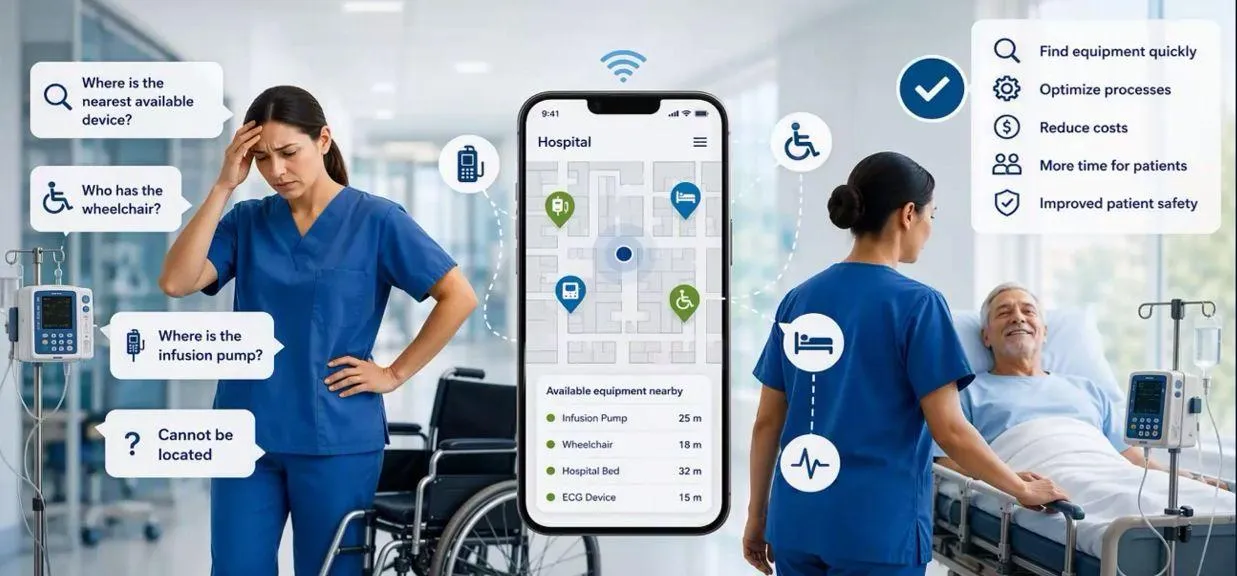
Where is the nearest available infusion pump? Which hospital beds or wheelchairs are ready for use? And how can healthcare staff locate essential equipment without wasting valuable time?
Hospitals depend on thousands of medical devices, instruments and consumables. Yet locating equipment, checking availability and coordinating maintenance remain major operational challenges. Time spent searching for equipment is time that healthcare professionals cannot devote to patient care.
In his presentation, Daniel Büth, Head of Sales IDENTIFICATION at FEIG ELECTRONIC, demonstrates how RFID-based location intelligence improves equipment visibility, reduces administrative work and supports increasingly automated hospital processes.
From RFID Identification to Digital Location Intelligence
RFID enables hospitals to automatically identify and locate tagged medical equipment across monitored areas.
Büth explains how RFID tags, readers, antennas and a central software platform work together to create an up-to-date overview of hospital assets. Medical devices, beds and wheelchairs carry RFID tags, while installed readers capture identification and location events.
An RFID hub processes the collected data and makes it available to hospital applications. This allows staff to determine where equipment is located, whether it is available and which devices require attention.
The goal is not simply to identify equipment but to transform RFID data into actionable information for daily hospital operations.
Tracking 25,000 Medical Devices with RFID
The presentation illustrates a large-scale hospital RFID infrastructure with the following specifications:
Permanently installed RFID reading points capture tagged equipment movements across monitored hospital areas. This reduces dependence on manual location updates and provides reliable information for asset management.
Four RFID Applications That Improve Hospital Efficiency
Büth highlights four operational workflows:
Equipment search: Locate urgently needed medical devices, including endoscopes, ultrasound systems, dialysis machines and hospital beds, by room or zone.
Inventory management: Automatically identify and count tagged assets, reducing manual inventory checks and improving visibility into equipment availability.
Maintenance management: Identify equipment requiring service and locate the relevant devices to support more efficient maintenance workflows.
Equipment pooling and analysis: Analyze asset distribution and movements to improve equipment utilization, investment planning and cost accounting.
Together, these applications help hospitals reduce search times, improve resource allocation and make better use of existing medical equipment.
Beyond Asset Tracking: RFID Across Healthcare
RFID also supports other identification and traceability processes, including blood bag tracking, treatment documentation, sterilization monitoring, laboratory operations and visitor information systems.
By linking physical objects to digital records, hospitals can automate documentation, improve process transparency and reduce the risk of identification errors.
Less Time Searching, More Time Caring
The benefits of hospital RFID extend beyond inventory accuracy. Automated asset identification and location monitoring help reduce administrative effort, avoid unnecessary equipment purchases and improve the availability of medical resources.
Watch Daniel Büth's presentation to discover how FEIG ELECTRONIC uses RFID and digital location intelligence to make hospital operations more efficient, transparent and reliable.