Profile
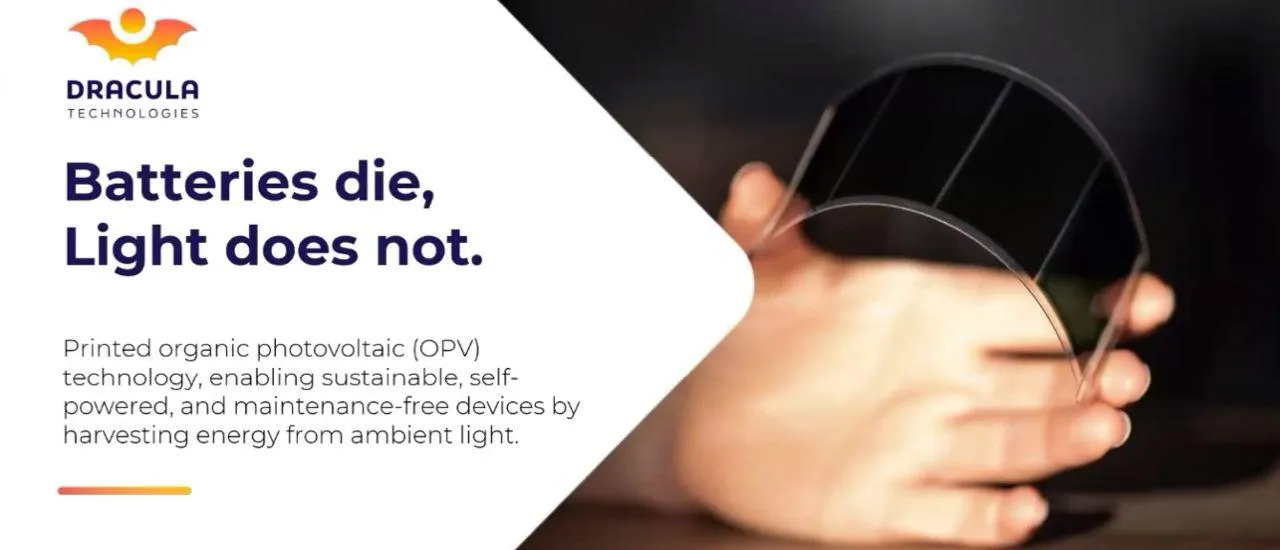
As smart labels and connected sensors become more capable, power supply becomes a central design question. Conventional batteries add size, cost, replacement effort and waste. In this Think WIOT livestream lecture, Alain Jutant, VP Sales at Dracula Technologies, explains how organic photovoltaic (OPV) energy harvesting can power smart labels and IoT devices from ambient indoor light.
The session explores how low-light OPV modules can replace or extend batteries in applications where light conditions, energy storage, chip selection and transmission intervals are carefully aligned. Rather than treating energy harvesting as a standalone component, Alain Jutant shows why a battery-free design must be considered as a complete system: from the available light profile and photovoltaic surface to the energy buffer, wireless protocol and communication frequency.
A key focus is the potential of OPV for indoor and low-light environments. Flexible, ultra-thin photovoltaic modules can be integrated into products, labels and connected assets where rigid solar panels or conventional batteries are impractical. The lecture highlights free-shape, thin and flexible OPV formats designed for seamless integration into smart labels, packaging and compact IoT devices.
The presentation also looks at active and connected smart-label applications. These include BLE asset tracking in hospitals, electronic shelf labels, temperature and cold-chain monitoring, smart packaging, vending-machine inventory, retail, smart-building devices and logistics.
Battery-free or battery-assisted energy harvesting can support richer real-time information, more frequent status updates and new forms of asset visibility without relying solely on disposable power sources.
Another theme is sustainability and durability. OPV technology can help reduce dependence on disposable batteries while enabling energy-autonomous devices with long operational lifetimes. Alain Jutant also discusses the role of recyclable materials, low-impact energy generation and flexible production formats in designing connected products for a more resource-efficient IoT.
The lecture provides practical guidance for anyone evaluating energy harvesting for BLE, RFID or low-power connected devices. It outlines the design limits that need to be considered and shows which applications become feasible when energy availability, storage capacity and wireless communication are matched to the real operating environment.