- UWB excels in scenarios requiring high spatial resolution and reliable real-time positioning, such as distinguishing neighboring workstations and precise material tracking.
- Alternative technologies like 5G, Bluetooth, and RFID provide adequate location data in many use cases and can reduce infrastructure costs compared to UWB.
- Hybrid positioning architectures can optimize cost and performance by applying UWB selectively where high precision is necessary while using simpler technologies in less critical zones.
- Successful UWB deployment requires ongoing infrastructure adaptation, strong OT/IT integration, and filtering of raw data to deliver pertinent information to manufacturing systems.
Ultra-wideband is one of the strongest technologies for precise real-time location in manufacturing. It can distinguish nearby workstations, track mobile assets continuously and support time-critical process events.
That performance comes with additional effort. Industrial UWB systems usually require active tags, fixed anchor infrastructure, careful installation, integration with production IT and ongoing adaptation as layouts change.
The real question is therefore not whether UWB works, but where its precision creates enough process value to justify the added complexity and cost.
This matters even more as other technologies improve. 5G, Bluetooth, RFID, GNSS and hybrid architectures can also provide useful location data, sometimes with lower infrastructure or device costs. UWB is strongest where high spatial resolution, frequent updates and reliable real-time positioning are actually needed.
Where UWB Has a Clear Advantage
UWB becomes particularly relevant when a production process needs more than presence or zone information.
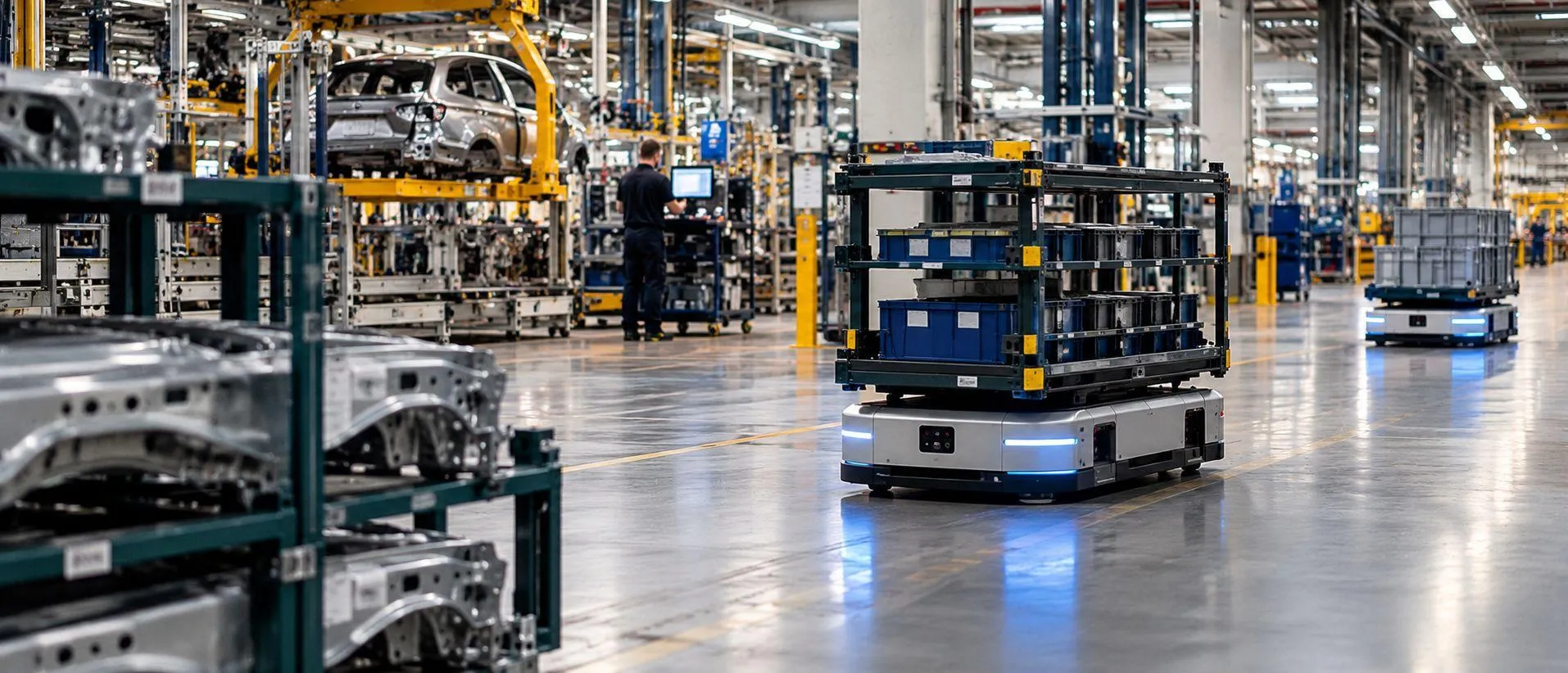
Examples include distinguishing neighboring assembly stations, locating tools at workplace level, following forklifts through production areas or detecting entry into tightly defined zones. In such cases, coarse location information may not be sufficient.
The required accuracy should therefore be defined from the process backwards. The key question is what decision depends on the position and how accurately that position must be known for the decision to be reliable.
The more important the distinction between nearby positions becomes, the stronger the case for UWB.

Precise Location Is Not Unique to UWB
The business value comes from reliable position data, not from one specific radio technology.
BMW’s work on 5G localization illustrates this. The company has evaluated positioning technologies including UWB, GPS and RFID within a common localization architecture. In tests, 5G achieved sub-meter accuracy in automotive production environments, depending on configuration and use case. UWB still provided higher precision, but 5G offers an interesting alternative where private cellular infrastructure already exists.
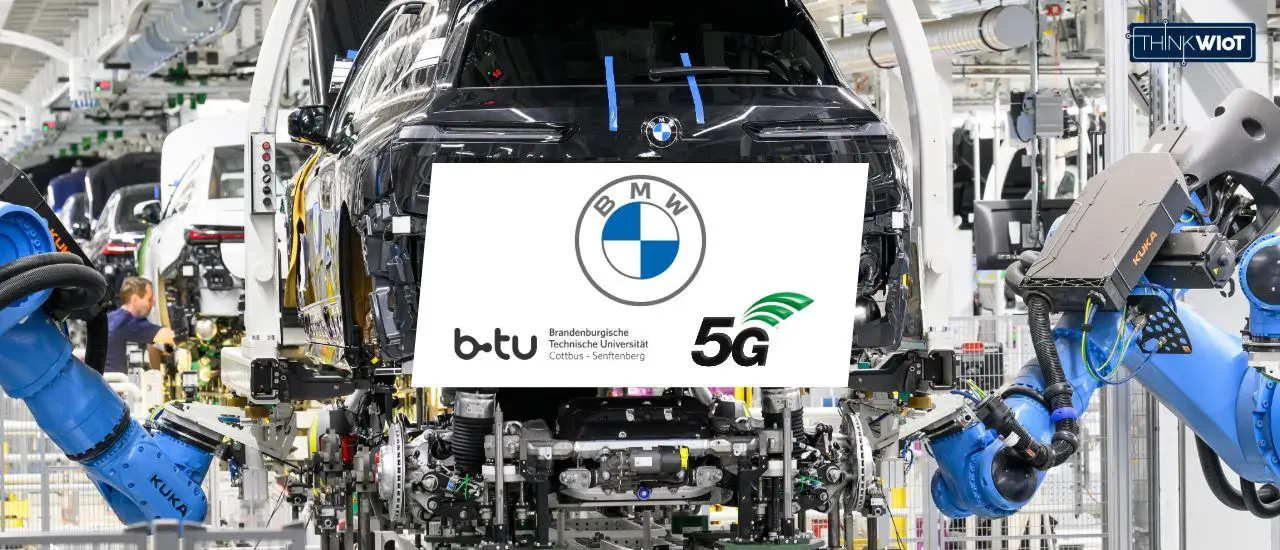

5G-Based Real-Time Location System in Automotive Production
5G-based real-time localisation can deliver sub‑meter performance in automotive production when integrated into a vendor‑independent platform, but practical deployment requires further hardware maturity and systems integration.
This changes the decision. UWB should not be selected simply because it is the most precise technology available. It should be selected when the process really benefits from that precision.
In other areas, Bluetooth, RFID, GNSS or 5G may be sufficient.
Accuracy Should Follow the Process
A factory rarely needs the same level of precision everywhere.
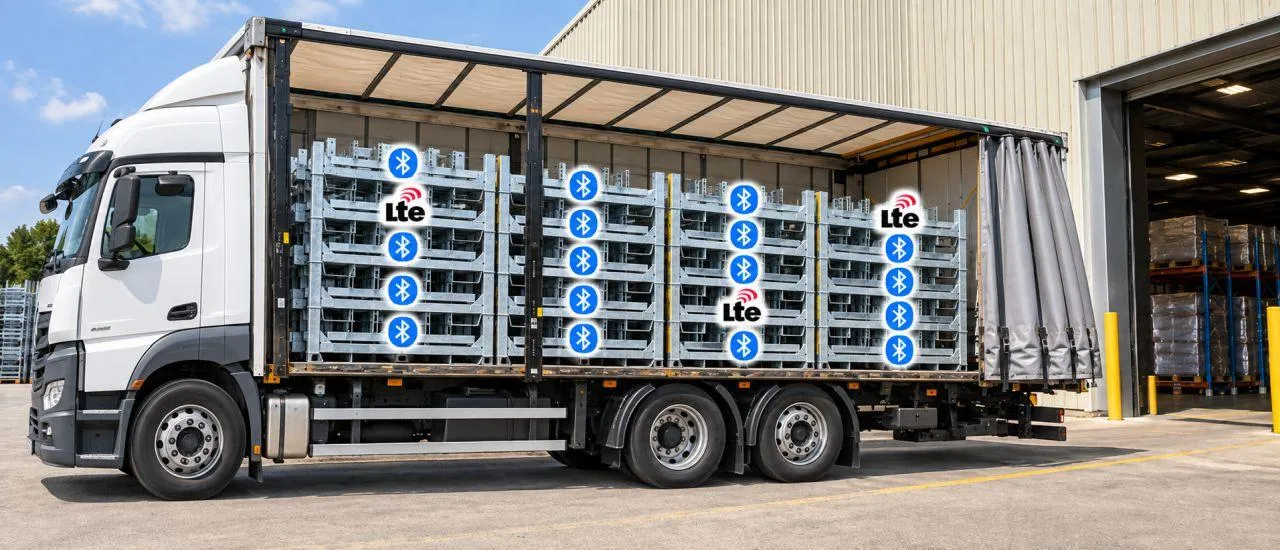
A load carrier may need precise positioning near an assembly line but only zone-level visibility in storage. A pallet passing through a controlled transition may only require an RFID read event. Outdoor vehicles can often be located with GNSS.
This makes hybrid architectures attractive.
High-precision UWB zones can be used where spatial resolution is critical, while simpler technologies cover other parts of the process. The source material already points to architectures that combine UWB with BLE, RFID or GPS.
The goal is not maximum accuracy across the whole factory. It is the right accuracy where it creates value.
Process Triggers Raise the Requirements
Location-based automation is one of the strongest cases for precise real-time positioning.
At the Munich plant of ASMPT, a global supplier of semiconductor and electronics manufacturing equipment and software, a UWB-based RTLS is used to track production orders and material movements. According to the published case study, manual bookings were reduced by 95 percent, production line stops fell by 60 percent, and material supply productivity increased by 2.5 percent.
This kind of application is demanding because the location data directly changes process status.
If a position only supports later analysis, an occasional inaccurate reading may be tolerable. If it automatically books a work order, releases material or triggers a warning, accuracy alone is not enough. Update rate, latency and reliability become equally important.
A positioning system used for process triggers must deliver the right position at the right time.
Scale Changes the Economics
SEG Automotive, a global supplier of powertrain and electrification components, tracked 600 metal pallets across approximately 2,000 square meters using 40 UWB anchors. The published case study reports eliminated picking errors and a 50 percent reduction in lead time.
This shows how valuable continuous visibility can be when assets are closely connected to production flow.
But scale also increases cost sensitivity. Large deployments multiply tag costs, battery maintenance, infrastructure and system capacity requirements.
That means scalability should not only be measured by the number of objects a system can locate. The more useful metric is the cost of providing the location information that the process actually needs.
For high-value work-in-progress or production-critical assets, UWB may be easy to justify. For very large populations of low-value objects, another architecture may be more economical.
Location Data Can Improve the Factory Itself
Not every benefit requires an immediate process trigger.
Marmon Foodservice Technologies, a manufacturer of commercial foodservice equipment and systems, used UWB-based movement data together with a digital twin to analyze production flows. According to the published case study, productivity increased by 15 percent, two production lines were consolidated and around 250 square meters of production space were freed for another use.
This type of data can expose unnecessary travel, waiting times, buffer congestion and inefficient layouts. It can also provide a valuable basis for advanced analytics or AI.
For such analytical applications, however, the requirements may differ from real-time automation. Maximum update frequency or centimeter-level precision may not always be necessary. The right balance depends on the question being analyzed.

Simon Chudoba: Driving Precision and Efficiency with UWB RTLS at Marmon Foodservice
Deploying Ultra-Wideband real-time locating systems provides the precise indoor tracking data necessary to materially improve operational efficiency, safety, and cost-effectiveness in industrial and foodservice environments.
Installation Is an Ongoing Factor
UWB infrastructure must be designed for the physical environment.
Machines, metal structures, vehicles and people can block or reflect radio signals. Tag orientation and mounting position can also affect performance. Production layouts change over time, so anchor geometry, coverage and zone definitions may need to be reviewed.
This makes localization part of change management.
A system should therefore be evaluated not only by its initial installation cost, but also by how easily it can be adapted when production lines, storage areas or material flows change.
That lifecycle effort can influence the economics as much as the original hardware.
The Backend Does Not Need Every Position
High-frequency RTLS can generate very large data volumes.
But ERP, MES or business applications rarely need every raw position update. In many cases, the relevant information is that an asset entered a zone, remained there for a defined period, changed state or violated a process rule.
This creates an important architectural option: location data can be filtered or aggregated at the OT or edge level before higher-level IT systems receive it.
Raw, high-frequency position data can remain close to the process, while only relevant events are forwarded to MES, ERP or cloud applications.
This reduces backend load without reducing the quality of the underlying localization.
Integration Can Be More Important Than the Radio
A technically successful RTLS does not automatically create value.
The system must associate tags with assets, define valid zones and process rules, handle missing or contradictory positions and connect location data with ERP, MES, WMS or safety applications. In production-critical projects, this OT/IT integration can require more effort than the radio installation itself.
This is also why open or technology-neutral location platforms are increasingly relevant. If applications consume standardized location information, manufacturers can use different positioning technologies for different process requirements instead of building every application around one radio system.
That reduces technology lock-in and makes future changes easier.
Where UWB Justifies the Effort
UWB is strongest where continuous, high-resolution location creates a measurable operational benefit.
This includes tightly spaced production zones, high-value mobile tools, work-in-progress, vehicle tracking, precise process triggers and detailed motion analysis. In these applications, the additional accuracy can directly improve automation, throughput or transparency.
But UWB can be over-engineered when the process only needs a gate event, room-level assignment or occasional location update. Passive UHF RFID, Bluetooth, GNSS, 5G or hybrid solutions may then offer a better cost-performance ratio.
The relevant comparison is therefore not which technology produces the smallest positioning error. Manufacturers need to weigh accuracy, update rate, latency and reliability against tag cost, infrastructure, lifecycle effort, scalability and backend requirements.
UWB remains one of the strongest technologies where precise real-time indoor positioning is genuinely required. Its value is highest when the process can make use of that precision.
Where it cannot, more precision simply means more system than the application needs.