
- The EU's Digital Product Passport Registry has been operational since July 2026 to uniquely register products with standardized metadata.
- European standards (EN 18219 to EN 18223) define unique identifiers, data carriers, data exchange, and interoperability crucial for the DPP infrastructure.
- The battery passport, mandatory from February 18, 2027, represents the first major real-world implementation of the DPP approach.
- Multiple identification schemes and data carriers, including QR codes, NFC, and UHF RFID, enable flexible product linking to digital information.
- International cooperation through ISO/IEC JTC 5 and CEN-CENELEC JTC 24 seeks harmonized DPP standards beyond Europe.
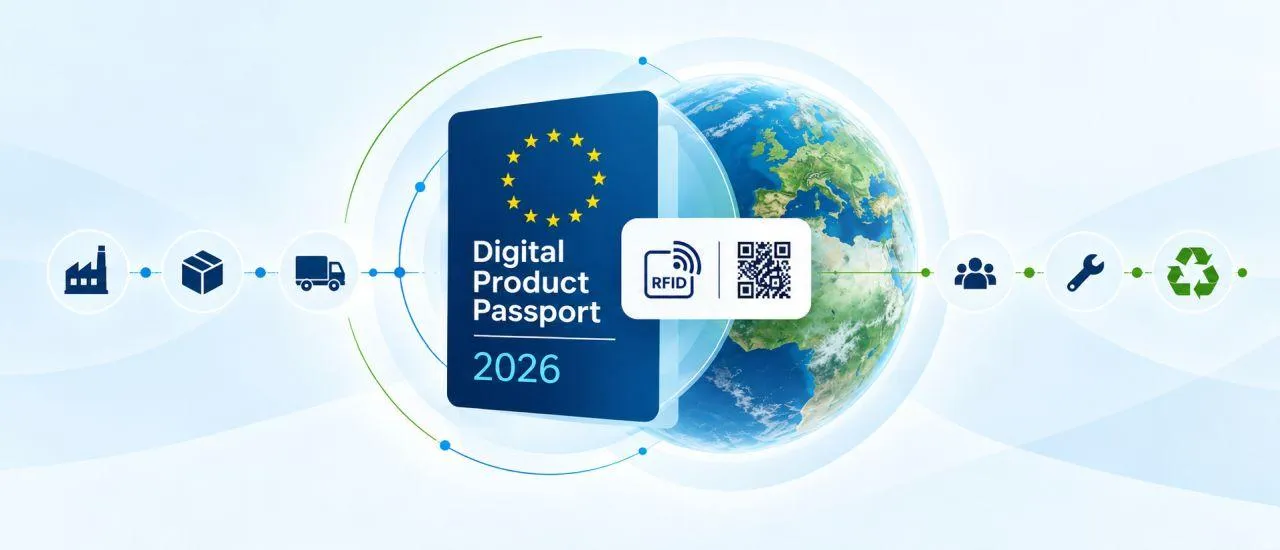
Things are taking shape with the Digital Product Passport: The EU’s DPP registry has been operational since July 2026, key European standards have been published, and international standardization is also gaining momentum. For the industry, the question of whether the DPP will be implemented is becoming less and less relevant. What’s more interesting is: What has already been established, what can be implemented technically, and what remains to be determined?
Guest article by Olaf Wilmsmeier, Wilmsmeier Solutions
The DPP Has Made Significant Progress in 2026
The Digital Product Passport (DPP) plays a central role in achieving the goals of the European Ecodesign Regulation, the Ecodesign for Sustainable Products Regulation (EU) 2024/1781.
The idea behind it is simple: products and raw materials should be used for as long as possible, reused, and ultimately recycled more effectively. To achieve this, information about a product must remain available throughout its life cycle.
For a long time, the DPP was discussed primarily as a future concept. Now, it is taking shape. On July 20, 2026, the European Commission launched the EU Digital Product Passport Registry—or DPP Registry—including a test environment. At the same time, important European standards were published.

And things are also moving forward internationally. In early September, experts gathered in Berlin for the first meeting of ISO/IEC JTC 5 “Digital Product Passport.”
Does this mean the DPP has been fully defined? No. Important specifications are still missing, particularly for certain product groups. But the technical direction is becoming much clearer.
More Than a QR Code Linking to a Product Website
A physical product—such as a battery, a piece of furniture, or perhaps, in the future, a textile—must be uniquely linked to its digital information. To this end, it is assigned a machine-readable identifier.
No, in the context of the DPP, this does not simply mean that a QR code links to some website of the manufacturer where a data sheet is available.
To enable different companies and systems to work together, standardized requirements must be met. These include unique identifiers, defined interfaces and data formats, rules for data storage, as well as access and security concepts.
After all, things quickly become complex here as well: An end customer needs different information than a recycling company. A manufacturer, in turn, may need access to data that is not intended to be public.
This is precisely why the DPP is much more than just a digital product page.
The EU's DPP Registry Is Operational
The EU’s new DPP Registry should not be confused with a central database in which all product information is stored.
The actual product data is generally provided decentrally. The register primarily records unique product identifiers and necessary metadata. This allows Digital Product Passports to be uniquely registered and assigned.
At first glance, this may sound like a technical detail. However, for a DPP infrastructure that functions across Europe, this unique assignment is crucial.
The Technical Standards Are Taking Shape
CEN, the European Committee for Standardization, and CENELEC, the European Committee for Electrotechnical Standardization, have established JTC 24, a joint technical committee for the standardization of the DPP infrastructure.
The standards developed there cover unique identifiers, data carriers, data exchange, data storage, APIs, and interoperability between systems.
These include:
EN 18219 – Unique identifiers
EN 18220 – Data carriers
EN 18216 – Data exchange protocols
EN 18221 – Data storage, archiving, and data persistence
EN 18222 – APIs for the management and discoverability of product passports
EN 18223 – System interoperability
In addition, there are standards for access rights, information security, and the authenticity and integrity of data.
This list alone makes it clear: The DPP is not just a label on the product. Behind it lies a complete data infrastructure.
Five Approaches to Unique Product Identification
The unique identification of a physical product is an essential prerequisite for the Digital Product Passport. Only then can product information be reliably assigned throughout the entire lifecycle and exchanged between manufacturers, users, service providers, and recycling facilities.
EN 18219 defines five different ID schemes for this purpose, with a total of eight variants. They differ in how a product identifier is structured, managed, and linked to the associated digital information. A company is therefore not necessarily limited to a single identification system.
The following table shows the five permitted ID schemes and the corresponding standards.
ID Scheme | Explained Simply | Variants / Standard |
|---|---|---|
1. Web-based product identifier | The product ID is embedded in a standardized web address. This address can be used to locate the digital information. | GS1 Digital Link; AutoID URL 1.3 |
2. Identification Link | A unique object identifier is linked to the product’s digital information via a standardized link. | EN IEC 61406-1; EN IEC 61406-2 |
3. Decentralized Identifier | The product identifier can be managed decentrally and is not necessarily tied to a central registry. | DID v1.0:2022 |
4. RFID- or 2D-Based Identification | The product identifier is encoded according to ISO/IEC standards for RFID or 2D codes (QR code, DataMatrix). | RFID: ISO/IEC 15961, 15962, 17360, 20248; 2D: ISO/IEC 17360, 20248, 15434 |
5. Digital Object Identifier | The product is assigned a permanent digital identifier from the DOI system. | ISO 26324 |
The five schemes thus share the same goal: to uniquely identify a physical product and link it to its digital information.
Only in the next step does the question arise as to how this identifier is applied to the product and read. Options for this include, for example, QR codes, NFC, or UHF RFID (also known as RAIN RFID).
QR Codes, NFC and UHF RFID: Making the DPP Accessible
Once the identity is defined, the next question arises: How does it get onto the product, and how is it read?
This is where EN 18220 comes into play regarding data carriers. Possible options include QR and DataMatrix codes, HF RFID or NFC, and UHF RFID—often referred to as RAIN RFID.
A 2D code is inexpensive and simple. It can be printed and read with a smartphone or scanner. For the end customer, this is likely the most obvious option in many cases. However, visual contact with the code is required.
With NFC, it’s enough to bring a smartphone or reader close to the tag. Here, too, operation is very simple for the user.
From an industrial perspective, UHF RFID—or RAIN RFID—is particularly interesting. The identifier is read via radio waves. A line of sight is not necessary, and dirt or minor surface damage have a much smaller impact than with optical labels.
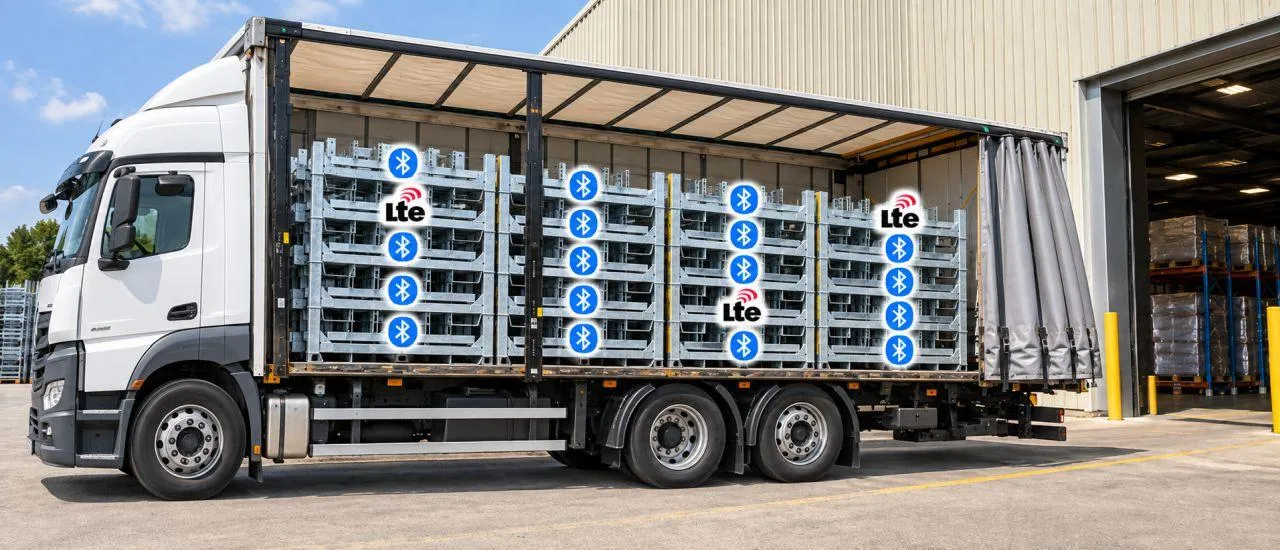
Even more important, however, is batch scanning. With UHF RFID, multiple tagged products can be scanned simultaneously and over greater distances.
Why is this of interest to the DPP?
Consider, for example, an automated recycling facility. No one there wants to turn each item individually, search for a QR code, and then scan it. UHF RFID can automatically capture product identifiers and thereby trigger access to the associated information.
For some products, this technology is already well established—car tires, for example.
Also of interest in this context is the new Lookup Service from the AIM Association at item-id.org. For example, if a product identifier conforming to ISO/IEC 15459 is read via UHF RFID or RAIN RFID, the next step is to find the path to the corresponding digital information. This is exactly where the Lookup Service comes in: Based on the identifier, it determines which issuing authority issued it, assigns it to the corresponding company, and can direct users to the relevant information or resolver service.
The service is not limited to RFID. The same identifier can also be read via a 2D code, for example. With RAIN RFID, the particular advantage is that such identifiers can be captured automatically and even in large quantities. For DPP applications, the automatic identification of a physical product can thus immediately provide access to its digital information.
Of course, technologies can also be combined. For example, a product can carry a 2D code for the end customer and, in addition, a RAIN RFID transponder for automated processes.
The DPP Can Evolve Throughout the Product Lifecycle
Initially, identification and data storage merely provide access. What becomes interesting is what information is added over the course of the product’s life.
In the case of a battery, for example, it may be interesting to know how often it has been charged and discharged or under what conditions it was operated. Such data can be crucial later on when assessing whether a battery or individual cells can be reused.
However, this brings us to the next challenge.
If several independent companies are to read, supplement, and process data over the course of years, a functioning interface alone is not enough. The data itself must also be clearly defined.
A number alone is of little use if the recipient does not know in which unit it was specified, under what conditions it was generated, or what exactly it describes. Ideally, therefore, metadata is transmitted along with the data.
The Battery Passport Becomes the First Major Practical Test
Things are now getting concrete when it comes to batteries.
According to the European Battery Regulation (EU) 2023/1542, starting February 18, 2027, every LMT battery (batteries for Light Means of Transport, e.g., for e-bikes and e-scooters), every industrial battery with a capacity of more than 2 kWh, and every electric vehicle battery will require a battery passport.
The EU Battery Regulation initially mandates the use of a QR code as the mandatory means of access to the battery passport. Starting February 18, 2027, the QR code must be linked to the individual identifier for the batteries in question and lead to the battery passport. However, this does not fundamentally rule out other technologies: The regulation expressly provides for the future authorization of alternative or additional smart labels. This makes the battery passport the first major practical test for the DPP infrastructure.
For batteries, the information that must be included is now described in relatively precise terms. In my opinion, however, some of the EU’s requirements are still not precise enough.
Especially when different companies are expected to exchange data automatically, interfaces, data structures, and the meaning of individual data fields must be unambiguous. It remains to be seen whether this will work smoothly in practice across the board.
Important Details Are Still Missing for Other Industries
We’re not quite there yet for other product groups.
For textiles, furniture, or steel, some product-specific guidelines are missing that clarify which data will actually be part of the DPP and when the obligations take effect.
However, that doesn’t mean companies can’t do anything today. The technical foundation is becoming increasingly clear. It’s already possible—and advisable—to start thinking about identification, data carriers, data structures, and system architecture.
What is not yet in place is the final implementation of all requirements for every product group. Decisions from the EU are simply still pending on this matter.
International Standardization Beyond Europe
Outside of Europe, too, there is now intensive discussion about Digital Product Passports and comparable systems.
European standardization efforts are therefore being integrated with international standardization. CEN-CENELEC JTC 24 and ISO/IEC JTC 5 are to work closely together to ensure that the technical foundations developed in Europe are also incorporated into the international discussion.
These bodies bring together representatives of national standards organizations from various economic regions, including DIN for Germany, ANSI for the U.S., SAC for China, JISC for Japan, and Standards Australia.
This is important. After all, it would be unattractive for a manufacturer to have to maintain different and technically incompatible product specifications for the same product in Europe, China, the U.S., or other markets.
Ideally, this will lead to compatible structures that function well beyond Europe.
Will this succeed? Here, too, practice will show to what extent the various requirements can actually be harmonized.
Now the DPP Needs to Be Put into Practice
By 2026, important foundations will have been laid. The EU’s DPP registry is operational, key technical standards have been published, and with the battery passport, the first major mandatory application is on the horizon.
This makes it increasingly clear how the technical infrastructure can function.
In my view, however, it would be short-sighted to view the DPP exclusively as a new regulatory requirement.
Today, product information is exchanged via databases, documents, various interfaces, and, in some cases, still on paper. If the DPP helps make this information more uniform and available throughout the entire product lifecycle in the future, it will create real added value.
Ideally, there will eventually be a Digital Product Passport for each product that can be understood and used across systems, industries, and national borders.
That’s a challenging goal. But that’s precisely where the opportunity for the DPP lies.