

Understanding DPP: The Digital Product Passport and the Things Frontend
The Digital Product Passport integrates physical products with decentralized, structured digital data through interoperable identification and wireless technologies to enable sustainability and regulatory compliance in Europe.
- Published: July 13, 2026
- By: Anja Van Bocxlaer
- Read: 7 min
- The DPP links physical products to structured digital data about sustainability, lifecycle, and provenance under EU regulations.
- QR codes, RFID, and NFC technologies support product identification and data access at the 'things frontend.'
- Mandatory DPP requirements begin with batteries by February 2027, with textiles and other sectors planned later.
- Effective DPP implementation requires integrated systems for identifiers, data management, access control, and lifecycle updates.
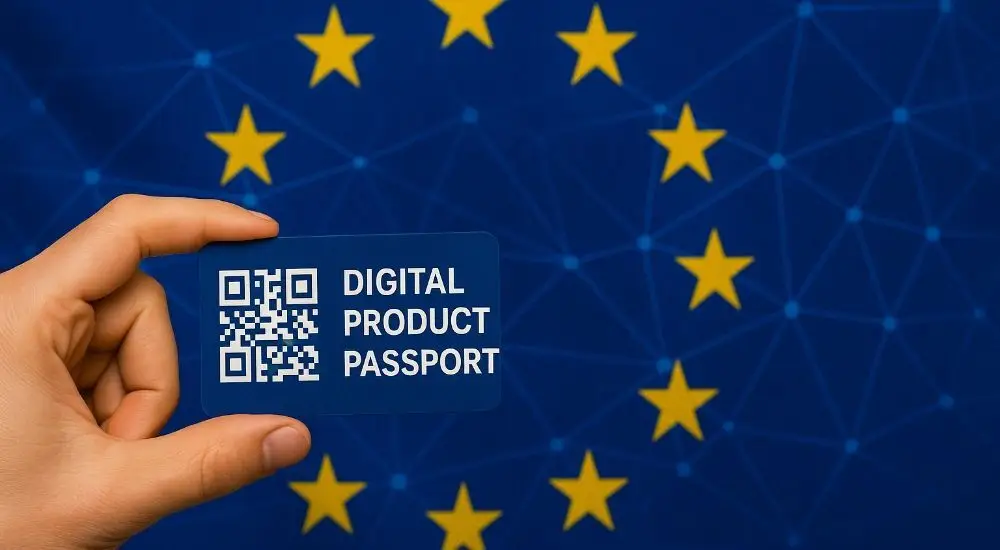
The Digital Product Passport, or DPP, is one of the most important regulatory and data architecture topics for product industries in Europe. It links a physical product to structured digital information about origin, materials, sustainability, durability, repair, reuse and recycling.
Under the EU Ecodesign for Sustainable Products Regulation, the DPP is designed to store and share relevant data about a product’s sustainability, durability and other environmental aspects with consumers, businesses and public authorities. The European Commission provides official DPP information through its ESPR and Digital Product Passport pages, including the DPP Registry and sector-specific pages such as batteries and textiles.
The DPP Is Not Just a Label
The Digital Product Passport is often associated with a visible QR code on a product. That is understandable: QR codes are inexpensive, visible and readable with smartphones. They are likely to play a major role in consumer-facing DPP access, especially where manual scanning is acceptable.
But the DPP is not only a printed code. It is a structured data system. The carrier on the product points to information that may sit in manufacturer systems, industry platforms, registries or DPP service-provider infrastructures. The European Commission describes the DPP Registry as a central indexing service that links a product’s unique identifier to its DPP, while the full product data remains decentralised under the responsibility of the relevant economic operator.
That distinction is important. The physical carrier provides access. The passport itself depends on reliable identifiers, data quality, lifecycle updates, access rights, interoperability and long-term availability.

Why Wireless IoT Technologies Matter
Wireless IoT technologies support the DPP where products and data meet. They identify the physical object, connect it to a digital record and, in some cases, add automated process or condition data.
At the “things frontend”, QR codes, RFID, NFC, secure identifiers, sensors and connected systems act as access and identification technologies. They help collect or resolve the passport number, product identifier or digital access point that connects the item to its DPP.
QR codes are currently the most direct and lowest-cost entry point for many products. However, many items in retail, logistics and supply chains are already tagged with RFID for inventory accuracy, anti-theft processes, omnichannel fulfilment or automated logistics. If DPP requirements increase the need for persistent product identities, the RFID industry expects an additional push for item-level tagging, especially where automated capture is more practical than scanning one QR code after another.
Deadlines: Which Product Categories Come First?
The DPP will not become mandatory for all product categories at the same time. The EU approach is staged. First, the technical DPP infrastructure is being developed, including identifiers, data carriers, access rights, the DPP Registry and related standards. Product-specific obligations then follow through sectoral legislation or delegated acts under the ESPR.
The first binding DPP deadline is already defined for batteries. The European Commission states that certain batteries are the first product group for which a DPP will become mandatory in the EU. The battery passport becomes mandatory on 18 February 2027 for relevant battery categories placed on the EU market. The same Commission page also notes that the DPP Registry has a legal deadline of 19 July 2026 and that technical implementation work continues through 2026 and 2027.
For textiles, the Commission is preparing the future DPP framework with stakeholders. The current indicative timeline points to planned adoption of the ESPR delegated act for textiles in Q3 to Q4 2027, followed by further guidance, technical specifications and implementation measures. The Commission explicitly notes that implementation timelines may evolve as legislative and technical work progresses.
Beyond batteries and textiles, the first ESPR and Energy Labelling Working Plan 2025 to 2030 identifies priority products for future ecodesign and information requirements. These include steel and aluminium, textiles with a focus on apparel, furniture, tyres and mattresses, as well as a number of energy-related products. The working plan covers five years and is scheduled for review in 2028.
For companies, this means that “DPP deadlines” must be read carefully. A working plan or planned delegated act is not the same as a final compliance date. The binding requirements, data fields, carriers, access rules and transition periods are defined in the relevant product-specific legal acts. Batteries are the first concrete implementation case; textiles, apparel, metals, tyres, furniture and mattresses are the next product groups to watch closely.
QR Code, RFID or NFC: Not One Answer for Every Product
The right DPP carrier depends on product type, cost, lifetime, environment and user interaction. A QR code may be sufficient for many consumer-facing use cases. NFC becomes attractive where direct smartphone interaction, authentication, brand protection or secure access to product data is required. RFID becomes relevant where products need to be read automatically in quantity, through packaging or without line of sight.
In practice, hybrid strategies are likely. A product may carry a 2D code for consumers and an RFID tag for supply-chain automation. A luxury product may use NFC for authentication. A reusable industrial asset may rely on RFID because it must be identified repeatedly over many cycles. GS1 describes the role of globally unique, web-enabled product identification as a bridge between physical products and DPP-related information.


From Item Identity to Passport Data
A DPP project starts with the question of how a product is uniquely identified and connected to a digital data record. For some products, the passport may exist at product-model level. For others, especially where repair, refurbishment, resale, reuse or individual lifecycle history matters, item-level identification becomes more important.
This is where the DPP becomes a systems topic. Identification at the object is only the starting point. Companies also need data models, APIs, access control, integration with ERP, PLM and supply-chain systems, and processes to keep the passport current over time.
RFID, NFC and Chipless RFID in the DPP Landscape
RFID and NFC add value where identification must be automated, reliable or linked to interaction. NFC supports smartphone-based access and secure product engagement. UHF RFID is relevant for logistics, retail inventory, supply-chain visibility, reusable packaging and automated process capture.
Chipless RFID can also be considered in the mid term. It is not yet a mainstream DPP carrier, but it may become relevant for selected high-volume or low-cost applications where conventional silicon-based RFID is too expensive or where printed, material-based identification becomes attractive. For now, it should be treated as an emerging option rather than a standard DPP technology.
What Companies Should Prepare
Companies preparing for the DPP should not start with the carrier alone. The first questions are operational and architectural: Which product data is required? Where does it originate? Which identifier connects the physical item to the passport? Who updates the record? Which stakeholders need access? How long must the link remain valid?
Only then should the technology choice follow. QR codes, RFID, NFC and future chipless RFID approaches each have strengths. The DPP will need different carriers in different contexts.
For Wireless IoT, the Digital Product Passport is therefore not only a compliance topic. It is a product-identity, data-access and lifecycle-integration topic. The companies that solve the connection between the physical thing and the trusted digital record will shape how DPP works in real operations.
Official EU DPP Information
For regulatory background, implementation updates and technical infrastructure, refer to the European Commission’s official Digital Product Passport information. The EU pages provide guidance on the DPP framework, the DPP Registry and product-specific implementation areas such as batteries and textiles.
Visit the EU DPP Information Pages: