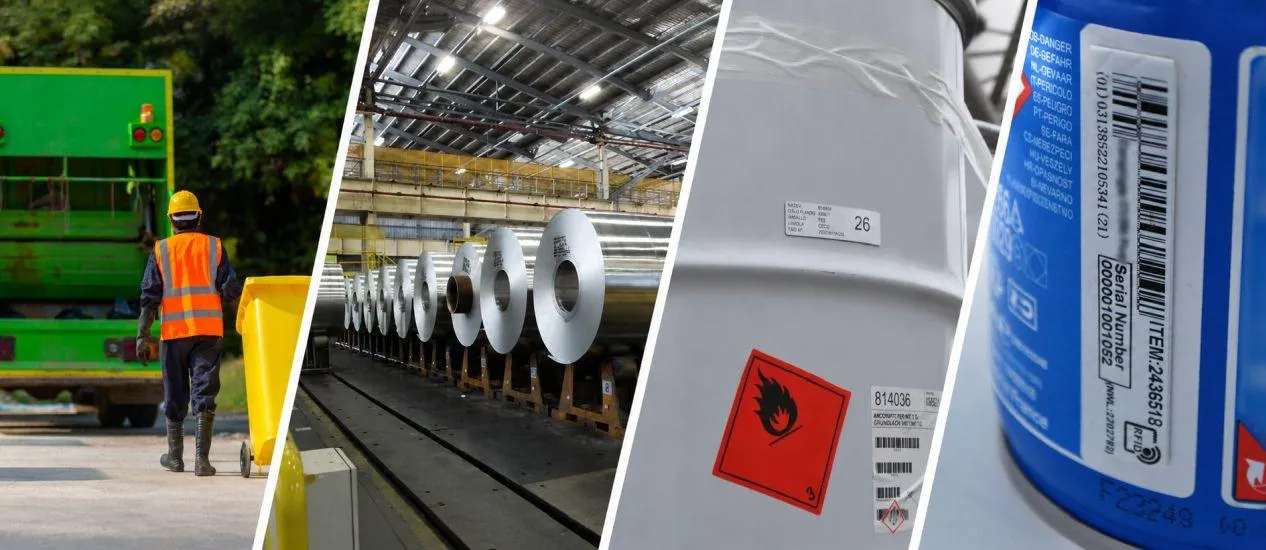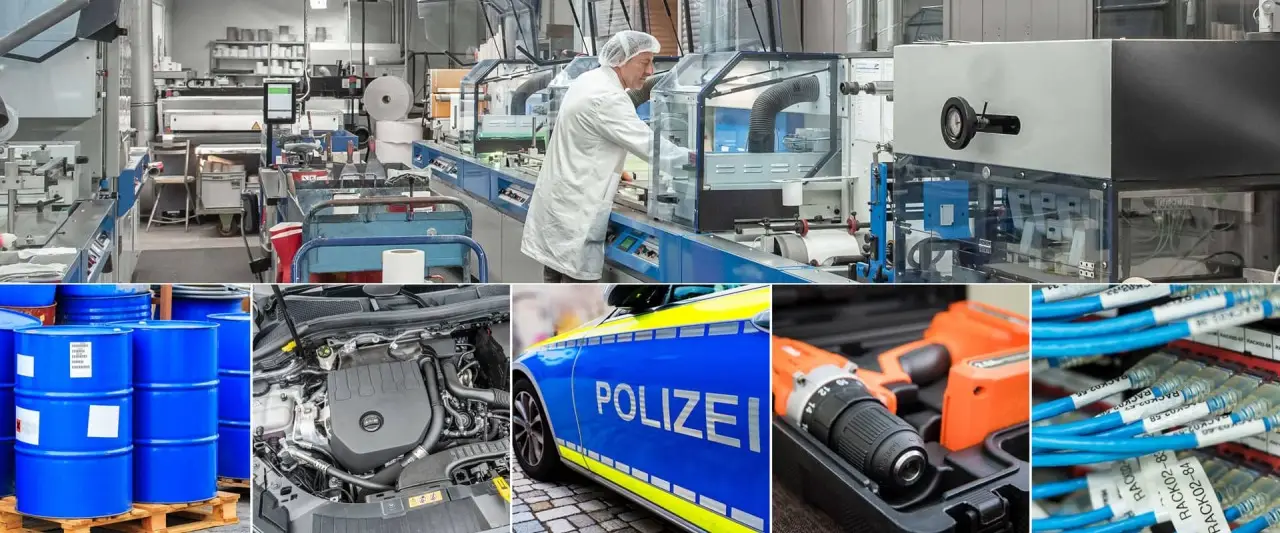
- Herpa Print operates as a complete solution provider offering customized labeling and RFID solutions for multiple industries.
- Sustainability is integral to their production, emphasizing PVC-free films, solvent-free adhesives, and recyclable inks.
- Their labeling solutions address high-performance requirements such as temperature resistance, chemical durability, and removability without residue.
- The company collaborates closely with partners like 3M and Avery Dennison, integrating tailored materials and finishes.
Herpa Print has been providing labeling solutions for over 70 years. Today, the label specialist supplies the electrical, automotive, chemical, and pharmaceutical industries.
In this interview, owner and managing director Karl-Michael Pack and sales manager Andreas Binder explain why expertise is so important and why the manufacture of labels and film products is still a craft.
70 years of Herpa Print
"Our unique selling point? Herpa Print acts as a complete solution provider rather than a traditional label manufacturer. The production of labels is the final step on the way to a complete solution."
Michael Pack – Managing Director , Herpa Print
Interview with Karl-Michael Pack
1. The history of Herpa Print began over 70 years ago. What milestones have shaped its success over the past decades?
Karl-Michael Pack: Yes, what can I say? There were no milestones. Our success was not marked by milestones, but by more than 70 years of continuous, long-term, and steady business development. We never made any rash company acquisitions or large investments in machinery.
Our approach is based on long-term planning and sustainability, not on short-term successes. Neither my grandfather, my father, nor I have spent large sums of money on luxurious buildings. Our success is based on gradual investments and the continuous pursuit of improvement.
2. How does Herpa Print manage to be a strong partner for complete solutions as a label manufacturer?
Pack: Herpa Print acts more as a complete solution provider than as a label manufacturer. We hardly produce any standard labels, but mainly manufacture customized and individual complete solutions. This enables us to offer individual and tailor-made solutions for specific customer requests from different industries.
Our unique selling point lies precisely in this approach. This is also reflected in our new website, which showcases various industries and references from well-known customers with whom we have already successfully implemented projects. We have the necessary expertise in sales and related areas in these industries. We want to be perceived as a complete solution provider and not just as a traditional label manufacturer.
3. Which partners does Herpa Print work with to implement complete solutions?
Pack: We work closely with renowned partners such as 3M and Avery Dennison to develop customized solutions. These partners supply the basic materials such as films and adhesives, which we process according to our customers' requirements.
Our expertise plays a crucial role here, as we not only use the basic materials, but also carry out special finishes and customizations, from color printing to special adhesives and carrier materials.
4. How is Herpa Print positioned in the field of RFID technology?
Pack: Together with Herpa Tech, we also offer identification labels with RFID technology. The portfolio includes a wide variety of RFID labels as well as the complete integration and processing of RFID data. Here, we act as a system integrator and offer complete solutions. These include labels and suitable hardware and software.
In cooperation with our partner network, which also includes printer suppliers, we select the appropriate partners depending on customer requirements. We see ourselves not only as a manufacturer, but also as a consultant, and we operate independently of manufacturers as a system integrator.

Specialists in marking solutions for over 70 years
Founded in 1948
Headquarters in Much, North Rhine-Westphalia
120 employees
Shareholding in Herpa Tech (located in Löhne, North Rhine-Westphalia, 8 employees)
Most people are unaware of the origins of Herpa Print. In the early 1950s, the grandfather of the current owner developed a labeling solution for milk cans based on a numbering system. At the time, this was a minor revolution.
The next leap forward came in the 1960s, when Herpa Print began using classic screen printing to produce stickers and advertisements for trucks and other vehicles. It was during this period that the close collaboration with 3M began, which continues to this day.
In the 1970s, Herpa Print produced exterior decorations for special series from Opel and Volkswagen, thereby gaining widespread recognition. In the 1980s, Herpa Print laid the foundation for the production of labels on its own machines.
In 2023, production capacities were expanded with the addition of a multifunctional converting machine. At the same time, a new, separately enclosed, low-particle production area was created.
Industry and electronics
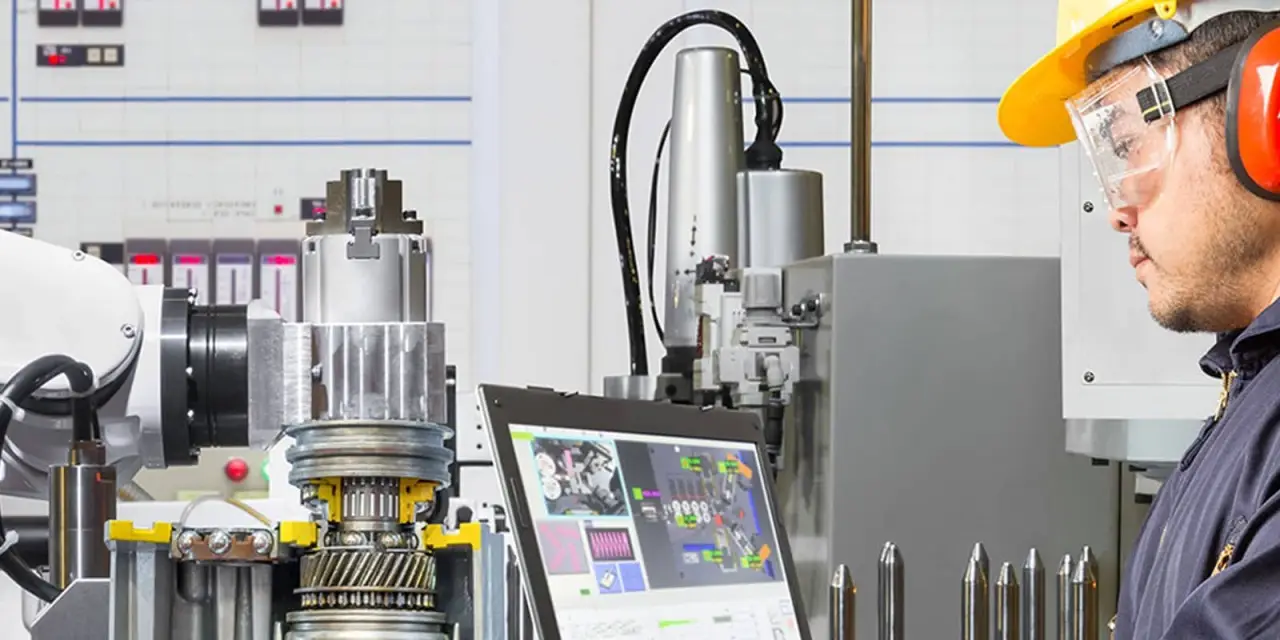
High demands on labeling in industry
Critical substrates in the engine compartment: Requirements are particularly demandingin this area, where high temperatures occur. Specific adhesives and materials are required to ensure the adhesion and durability of the marking, even under extreme heat conditions. High-temperature films are one solution and can withstand temperatures well above 300 degrees Celsius.
Steel industry: In the steel industry, substrates are often oil-stained or powder-coated. Special adhesives and labeling solutions are required here to ensure permanent adhesion.
Outdoor areas: Suitable materials that can withstand weather conditions must be usedoutdoors . With the right choice of materials and, if necessary, painting or lamination, durability in outdoor areas can be guaranteed for many years.
Removability: In some applications, especially in sensitive areas, no adhesive residue should remain on the substrate when the marking is removed. It is important to use the right removable adhesives so as not to damage the substrate when removing the marking.
Temperature changes: In areas with extreme temperature fluctuations, specific materials must be used that can withstand these changes without losing their adhesion.
Different climate zones: In applications that pass through different climate zones, such as in the automotive industry, the marking solutions must be able to withstand the different climatic conditions.
Resistance to friction and chemicals: The marking must also be resistant to friction, cleaning agents, chemicals, and similar influences. Each customer inquiry requires specific testing in order to develop the right product.
Interview with Andreas Binder
1. What products does Herpa Print offer for the electrical industry?
Andreas Binder: We offer customized solutions for the electronics industry, in particular labels and cable marking solutions. In this area, high demands on material, durability, and adhesion to the surfaces of cables or wires play a major role.
We also offer front foils that can function as design elements as well as input media or control elements and can be printed according to individual customer requirements and punched into customized shapes.
In addition, our range includes security labels, especially for products where clear tampering attempts must be indicated by appropriate security labels in order to verify commercial warranty claims or similar issues.
2. The requirements for the durability of composite materials and surfaces are very high in the electrical industry. How much development work does Herpa Print do for specific customer requests?
Binder: Depending on the area of application and the specific conditions, the requirements for the durability of composite materials and surfaces vary greatly. These include service life, durability, corrosion resistance, and environmental compatibility. Information from application-oriented sales is therefore crucial in development work for a customer.
Work preparation determines suitable materials and machines, while reproduction makes the decision on suitable colors and color systems for printing. Quality assurance is of great importance due to our IATF certification, which requires consistent product quality.
When developing customized products, several departments are involved in the development process. Up to 30 employees are involved in some projects to develop tailor-made products. The expertise of the industry and printing masters is unique and has a significant influence on the results of the solution finding process. Herpa Print therefore does not have a separate development department, but coordinates sales, costing, work preparation, and highly qualified employees.
3. Does Herpa Print focus on large or small series?
Pack: Like any other commercially oriented company, we have a strong interest in large series. There is no question about that. Due to our expertise in customer-specific solutions and production, we often also serve smaller series. It is often small series that large customers start with. This is often the case in the automotive industry. This means that we are equipped for both small and large series in terms of both our facilities and our capacities.

Automotive and vehicle decors
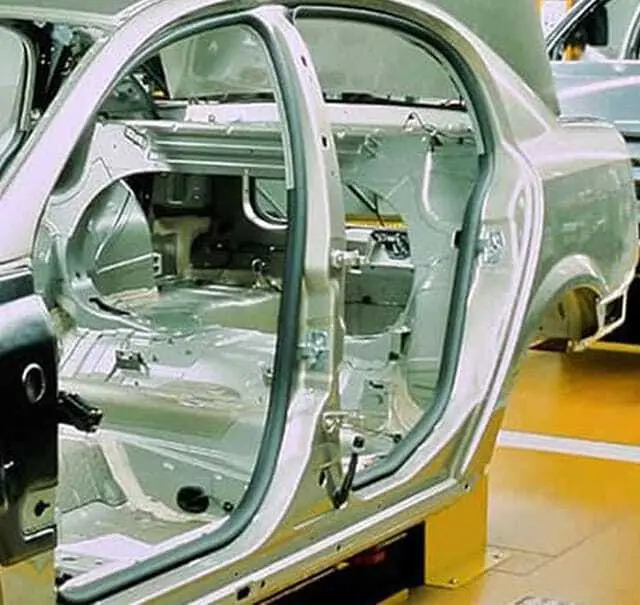
Requirements for labeling products for the automotive industry
1. The requirements for labeling products for the automotive industry are more diverse than in almost any other industry. Up to 900 different labels are required for the production of a single vehicle. Do you offer all 900 label specifications?
Pack: The number 900 should generally be interpreted as up to 900. This number includes all labels that ultimately come into circulation somewhere until a car is completely built. Over the lifetime of the vehicle, only a significantly smaller amount, usually around 250, remains on the vehicle. The 900 also includes packaging labels on cartons in which various components are transported, etc. This therefore covers the total quantity per vehicle, taking into account all types of labels.
However, we are particularly interested in the labels that remain on the vehicle, as they often pose a special challenge due to the large number of different materials that are installed and used in a vehicle. Herpa Print is also certified according to IATF 16949:2016 and is therefore able to competently meet the challenges of the automotive industry.
2. What is the percentage breakdown of production between the engine compartment, die-cut parts, and RFID labels?
Pack: The terms 'engine compartment' or 'die-cut parts' may be too limited, as these labels are not exclusively intended for the engine compartment, but are rather suitable for specific marking requirements on different components. In terms of label distribution, we can say that the majority, around 70 percent, must meet specific marking requirements.
Around 20 percent of the labels meet standard requirements, while the remaining 10 percent are considered smart labels based on RFID technology. The RFID sector definitely offers growth potential.
3. How important is the issue of sustainability in label production?
Binder: Sustainability is a key issue that is becoming increasingly important in the manufacturing industry. There are ongoing developments towards PVC-free films and materials that facilitate recycling or make it possible in the first place. Materials are also being developed that already contain a certain proportion of recycled material.
Adhesives also play an important role in the context of sustainability and should be as solvent-free as possible. This also applies to the inks used for printing, which are increasingly recyclable or consist of non-solvent-based components. Sustainability extends not only to materials and their environmental compatibility, but also to ensuring that a material adheres to a product for as long as possible without having to be replaced. This also fulfills a sustainability aspect.
4. Transport advertising and printing films for commercial vehicles are a long-established branch of Herpa Print's manufacturing activities. How important is it for the company?
Pack: We started with vehicle decals in the 1960s. This business area will continue to be of great importance to our company in the future. It enables us to expand our expertise in screen printing and digital printing, which often sets us apart from our competitors. In the automotive industry in particular, we are seeing manufacturers offering series vehicles as editions that are customized with decorative elements to appeal to different target groups.
When I see today's requirements for screen printing, especially in the motorcycle sector, where color variety and precision are in demand, I am always impressed by the fact that screen printing is still a craft despite its technological advances.
Achieving a tolerance of 2/10 in screen printing is impressive and shows how precisely we can work in our production. Essentially, screen printing is the printing of surfaces, similar to applying stickers, but under special production conditions in order to maintain tolerances. Durability is another important aspect.
Our customers place great value on sustainability and prefer solvent-free inks, but the products must still guarantee a durability of up to ten years, which often requires the use of PVC films and solvent-based inks.
Another area we serve is outdoor advertising, especially for vehicles that convey their advertising message via stickers. This affects a wide range of companies, including craft businesses, parcel service providers, and transport companies.
Pharmaceuticals and chemicals
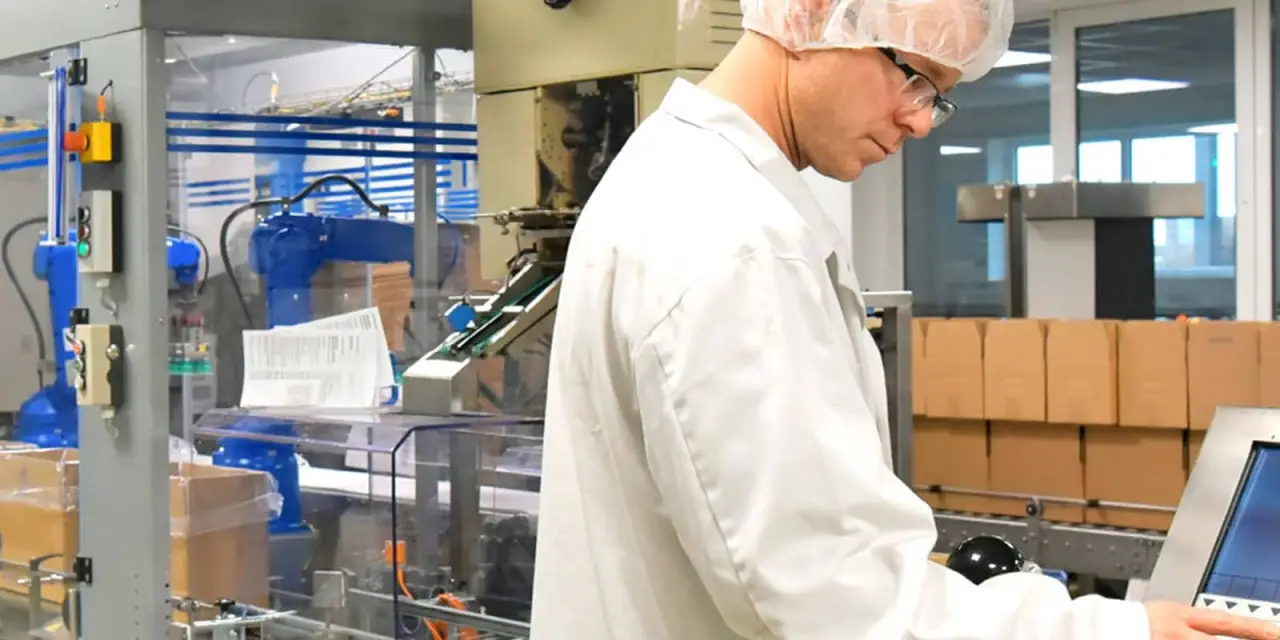
"We have been developing labeling solutions for the chemical industry, the pharmaceutical sector, and the electrical industry for many years. We have also been actively working with automobile manufacturers for decades. This involves both label solutions and vehicle decals."
Andreas Binder – Sales Manager , herpa print
Labeling solutions for the pharmaceutical and chemical industries
1. What are the differences between labeling solutions for the pharmaceutical and chemical industries?
Andreas Binder: These two areas must be separated from each other, even though they are intertwined in a certain way. Both areas work with chemical substances and are subject to certain safety-related labeling requirements. Nevertheless, it is important to make clear distinctions.
The chemical industry primarily encompasses large-scale chemical production, including the transport of chemicals, acids, and oils. The pharmaceutical sector, on the other hand, focuses exclusively on the manufacture of pharmaceutical products.
2. What labeling solutions are used in the pharmaceutical industry?
Binder: When we talk about labeling solutions in the pharmaceutical and chemical industries, we are often referring to customer-specific solutions. The pharmaceutical sector is also characterized by requirements that go beyond the size of the label.
Factors such as environmental conditions, sterilization, and possibly cold chain compliance are of great importance. We are seeing strong growth in the pharmaceutical industry in particular. This applies to intralogistics processes and the issue of tamper and counterfeit protection.
3. What labeling solutions are used in the chemical industry?
Binder: In the chemical industry, labeling is subject to specific requirements. Many chemical companies still use traditional labels for labeling that are not RFID-compatible. This is mainly due to the risk of potentially explosive areas, where the use of RFID technology is not readily possible due to electromagnetic interference, even though there are now approved and highly protected products available. We are talking here about the labeling of hazardous goods containers, pressurized gas containers, pipelines, and similar products.
In practice, vehicles, containers, or tanks are often labeled with stickers to ensure that their contents can be clearly identified. This applies in particular to the labeling of chemical containers and hazardous goods transports.
Herpa Print specializes in durable and high-quality labeling solutions. The requirements we have to meet are comprehensive and range from regulations and ordinances to industry-specific standards such as the labeling of pipelines in accordance with DIN 2403.
Labeling solutions from Herpa Print
Industry and electronics
Foil labels and type plate labels
Front films and membrane keyboards
Cable marking
Security labels and seal labels
Automotive and vehicle decals
Information signs and identification labels in the engine compartment
Die-cut parts and insulation films
smartLabels / RFID labels
Marking of small load carriers
Certification according to IATF 16949:2016
Pharmaceuticals and chemicals
Labels for marking hazardous goods containers
Optimized labeling of pressurized gas containers
Marking of pipelines in accordance with DIN 2403