

- Regulatory frameworks for the Digital Product Passport exist, but detailed technical and data requirements remain incomplete for many product groups.
- Companies face challenges including data standardization, supplier data acquisition, and internal coordination across departments.
- High upfront investments and unclear immediate economic benefits contribute to companies prioritizing other expenditures over DPP implementation.
- Studies show a gradual increase in implementation steps, but widespread company readiness and participation in standardization efforts remain limited.
A Comparison of Studies by IW-Cologne, DIN/DKE, and KPMG
In a one-on-one interview with Anja Van Bocxlaer, Jan Büchel from the German Economic Institute explains why, despite the confirmed introduction of the Digital Product Passport, companies are not yet preparing for it on a widespread basis. Drawing on the IW study “Digital Product Passport: Ready to Go?”—published jointly with Dr. Adriana Neligan—he speaks candidly about pending regulations, inadequate data structures, high investment barriers, and the wait-and-see attitude of many companies.
When asked whether Europe can afford the DPP, he nevertheless replies: “We should afford it.” In light of scarce raw materials, fragile supply chains, and geopolitical conflicts, a more circular economy is becoming increasingly important.
About the Author
Jan Büchel is an economist specializing in artificial intelligence and the data economy at the Cologne Institute for Economic Research (IfK). Since 2020, his research there has focused on topics including digitalization, the data economy, data sharing, and AI. He is a member of the “Digitalization and Climate Change” research cluster, where he examines in particular the intersection between digital and ecological transformation. Together with Adriana Neligan, he published the IW brief “Digital Product Passport: Ready to Go?” in 2025.
Uncertainties
Although the regulatory framework is now significantly more concrete, the final detailed requirements for many product groups have yet to be established. This makes it difficult for companies to finalize their plans for major investments. Many companies now know that in the future they will have to collect, process, and make detailed product data available throughout the supply chain, but only a fraction have already launched concrete projects.
“Companies and their management know that the DPP exists and that it’s coming, but they aren’t yet taking action across the board,” says Büchel. For the Economist specializing in artificial intelligence and the data economy, this reluctance cannot be explained by a lack of interest. Rather, it is the result of several uncertainties that reinforce one another.
The regulation is in place, but the specific detailed requirements are not yet
The first reason lies in the structure of European regulation. The DPP has been adopted as an instrument, but the specific requirements are being defined step by step for individual product groups.
“From a regulatory standpoint, it has not yet been definitively established what a DPP must fulfill and how it must be technically implemented,” explains Büchel.
As a result, while companies know they may be affected, they often do not yet know what data they need to collect, to what level of detail, how they should structure it, or what technical architecture they must use to make it available. It is precisely this lack of specificity that makes it difficult for companies to allocate larger budgets or commit to a specific technical solution at an early stage.
In his view, this also explains why the results of the IW study remain relevant despite their age. As long as there are no binding and technically feasible detailed requirements for many product groups, the fundamental situation will remain similar: Companies are monitoring developments but avoiding investments that could later prove incompatible.
This reluctance is not automatically resolved by the growing number of platforms, data rooms, and DPP providers. Companies are also faced with the question of whether to develop their own solution, expand existing systems, or commission an external provider. As long as data models, interfaces, and interoperability requirements are not fully established, this decision also remains fraught with risks.
Editor’s note: The CIRPASS II project offers guidance through the jungle of platform providers.

The DPP Competes with Other Investments
Büchel describes the IW survey as a “reality check.” From a macroeconomic perspective, there is a strong case for the Digital Product Passport. It could enable a circular economy, improve the availability of secondary raw materials, make supply chains more transparent, and support new business models.
At the level of an individual company, however, the picture looks different.
“This means costs and investments for companies that are already under pressure from other crises in the current economic climate,” says Büchel. Companies would not only have to procure software. They would need personnel resources, would have to define responsibilities, clean up data sets, integrate suppliers, and connect existing IT systems with one another.
His conclusion: “Companies may be prioritizing other aspects right now, even if they already have the DPP in the back of their minds.”
Getting started can be particularly difficult for small and medium-sized enterprises. Large companies more often have centralized product databases, specialized IT departments, and defined processes for data exchange. In smaller companies, however, relevant information is often scattered across various ERP systems, spreadsheets, documents, or even the tacit knowledge of individual employees.
Büchel therefore emphasizes that while the DPP may make sense from a macroeconomic perspective, it initially represents a significant burden at the corporate level.
The Real Work Begins Before the Product Passport
Another reason for the slow implementation is that the DPP does not begin with the application of a QR code. Before a data link can be associated with a product, the underlying information must be available, structured, and reliable.
Companies in the middle of a supply chain must first obtain data from their suppliers. They must then store and process this information and link it to their own production data.
Büchel describes the necessary sequence very specifically: The data must be “stored comprehensively,” then “processed in a structured manner,” meaningfully linked to the company’s own production data, and finally used in a targeted way. Only then can a company generate a product passport that actually provides a complete description of a specific product.
The challenge, therefore, lies not only in the DPP itself. Rather, it highlights how far companies have already progressed in product data management, standardization, and data sharing.
This becomes particularly complex for products with many components. A window, for example, may contain glass, wood, or plastic, as well as coatings, seals, hardware, and other materials. To create a complete DPP, the necessary information from various upstream stages must be consolidated. If an important data set is missing at the beginning of the supply chain, downstream companies will also be unable to fully populate their product passports.
The economic benefits are not yet concrete enough
The DPP is often justified on the grounds of transparency, sustainability, and the circular economy. These goals are relevant to companies. However, they do not automatically lead to investment funds being made available in the short term.
“As soon as companies realize for themselves what monetary benefits can be achieved through DPPs, their attitude toward the concept changes,” says Büchel.
Such benefits could stem from lower material costs, improved material availability, more efficient repair processes, or new service-based business models. Manufacturers could support products for longer, analyze maintenance data, organize take-backs, and reuse materials at the end of the life cycle.
However, many of these benefits are still future scenarios. In contrast, the costs for data preparation, IT integration, and personnel are incurred as early as the preparatory phase. This time lag contributes to companies initially viewing the DPP as a compliance project rather than an economic innovation project.
Why the DPP Is Still Important
Büchel’s conclusion is: “We should invest in the DPP.” The DPP can increase transparency in supply chains, enable traceability, and lay the groundwork for using products longer and recycling materials in a more targeted manner. Furthermore, he anticipates a “ripple effect on digitalization and data sharing” that companies could leverage even beyond mere compliance with regulatory requirements.
For Büchel, the link between the circular economy and economic resilience is particularly important. “Digital product passports enable a circular economy,” he says. In light of scarce raw materials, fragile supply chains, and geopolitical conflicts, a more circular approach to the economy is becoming increasingly important.
Nevertheless, he believes the investments should not be underestimated. The key factor will be whether companies can successfully demonstrate the long-term benefits. Improved material availability, more efficient processes, additional product data, and new business models could offset the initial costs in the long run. The DPP is thus not merely a new obligation but could also serve as a catalyst for digitalization and growth.
The IW Survey Shows the Starting Point
The IW brief report by Jan Büchel and Adriana Neligan, published in April 2025, is based on a survey of 1,078 companies conducted in the fall of 2024. The study therefore does not provide a current snapshot of the year 2026. However, it documents an important starting point prior to the more concrete implementation phase.
At that time, only 4 percent of the surveyed companies had already taken steps to prepare for the DPP. Another 11 percent planned to address the issue. Seventeen percent were aware of the DPP but did not intend to take action either currently or in the future. Overall, two-thirds of the companies were either unaware of the DPP or did not consider it relevant to their own business model. (Institute of German Economy, IW)
The data infrastructure was also limited. About half of the companies provided digital product data to partners, customers, or suppliers. Only 18 percent transmitted this data in a standardized format. Among companies with fewer than 50 employees, the share of standardized data provision was 17 percent, whereas among companies with more than 250 employees, it was 39 percent. (Institute of German Economy, IW)
The older survey should therefore not be cited to suggest that only 4 percent are prepared today. Rather, it can be used as an early baseline measurement: At the outset of regulatory implementation, neither widespread awareness nor data maturity existed.
DIN and DKE continue to see a significant need for guidance

The 14th German Standardization Panel, published in June 2026, shows that more companies have now taken concrete steps. Of the 1,092 companies and organizations surveyed, 201 had begun implementation. This corresponds to just under one-fifth.
At the same time, many respondents continued to see a need for clarification regarding standards, data structures, and organizational frameworks. They cited uniform requirements, interoperable systems, and common data formats and interfaces as key prerequisites. Only about 11 percent were already actively participating in DPP-related standardization committees. (VDE)
These figures should not be interpreted as a direct continuation of the IW survey. The Standardization Panel surveyed companies and organizations from industry, construction, electrical engineering, services, and other sectors. Furthermore, the question regarding concrete steps already taken differs from the categorization used by the IW Future Panel.
Nevertheless, the Standardization Panel confirms Büchel’s assessment: Implementation is gaining momentum but remains concentrated in a limited segment of the economy. A lack of standards and unclear integration pathways continue to be key obstacles.
KPMG describes a cautious wait-and-see approach
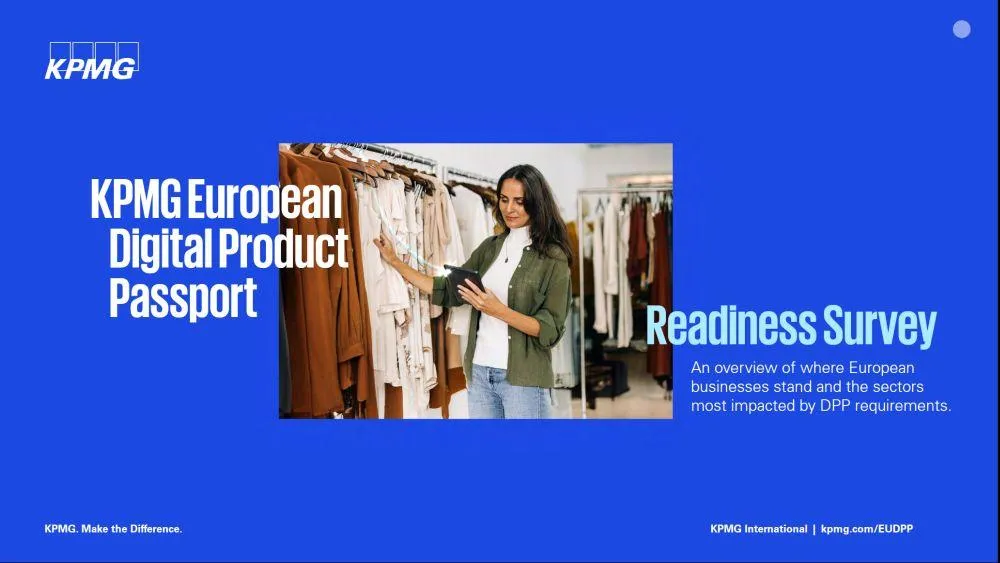
The European KPMG survey supplements this picture by including companies from sectors affected particularly early on. Between September and December 2025, more than 70 organizations from 13 European countries were surveyed. Forty-six percent of the participants were companies with at least 1,000 employees, and 44 percent were from the textile and apparel industry. The sample is thus composed quite differently from the German IW Future Panel and is not directly comparable to it. (KPMG Assets)
Awareness was very high in this group: 97 percent had heard of the DPP. Nevertheless, only 33 percent reported a high level of understanding of the specific requirements and impacts on their own companies. 58 percent rated their understanding as moderate. (KPMG Assets)
Operational readiness also remained limited. 19 percent described themselves as well-prepared. 53 percent had taken initial steps but did not yet have a comprehensive, cross-functional roadmap supported by senior management. 16 percent planned to get started soon, and 12 percent had not yet begun discussions at the executive level.
KPMG describes this pattern as a rational “wait-and-prepare” approach: Companies are laying the groundwork in specific areas but are avoiding major investment decisions as long as key requirements remain unresolved.
The specific activities reveal where companies are already taking action. 47 percent were working on supplier data, 39 percent were evaluating or modernizing their IT systems, 35 percent had appointed a person in charge, and 26 percent were conducting pilot projects. At the same time, 23 percent had not yet begun any work. 61 percent had not yet decided whether to develop a DPP solution in-house or purchase one.
Participants cited obtaining data from the supply chain (31 percent) and understanding the technical requirements (25 percent) as the biggest obstacles. These were followed by technological limitations and cross-functional coordination (14 percent each), as well as budget constraints (11 percent).
Three Studies, One Common Pattern
First, there is a lack of concrete guidelines. Companies want to know which data, identifiers, interfaces, and documentation will become mandatory for their product group.
Second, standardized data is lacking. While many companies store information digitally, they are not yet able to exchange it across systems in a machine-readable format.
Third, the challenge begins with suppliers. A company can only provide a complete DPP if the necessary data from upstream supply chain stages is available.
Fourth, internal responsibilities are often unclear. Sustainability, IT, procurement, product development, compliance, and production must work together. The DPP cannot be permanently assigned to a single department.
Fifth, long-term opportunities are offset by short-term costs. This affects small and medium-sized enterprises particularly hard.
Sixth, the concrete business case is not yet apparent everywhere. As long as companies view the DPP primarily as a regulatory obligation, its priority will lag behind investments directly related to revenue or production.
Waiting is understandable, but complete inaction remains risky
The wait-and-see stance of many companies is therefore not necessarily an expression of fundamental rejection. In many cases, it is a reaction to unresolved regulatory details and the risk of misguided investments.
At the same time, however, the studies show that companies do not have to wait for every technical specification. Product groups and data sources can already be identified, internal responsibilities defined, existing systems reviewed, and suppliers approached. Smaller pilot projects are also possible without committing to a final DPP platform at an early stage.
The key distinction, therefore, lies not only between prepared and unprepared companies. It lies between companies that are already getting their foundations in order and those that will only begin once the specific obligations take effect.
Or, as Büchel puts it: Many companies could already meet the data-related requirements today “in order to be able to implement the DPP quickly and easily later on.”
Sources
https://www.iwkoeln.de/studien/jan-buechel-adriana-neligan-digitaler-produktpass-ready-to-go.html
https://www.vde.com/en/press/press-releases/survey-of-companies-din-dke-digital-product-passport