Identiv Explains Why Multicomponent Assembly Will Shape the Next Decade of IoT

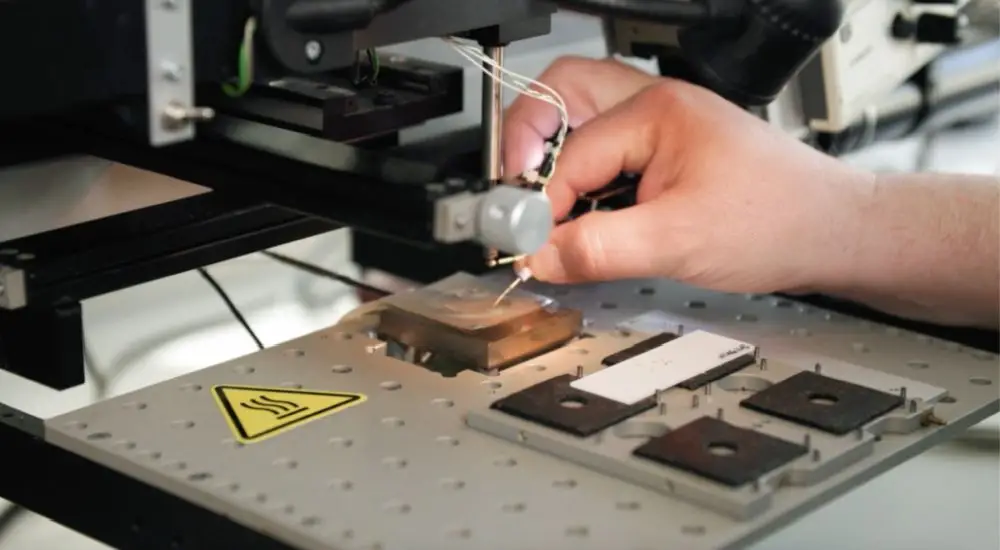
Identiv explains why IoT tags are evolving from simple digital identifiers into compact electronic systems for sensing, verification and condition monitoring. Multicomponent assembly is becoming a key manufacturing capability for next-generation RFID and IoT tags.
From RFID Tags to Intelligent IoT Systems
For many years, RFID and IoT tagging followed a simple model: attach a radio chip to an object, assign a digital identity and enable identification at scale. This approach enabled major progress in retail inventory, warehouse visibility and basic asset tracking.
Today, requirements are changing. Industries no longer only want to know where an item is located. They also need to know how it has been handled, which environmental conditions it has experienced and whether it is still safe, authentic or fit for use.
This shift changes the role of the IoT tag. It is becoming a miniature electronic system that can sense, interpret and verify conditions throughout the product lifecycle.
Why Traditional RFID Manufacturing Reaches Its Limits
Classic RFID manufacturing was built for high-speed production of simple products: antenna, chip, substrate and high-volume output. This model remains effective for standard identification tasks, but advanced IoT applications require more.
Cold chain monitoring, healthcare packaging, authentication, quality assurance and consumer electronics applications may require sensors, antennas, oscillators, batteries, passive components and protective structures in thin, durable formats.
These requirements exceed what traditional RFID assembly lines were originally designed to support.
Multicomponent Assembly as an Enabling Layer
Multicomponent manufacturing, or MCM, enables several components to be placed and integrated on flexible substrates. Instead of assembling only one chip, MCM brings together chips, sensors, crystals, capacitors, resistors, batteries and other elements in a coordinated process.
This capability is essential for IoT devices that must measure temperature, humidity, light exposure, vibration or shock. These functions depend on components beyond the main RFID or NFC chip. The reliability of the complete tag therefore depends on how these elements are assembled, bonded, protected and tested.
Equipment Alone Is Not Enough
MCM is not only a question of machinery. Dedicated multicomponent assembly equipment is important, but it does not automatically create scalable production capability.
The process requires coordination between product design, process engineering, material science, test development and reliability modeling. A change in substrate thickness can affect adhesive behavior. A different battery chemistry can require a new curing process. A revised antenna geometry can lead to changes in in-line testing.
Long-term manufacturing experience is therefore critical. Placement tolerances, curing profiles, sensor integration and testing strategies determine whether complex IoT systems can be produced reliably at scale.
Relevance for Cold Chain, Healthcare and Authentication
Multicomponent assembly is especially relevant where IoT tags must provide verified data, not only identification.
In cold chain logistics, tags may need to document temperature history or environmental excursions. In healthcare and pharmaceutical supply chains, packaging may need to confirm product integrity across transport and storage. In authentication, connected labels and smart packaging can help verify originality and detect tampering or handling events.
These use cases depend on robust, thin and scalable electronic systems that operate under mechanical stress, temperature variation and real-world handling conditions.
Manufacturing Defines What IoT Can Deliver
The next decade of IoT will not be shaped by software and chip design alone. Manufacturing processes will also define what is technically and commercially possible.
As connected products become more context-aware, the endpoint becomes a decisive part of the IoT architecture. If the tag cannot reliably measure, store and communicate data over its operating life, the value of the upstream cloud or analytics system is limited.
Attribution
This article is based on “The Next Manufacturing Frontier for IoT: Why Multicomponent Assembly Will Define the Coming Decade”, authored by Manfred Mueller, Chief Strategy Officer at Identiv, and Michael Zehnpfennig, Vice President of Engineering at Identiv. The article was originally co-developed with Manufacturing Engineering & Technology and is republished by Think WIoT with attribution.
Contact Identiv
Need advanced RFID, NFC, BLE or IoT tags with integrated sensing, authentication, power or condition-monitoring functions? Identiv brings the manufacturing expertise to develop and produce application-specific connected endpoints using multicomponent assembly and scalable production processes.
Contact Identiv to turn your next IoT concept into a reliable, manufacturable endpoint.