

5G SA is becoming a location platform for new IoT and enterprise applications

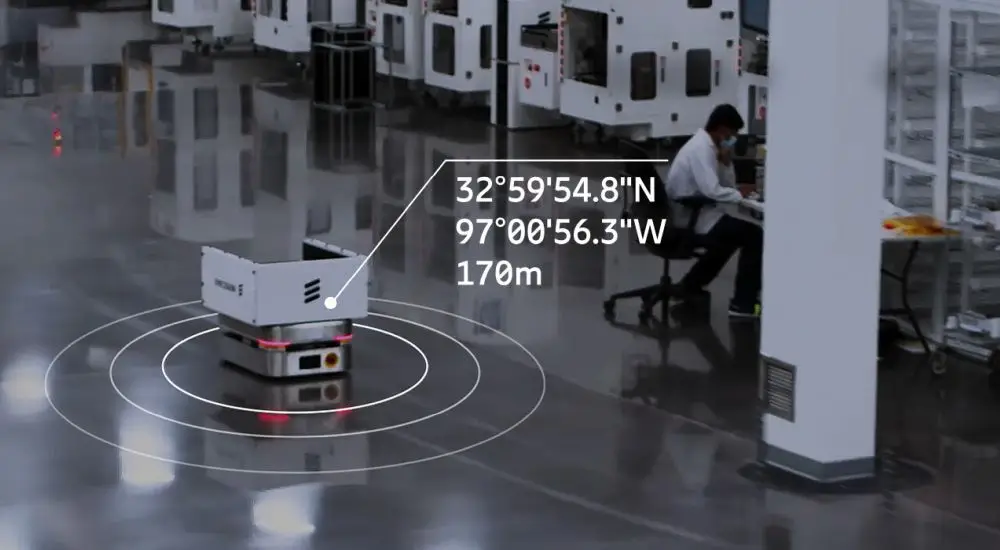
Ericsson bundles network-based positioning into a solution portfolio
Ericsson is positioning 5G Advanced Location Services as a solution portfolio for precise location tracking based on 5G Standalone. At its core, it involves positioning capabilities that are directly integrated into the 5G architecture, thereby enabling indoor and outdoor localization for new enterprise and IoT applications.
Location becomes part of the 5G infrastructure
With 5G Advanced Location Services, Ericsson is not describing an isolated individual component, but rather an interplay of 5G SA functions, network components, RAN extensions, and APIs. The goal is to provide positioning more as a native network function, thereby reducing existing dependencies on additional location infrastructures.
For businesses and public institutions, this approach addresses typical challenges such as emergency location, asset tracking, crowd management, route optimization, industrial location, and protection against spoofing.
Why existing location solutions often reach their limits
GNSS-based positioning works reliably outdoors in many scenarios, but its quality drops significantly indoors or when satellite visibility is limited. Indoor technologies such as UWB, Bluetooth, Wi-Fi, vision, or LiDAR bridge this gap, but often require additional infrastructure. This increases integration effort, complexity, and OPEX.
This is exactly where 5G-based positioning comes in. Integration into 5G-SA networks is intended to enable seamless indoor-outdoor scenarios, fewer system breaks, and more centralized access to location data.
What features Ericsson highlights
Ericsson cites several technical capabilities that, together, are intended to enable scalable end-to-end positioning:
Sub-10-cm accuracy outdoors based on Real-Time Kinematics
Macro-positioning with 5G network extensions and reduced device dependency
Indoor positioning with accuracy of up to less than 1 m
Passive 5G positioning for geofencing and SIM density analysis
Location APIs for accessing network-based location data
From the perspective of the wireless IoT market, it is particularly relevant that location tracking is increasingly shifting from a separate add-on feature to an integrated network capability.
Relevance for service providers, integrators, and users
For service providers, the focus is on new revenue models beyond traditional connectivity. Network-based location data can be integrated into applications via APIs and marketed as a service.
For system integrators and end users, this approach is particularly interesting when location tracking, connectivity, and data access can be bundled into a single infrastructure. This can be especially relevant in logistics, manufacturing, public safety, healthcare, automotive, event management, and drone applications.
Why this is important for the IoT industry
The context is crucial: 5G Advanced Location Services are not simply a new Ericsson product, but are based on positioning capabilities within 5G Standalone that Ericsson bundles into a commercial solution offering. This is precisely what makes the topic interesting for the IoT industry. If precise location tracking can be provided via the mobile network, architectural decisions for tracking, automation, and real-time applications will shift significantly.
Source: https://www.ericsson.com/en/core-network/5g-core/solutions/5g-advanced-location-services