
Hospital supply chain: Amsterdam UMC puts the linen room in the spotlight

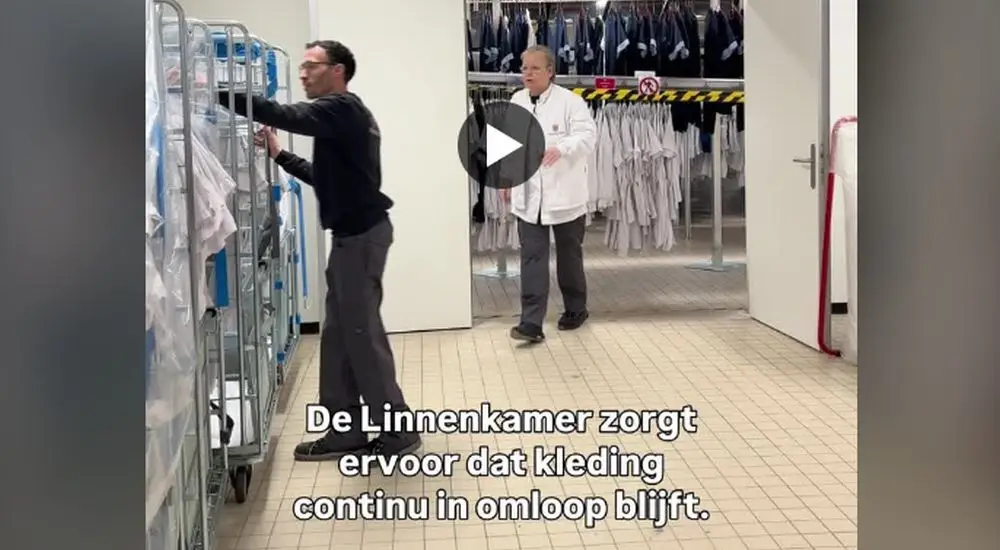
When workwear becomes a supply chain task
Workwear is an invisible but critical supply process in everyday hospital life: as soon as sizes are missing, returns are delayed, or stocks "disappear," it not only affects logistics but also directly impacts wards and teams.
That is precisely why the Facilities Department at Amsterdam UMC is currently highlighting the issue in a "Supply Chain Takeover" series on LinkedIn. A post by cluster manager Martijn van den Berg focuses on the linen room – the place that keeps the clothing cycle stable, handles exceptions, and ensures that workwear remains in continuous circulation.
The focus is less on new "showcase technology" and more on the operational core: from distribution and return points to reworking decentralized clothing and resolving system error messages – ensuring that the process remains reliable and transparent.
Comparison: Operational stability vs. RFID-supported closed-loop automation
What Amsterdam UMC describes here is everyday life in many institutions: availability is not only created by machines or software, but by an entity that "keeps the cycle running" – including exception handling, inventory maintenance, and data quality.
Two Think-WIoT articles show how this requirement is additionally systematically ensured by RFID in other clinics:
Northern Norway: A central, RFID-based textile room solution shifts the focus to controlled removal, clear rules, and 24/7 availability. The added value comes from transparency about circulating quantities, fewer bottlenecks, and a more stable supply even under difficult conditions.
Ljubljana: A data-driven RFID system is understood as closed-loop textile logistics: issuance and return are automated, processes are made measurable, and control via reliable data is integrated into everyday life. The result is more transparent, efficient textile management that can be scaled across locations and user groups.
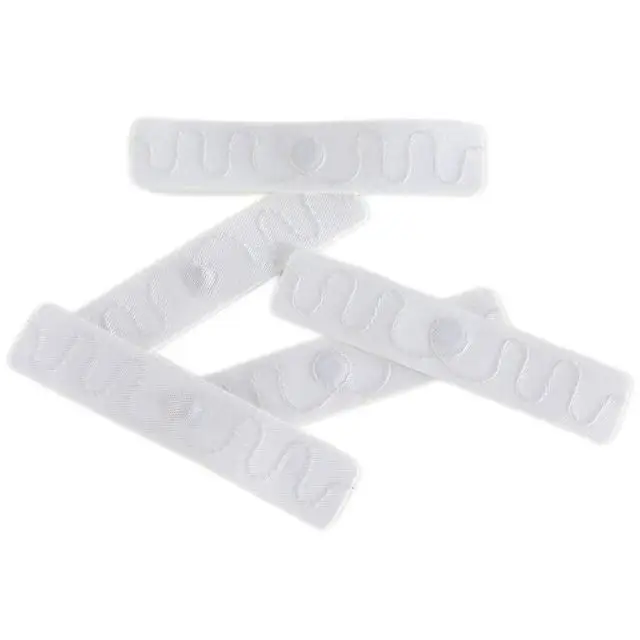
UHF RFID Fabric Laundry Tag

The JYL-Tech Fabric UHF RFID Laundry Tag offers an efficient, durable solution for automated textile tracking in high-volume laundry environments.
From hospitals to hotels: textiles as live data
Another Think-WIoT contribution from the five-star hotel industry shows that RFID textile management is not only relevant in healthcare: Royal Jersey Laundry, in collaboration with HID, relies on robust UHF RFID laundry tags, fast scanning workflows, and a cloud platform that translates tag IDs into live availability, delivery notes, and billing logic.
The core concept is the same as in the clinic: not "counting more hands," but digitally recording textile flows in such a way that they become controllable inventory data in real time – 24/7, workflow-oriented, and economically resilient.
Practical insight from Graz: RFID laundry room as a scalable supply concept
An additional perspective is provided by the Think-WIoT livestream presentation by Kristina Gabriel, Head of Supply Chain Management at the LKH University Hospital in Graz. She describes an RFID laundry room concept that was launched as a pilot project in 2020 and structurally ensures 24/7 supply for staff.
Several clothing stores are already in use – with a clear scaling goal: by 2026, the supply is to be expanded to at least six clothing stores and several thousand employees. The presentation thus shows very concretely how a pilot project can become a plannable rollout strategy.
What can be learned from this for practical application
The Amsterdam UMC initiative makes it clear that even with distribution systems, the crucial question remains: "Who keeps the cycle stable when reality does not run 'by design'?" – i.e., in the event of deviations, special cases, error messages, and inventory gaps.
The examples from northern Norway, Ljubljana, and Graz also show how clinics can further "hard-wire" this stability technically: through clear identification, controlled issuance and return, valid key figures, and thus less search effort, less buffer stock, and greater supply security.
And the hotel industry example makes it clear: those who understand textiles as "live data" can not only secure processes, but also control them much more precisely from a business perspective.