RFID at the Airport: How Maintenance Becomes Fully Traceable

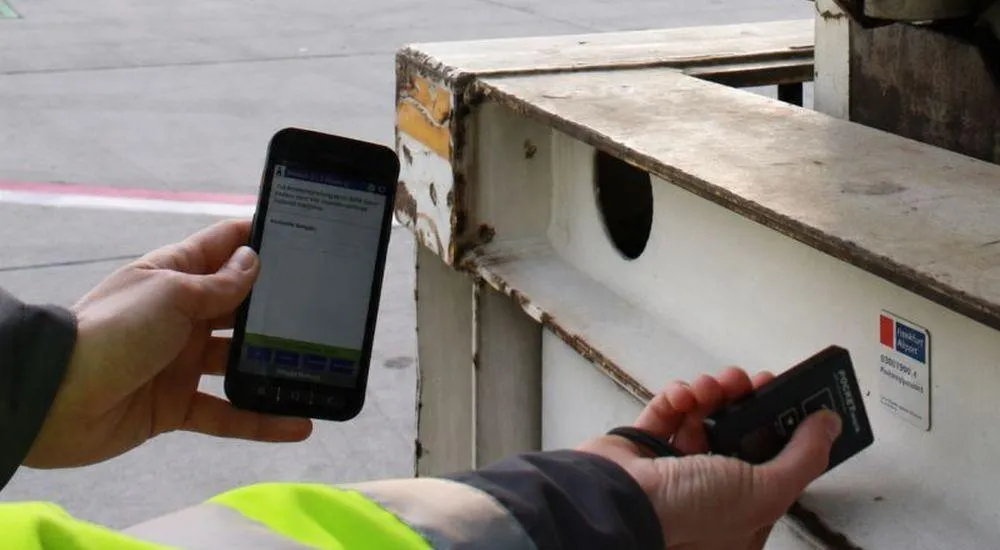
Airports operate thousands of technical assets that must be regularly inspected and maintained. microsensys demonstrates how robust HF-RFID and NFC labels uniquely identify each piece of equipment and link maintenance steps directly to a digital history, even during offline data collection.
When maintenance must not only be performed but also documented
Countless technical processes interlock at an airport. Machinery, components, vehicles, and ground support equipment must function reliably. At the same time, each of these pieces of equipment is subject to recurring inspections and maintenance work.
The real challenge, therefore, does not begin with the maintenance itself. Another crucial question is: Can it be clearly traced later on which piece of equipment was recorded, when, by whom, and as part of which task?
The physical piece of equipment is assigned a unique digital identity
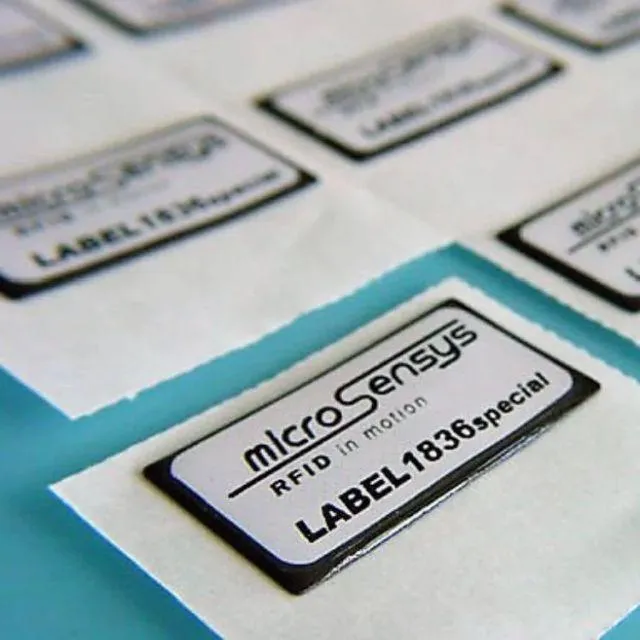
The LABEL 1836 special from microsensys is used as the identification tag. The RFID label has an IP64 protection rating, is self-adhesive, and is partially flexible. This allows it to be applied even to slightly curved and varied surfaces.
With this label, each piece of equipment receives a unique digital identity. During maintenance or inspection, this identity is read directly from the physical object, rather than having to manually select the relevant asset or enter its ID.

This is precisely where the key advantage lies: The maintenance process is directly linked to the piece of equipment actually present on-site. This creates the foundation for a clearly assigned maintenance history that can be traced over time.
A single scan initiates the unique documentation
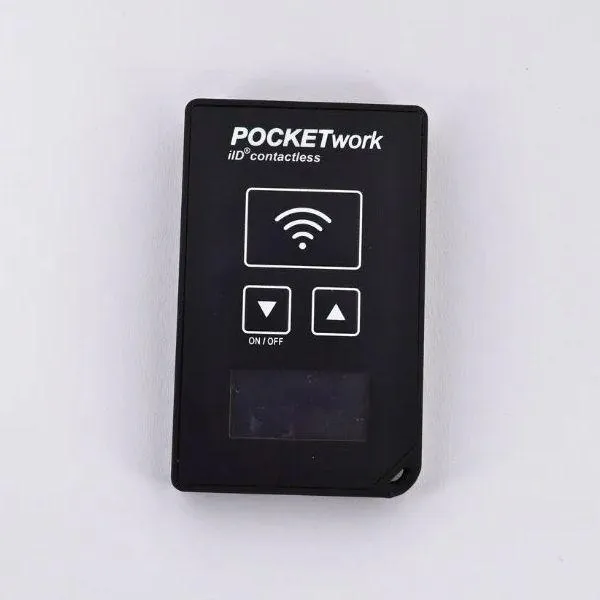
During maintenance or inspection, the employee reads the RFID label directly from the asset. The compact iID® POCKETwork Reader or another suitable RFID/NFC-enabled device can be used for this purpose.
The scan uniquely identifies which piece of equipment is being worked on. Along with this identification, the date, time, and responsible person can be documented without having to manually enter the asset ID.
This ensures that the maintenance task is directly assigned to the actual piece of equipment present on-site. This reduces data entry errors and lays the foundation for a fully traceable maintenance history.
What happens if there is no connection available on-site?
This is a particularly crucial consideration in large-scale operational areas. Data capture does not necessarily have to depend on a permanently available data connection.
The recorded information can initially be stored locally on the reader. It can then be transferred to an existing maintenance system or directly to an application.
This allows maintenance work to be documented even offline and later integrated into the digital workflow.
Individual scans build a maintenance history
With each additional inspection, the asset’s data record grows. This allows operators to track when a task was performed, which asset it was assigned to, and who was responsible for it.
Over time, this creates a complete and traceable maintenance history for the respective piece of equipment.
This is precisely where the greater benefit of RFID identification lies: The label does more than just identify an object. It forms the permanent link between the physical asset and its digitally documented history.
RFID becomes the link between the asset and the maintenance system
The airport use case demonstrates a typical industrial application of HF RFID and NFC. Wireless IoT technology handles unique identification directly at the point of work. Readers and the application then handle the collection and further processing of the maintenance data.
For operators, this means less manual data entry, clearer assignment of maintenance tasks, and a history of the respective asset that can be accessed at any time.
For system integrators, the key task is integrating RFID data collection with existing maintenance and application systems. This allows the physical maintenance process to be directly transformed into a traceable digital process.
Would you like to uniquely identify vehicles, machines, or other equipment and digitally document maintenance processes? Contact microsensys to explore how HF RFID and NFC can be integrated into your existing maintenance processes.