

Wi-Fi HaLow goes mainstream: long-range IP meets Europe’s regulatory ceiling

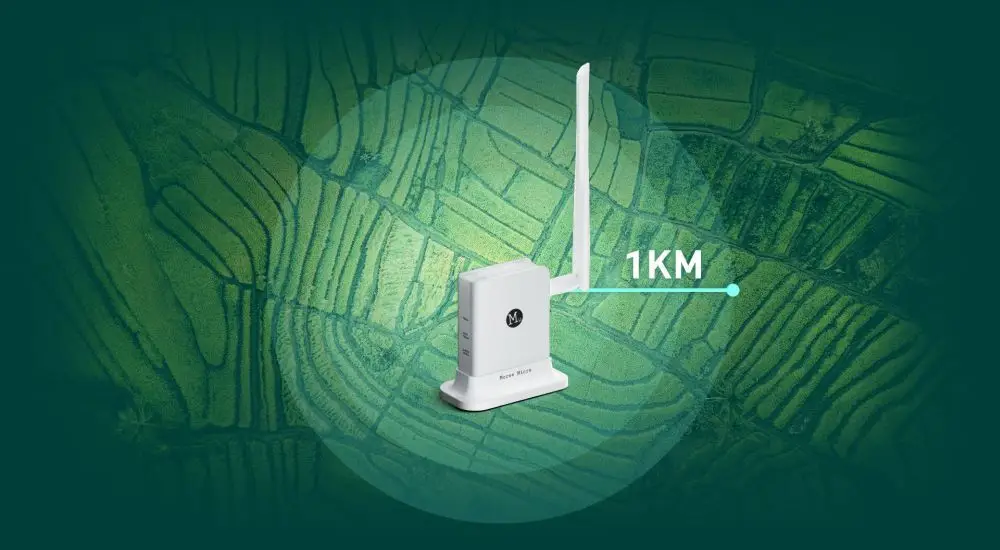
Wi-Fi HaLow (IEEE 802.11ah) is quickly moving from “interesting IoT niche” to a deployable option for long-range, IP-native connectivity. The latest proof point is the launch of the HaLowLink 2 by GL.iNet, a compact sub-1 GHz router designed to extend Wi-Fi far beyond typical indoor coverage and into wide-area environments where walls, vegetation, and distance usually defeat conventional WLAN.
HaLowLink 2 is built around sub-GHz HaLow silicon from Morse Micro and supports flexible operation as an access point or as a station, enabling both wide-area device connectivity and long-distance point-to-point bridging. Received HaLow links can be redistributed locally via Ethernet and classic 2.4 GHz Wi-Fi, making the device a practical connectivity “hinge” between remote field deployments and existing IT networks.
Wi-Fi HaLow goes mainstream
HaLow is not trying to win a speed contest with 5 or 6 GHz Wi-Fi. It is winning a different contest: reach, penetration, power efficiency, and operational simplicity at scale. By using sub-1 GHz spectrum and narrow channels, HaLow enables a new style of network design that is now becoming accessible to integrators and operators through off-the-shelf hardware such as HaLowLink 2.
What “mainstream” looks like with HaLowLink 2, especially outside Europe where regulatory conditions typically allow the technology to show its full performance, is a set of very tangible deployment patterns:
Campus-scale coverage with fewer nodes
Instead of blanket deploying access points, HaLow supports large footprints with dramatically fewer radio nodes, reducing infrastructure, mounting work, and maintenance. This is particularly relevant for industrial yards, depots, farms, ports, and utility sites where coverage is measured in hectares, not rooms.
Reliable links through real-world obstacles
Sub-1 GHz propagation is built for the messy reality of industrial and outdoor environments. HaLowLink 2 targets connectivity across walls, between buildings, through vegetation, and around equipment, enabling stable links where 2.4/5 GHz networks often become fragile or expensive to densify.
Long-range bridging as a “wireless cable”
In station mode, HaLowLink 2 can link two networks across long distances for rapid building-to-building connectivity, remote outposts, or temporary expansions. This reduces dependency on trenching, fiber runs, or leased lines and is attractive for quickly connecting warehouses, construction sites, events, and seasonal operations.
IP-native IoT without proprietary stacks
HaLow keeps the comfort of standard IP networking. That means fewer protocol translations, simpler integration into existing IT security and monitoring, and easier interoperability with routers, gateways, and cloud services. For operators who want to avoid proprietary LPWAN ecosystems while still reaching far beyond classic Wi-Fi, HaLow is a pragmatic middle path.
Energy-aware networks with practical endpoint scaling
HaLow’s design supports low-power endpoints and large device populations. In deployments such as metering, building automation, telemetry, and sensor networks, this makes it possible to scale coverage without the operational friction of constant battery changes or dense gateway grids.
More usable throughput than narrowband LPWAN for many tasks
Outside Europe, where broader channels and higher transmit power are more feasible, HaLow becomes compelling for applications that sit between “tiny sensor pings” and “full broadband.” Examples include periodic image uploads, inspection snapshots, mobile worker check-ins, diagnostics, firmware updates, and richer telemetry streams that would be painful over ultra-narrowband links.
A practical edge network for remote operations
HaLowLink 2 can act as an edge connectivity anchor in places where power and backhaul are limited. With USB-C power and Ethernet handoff, it can form the radio layer for remote monitoring of pumps, substations, renewables assets, agricultural infrastructure, and logistics zones, then pass traffic into existing backhaul options when available.
Europe’s ceiling: why expectations must be set correctly
In Europe, sub-1 GHz operation is constrained by stricter limits on channel usage, transmit power, and duty cycle. These rules do not eliminate HaLow’s value, but they shift it toward intermittent, bursty communication rather than continuous high-throughput links.
As a result, HaLowLink 2 in the EU is best positioned for specialized deployments such as sensor networks, telemetry, smart building extensions, and sporadic media transfers rather than as a general-purpose Wi-Fi replacement.
About GL.iNet
GL.iNet is a router and networking device manufacturer focused on compact, feature-rich connectivity products for home users, professionals, and industrial scenarios. The company is known for building flexible devices that support secure networking features and can be used in multiple modes such as router, access point, and extender, with an emphasis on practical deployment and remote operation.
About Think WIoT
Think WIoT covers industrial IoT and wireless technologies with a focus on real-world deployment constraints and ecosystem readiness, helping decision-makers translate standards into workable field architectures.
Questions about Wi-Fi HaLow worldwide? Think WIoT welcomes inquiries on HaLow deployments, spectrum realities, device ecosystems, and use cases across Europe, North America, Asia-Pacific, and beyond.