TURCK Brings HF RFID to an Installation Depth of Just 8 mm

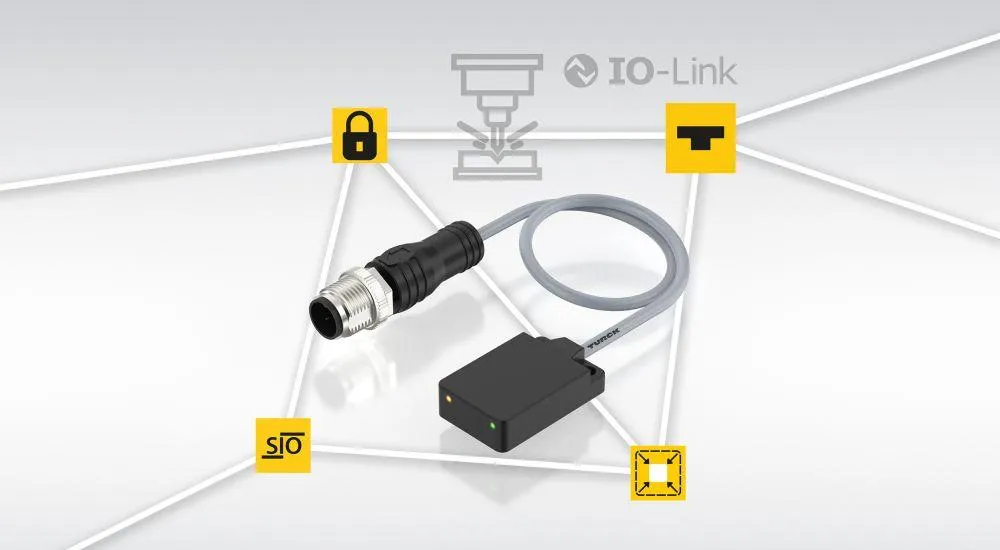
With the new TN-Q30-IOL2-0.15-RS4.41T HF read/write head, TURCK enables the identification of small workpieces and tools even in extremely confined spaces. IO-Link and integration into the TURCK Automation Suite (TAS) simplify integration into automated production processes.
At SPS 2026, TURCK is presenting an exceptionally slim HF RFID read/write head for industrial identification. This is a complete RFID reader that combines the antenna and read/write electronics in a single housing. It can read RFID tags and write data to them.
The new TN-Q30-IOL2-0.15-RS4.41T measures just 32 × 20 × 8 millimeters and can be integrated even in spaces where conventional readers in M12 or M18 form factors would take up too much room.
With this product, TURCK is expanding its IO-Link RFID portfolio to include a compact solution for identifying small objects on workpiece carriers as well as tools with integrated in-metal RFID tags. Typical applications include tool identification as well as semiconductor, electronics, photovoltaic, and battery production.
HF RFID for Small Workpieces and Tools
With an installation depth of just eight millimeters, the TN-Q30-IOL opens up additional possibilities for integrating RFID read points directly into machines and processing stations. It complements TURCK’s existing HF read/write heads from the TN-M18, TN-M30, and TN-Q40 series and offers the same basic functions in an exceptionally slim housing.
One key application is the identification of tools using so-called in-metal tags. These transponders are integrated directly into metal tools, allowing information to be stored on the tool and read when needed. Even small workpieces on compact workpiece carriers can thus be uniquely identified.
A common IODD simplifies integration
The new RFID head uses the same standardized device description (IODD, IO Device Description) as TURCK’s other RF read/write heads with IO-Link. It describes the functions, settings, and communication data of the readers. This allows different designs to be configured uniformly and integrated into machines and systems with minimal effort.
For simple identification tasks, reading the unique identifier (UID) of an RFID tag is sufficient. In addition, the read/write head can read and store small amounts of data directly on the tag. Configuration is performed via the web interface of a TURCK IO-Link master or via the TURCK Automation Suite (TAS).
In addition, the device supports the so-called SIO mode (Standard Input/Output). In this mode, the RFID head can output an electrical switching signal depending on the result of a tag detection. The result of an RFID read can thus be used immediately for simple machine functions.
Tool Data Available Directly on the Tool
In tool management, RFID tags can store information such as operating hours, maximum speed, tool type, and last maintenance date. The data remains associated with the respective tool and can be retrieved during the next identification process. The tool data stored on the RFID tag can be password-protected if necessary.
Via IO-Link masters, TAS, and TAS Cloud, this information is also available for advanced IIoT applications. In this way, RFID identification supports the availability of tool data within networked production environments.
RFID as Part of Networked Factory Automation
The new HF read/write head complements TURCK’s portfolio of industrial sensors, identification technology, and software. The TURCK Automation Suite supports the configuration of IO-Link devices and, with TAS Desktop, TAS Edge, and TAS Cloud, offers additional options for device management, data processing, and visualization.
The Think-WIoT technical article “How Turck Advances Factory Automation with RFID, Sensors, and Software” explains how TURCK combines RFID, sensors, decentralized automation, and software for end-to-end production and logistics processes. Key topics include workpiece identification, automated material tracking, and the integration of industrial data into digital applications.

TURCK at SPS 2026
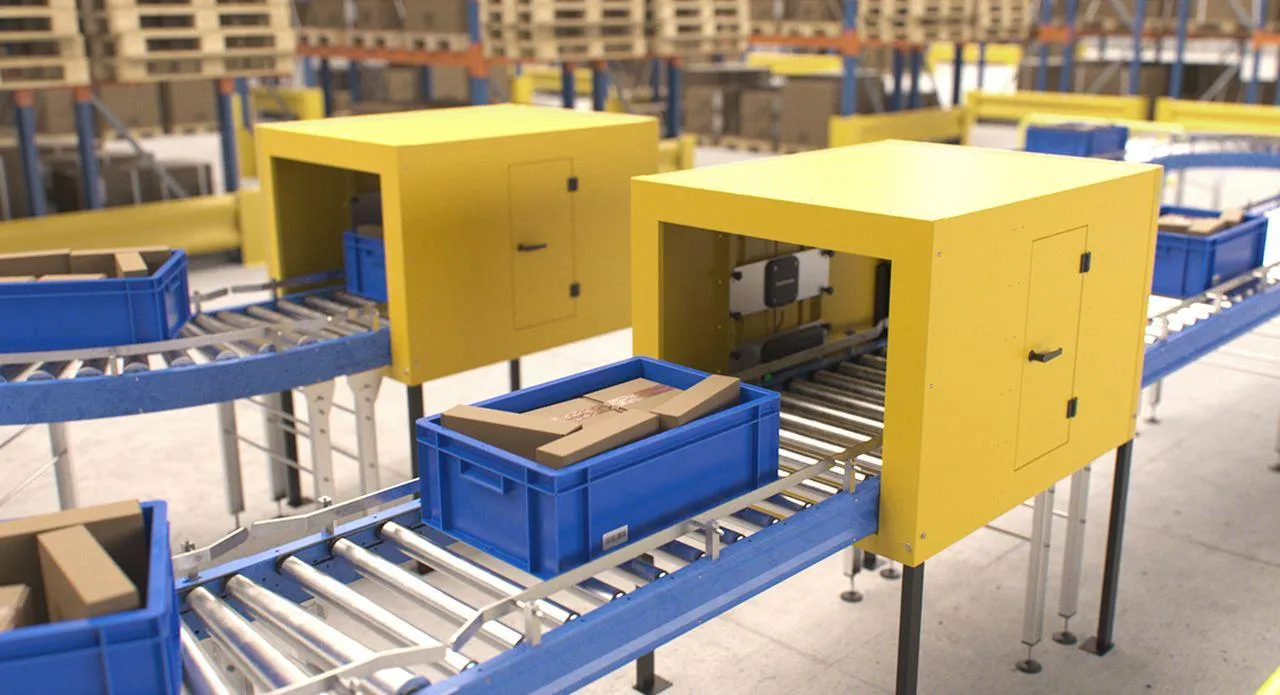
From November 24 to 26, 2026, TURCK will showcase additional solutions for connected production and logistics processes at SPS in Nuremberg. In addition to the new RFID reader, the company will present applications for condition monitoring, the TURCK Automation Suite, and digital conveyor technology, among other things.
Visit TURCK in Hall 7, Booth 250, to learn more about the new TN-Q30-IOL2-0.15-RS4.41T and other solutions for industrial automation.