Miniaturized RFID Tags Bring Identification Into the Smallest Spaces

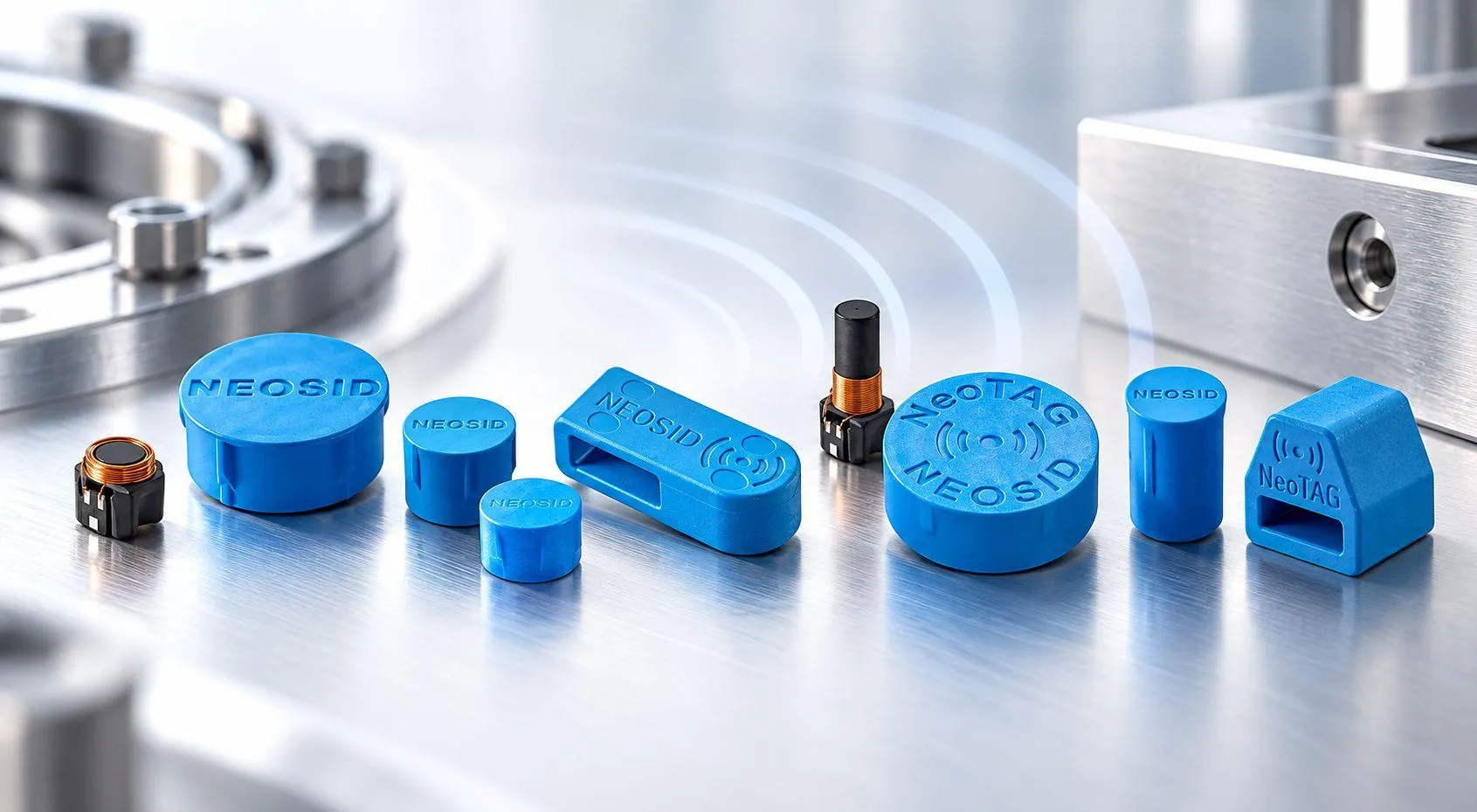
NEOSID’s NeoTAG® portfolio combines compact RFID transponders with reliable identification in demanding industrial environments. Available across LF, HF/NFC and UHF frequency ranges, the technology enables components, tools and assets to become digitally identifiable even where installation space is extremely limited.
RFID is becoming an increasingly important part of industrial products themselves. Instead of identifying only boxes, pallets or large assets, manufacturers are embedding transponders directly into tools, machine components, lifting equipment and other objects that may offer only a few millimeters of available space.
This is exactly where NEOSID positions its NeoTAG® RFID transponders. The portfolio is designed for applications in which very small dimensions, reliable read performance and resistance to demanding environmental conditions have to come together.
RFID Identification Inside Metal Environments
One particular challenge for RFID is the integration of transponders into or close to metal. Metallic surroundings can strongly influence the electromagnetic field and therefore reduce the performance of conventional RFID tags.
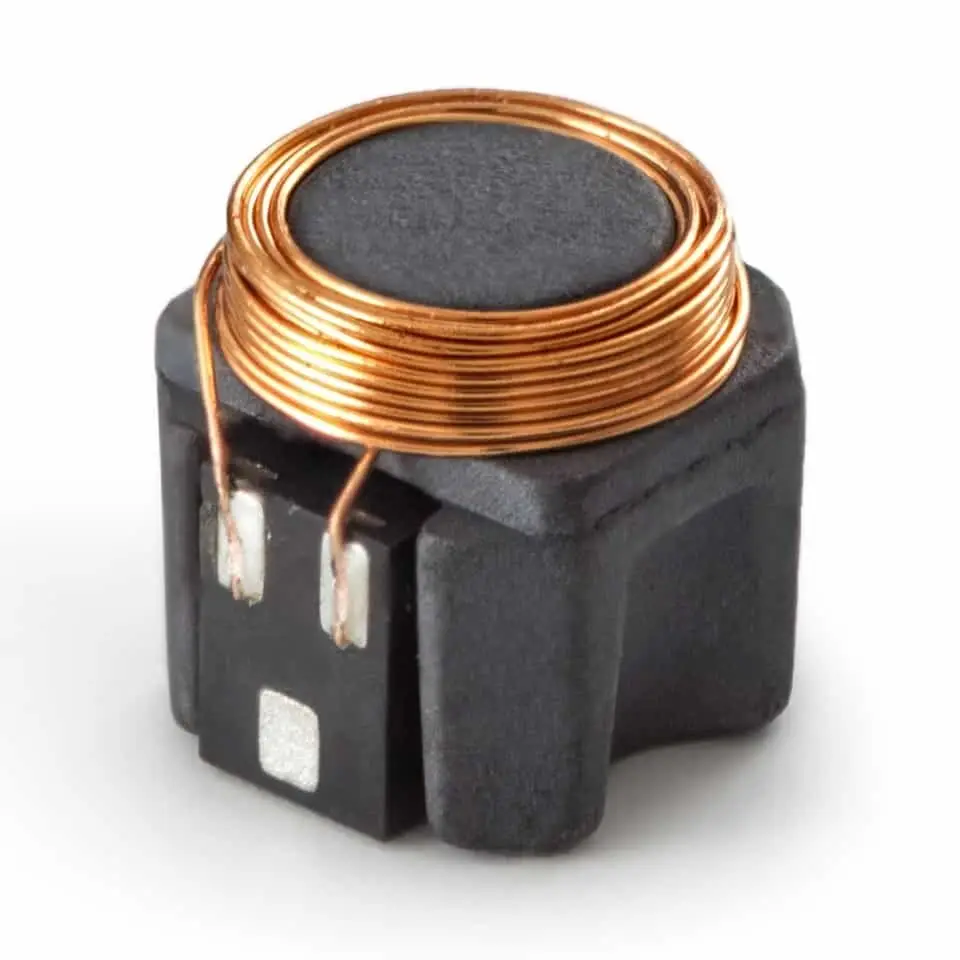
For its HF NeoTAG® technology operating at 13.56 MHz, NEOSID uses a specially designed ferrite core to support reliable communication from metallic environments. This makes it possible to integrate RFID identification directly into components where conventional label-type tags would not be suitable.
Some NeoTAG® designs measure only around 2.6 × 2.6 × 2.4 millimeters, opening up applications in extremely small installation spaces while still providing read/write functionality.
The HF transponders support ISO/IEC 15693 and can also be used as NFC Forum Type 5 Tags. This enables interaction not only with industrial RFID readers but, depending on the application, also with NFC-compatible mobile devices.
A tagged component can therefore carry its digital identity directly with it.
Related Stories


Neosid: Miniature RFID in metal thanks to ferrite
Neosid's mastery of injection-molded soft ferrites combined with end-to-end manufacturing enables reliable, miniaturized HF RFID transponders that operate directly in metal and meet complex industrial demands.
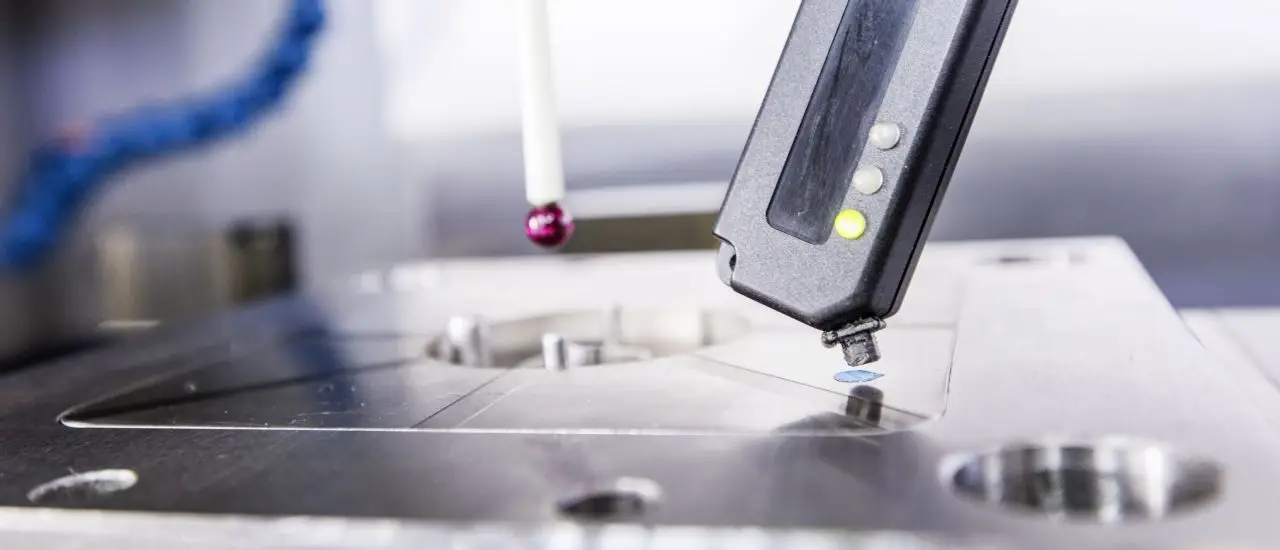
Neosid miniature RFID transponders for metal – robust thanks to ferrite core
Tailored ferrite-core miniature RFID transponders enable robust, long-term identification and digital traceability of metal objects across harsh industrial and medical environments.
From Tool Identification to Digital Product Information
A typical example is the integration of a NeoTAG® Plug into a hollow shaft taper used for machine tooling. Once the transponder is read, the identifier can be linked directly to digital information such as a product page, maintenance documentation or component data.
The principle can be extended to many industrial processes.
A permanently integrated RFID tag can connect a physical object with information about its identity, configuration, maintenance history, inspection status or digital documentation. Instead of relying on visually readable markings or manually entered serial numbers, the information can be retrieved wirelessly.
This becomes particularly relevant when components are difficult to access, exposed to dirt or mechanical stress, or expected to remain identifiable throughout a long service life.
Related Hardware
Plug and Flag Versions Support Industrial Integration
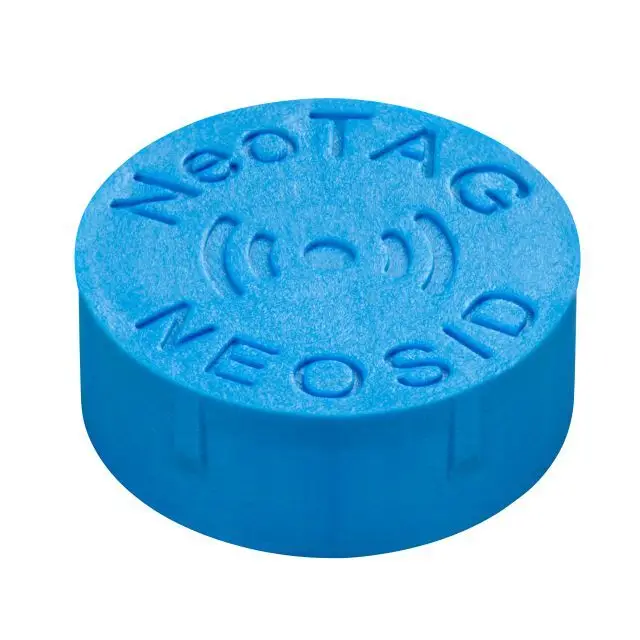
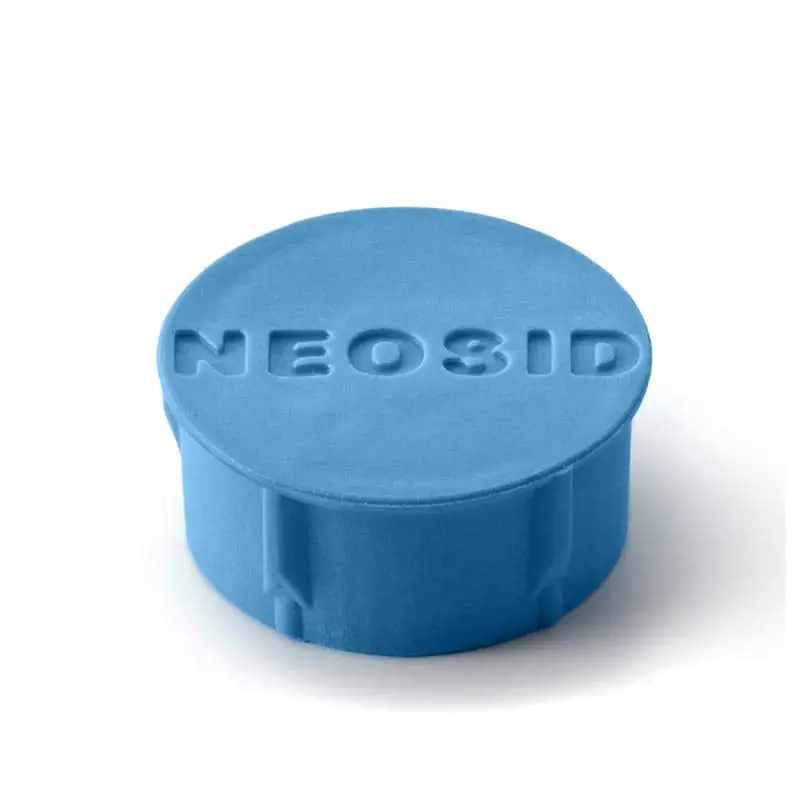
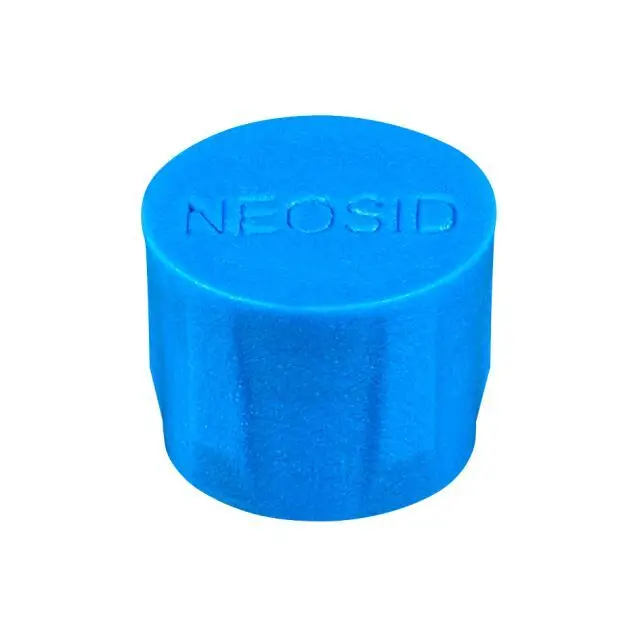
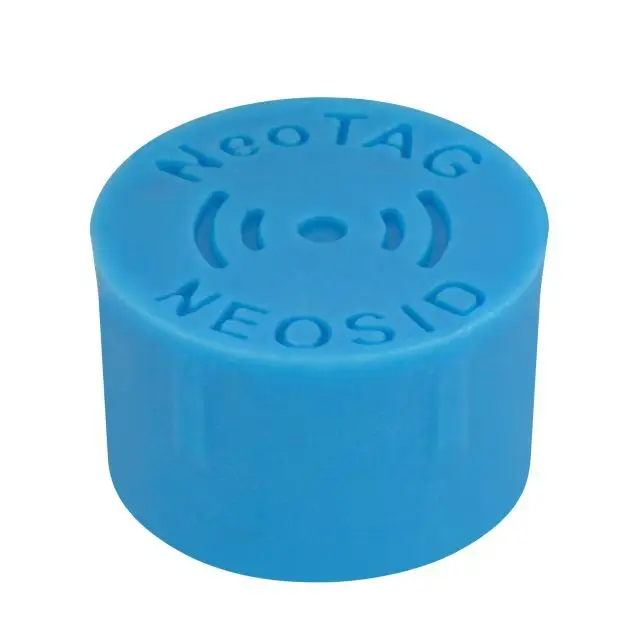
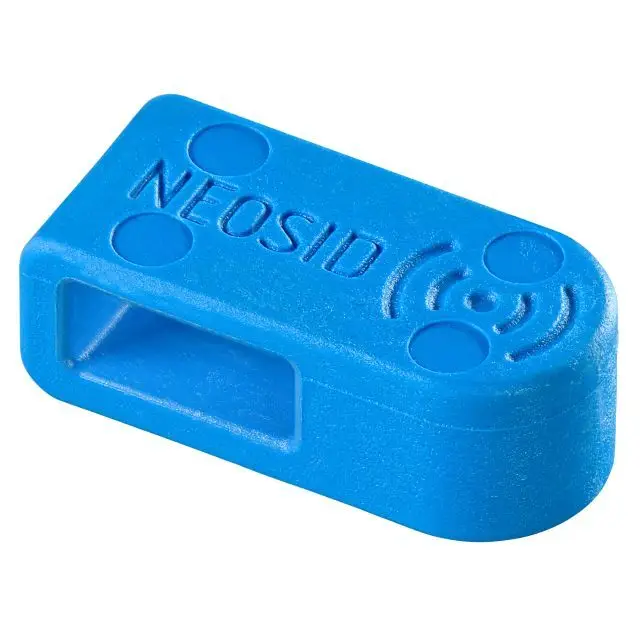
NEOSID also offers NeoTAG® Plug and NeoTAG® Flag variants with housings made from high-quality technical plastic designed to withstand mechanical loads, chemicals and elevated temperatures.
The NeoTAG® Plug features a press-in housing that can be inserted directly into a prepared bore hole and remain securely positioned without additional adhesive. This provides a practical way to integrate the RFID transponder directly into tools, components and other industrial assets.
Different housing and design variants allow the compact NeoTAG® technology to be adapted to different installation requirements and application environments.
Related Hardware
LF, HF/NFC and UHF for Different Applications
NEOSID develops RFID transponders for several frequency ranges rather than relying on a single RFID technology.
The portfolio includes LF at 125/134.2 kHz, HF/NFC at 13.56 MHz and UHF solutions in the 434, 868 and 9xx MHz ranges.
Each frequency range offers different characteristics regarding read distance, antenna design, environmental behavior and integration. This allows system designers to select a transponder technology according to the physical object and application rather than adapting the application to a standardized tag format.
NEOSID additionally develops matching transponder antennas and coils for RFID transponders and reader devices.
Small RFID Tags for Demanding Industrial Assets
The combination of compact dimensions and robust integration makes miniaturized RFID particularly interesting for assets that traditionally have been difficult to identify automatically.
Applications include maintenance and service operations, toolmaking, fire and safety equipment, foundries and steel mills, chain manufacturing, shipbuilding, aerospace, power generation, wind energy, tunnel and bridge construction as well as lifting gear and slings.
In these environments, RFID can establish a persistent digital connection between an individual physical component and the information associated with it.
This supports broader Industry 4.0 and IoT concepts in which not only machines but increasingly individual tools, components and technical assets become identifiable and digitally connected.
For manufacturers, the question is therefore no longer simply whether an object can carry an RFID tag. With transponders reaching dimensions of only a few millimeters, RFID identification can increasingly become an integrated part of the object itself.
Contact the RFID experts to discuss suitable tag formats, frequency ranges and integration options for your application.