
How Stichting OPEN secured its national battery chain with CLC

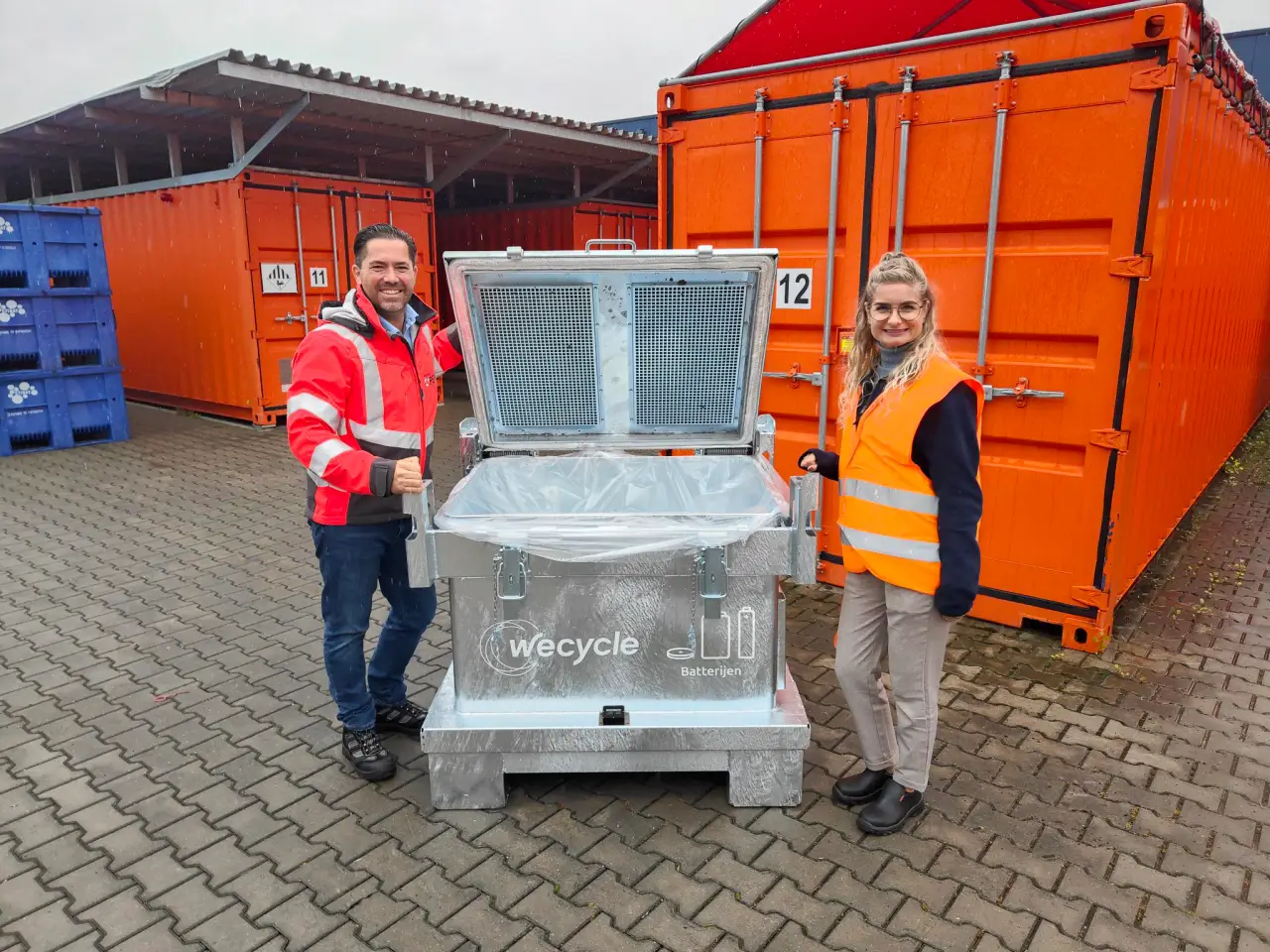
Stichting OPEN, the national coordinator for e-waste in the Netherlands, recently upgraded its battery logistics by moving from low-cost plastic barrels to high-value, safety-critical steel containers. By partnering with Connected Load Carrier (CLC), they replaced manual tracking with a digital validation layer, ensuring that every asset is visible, accounted for and rotating efficiently.
The transition from plastic to steel
Stichting OPEN coordinates the collection of over 238,000 tons of e-waste and batteries across the Netherlands. For years, the organization used inexpensive plastic barrels for battery storage. These were easy to manage; if stock ran low, the solution was simply to buy more barrels to maintain a large buffer.
However, the rise of lithium-ion batteries changed the requirements. Plastic barrels couldn’t contain a battery fire, leading Stichting OPEN to transition to specialized, high-value steel containers equipped with flame-resistant filters.
The costs of uncertainty
Unlike the old plastic barrels, these new steel containers represent a significant investment with replacement lead times of up to three months.
Success now depended on knowing exactly where every container was located at any given moment. Without that precision, Stichting OPEN would’ve been forced to keep buying expensive stock to cover for containers that were lost or sitting idle in unknown locations.
The limits of manual logging
In the past, planners relied on updates from various partners, which often led to a paper reality that didn't match the ground truth:
Data gaps: A location might be logged as having no container, even though there was one.
Stagnant stock: Containers could sit unused at a depot without being flagged, creating invisible rotation risks.
Unverified shortages: Sorting centers would report shortages that couldn't be confirmed, making it impossible to know if they truly needed more stock or if it was just an administrative error.
How Connected Load Carrier bridged the gap
To close this information gap, Stichting OPEN partnered with Connected Load Carrier (CLC) to add a factual verification layer to their existing processes. By embedding tracking hardware directly into the containers during production, CLC enabled the assets to log their own movements.
This was put to the ultimate test when a manufacturer reported a defect in a specific batch of flame-resistant filters. To ensure safety, every affected unit had to be pinpointed and repaired immediately.
With their traditional manual system, this would’ve required phone calls and manual reconciliation. But luckily, for Stichting OPEN, their baseline had already changed.
"When the producer told us there was a defect and every filter had to be repaired, I was really glad we had now made use of the CLC solution," says Stef Koomen, Battery Recycling Coordinator at Stichting OPEN. "I could immediately see exactly where the containers were... and send the repair team to the right spots".
By replacing manual records with verified reality, Stichting OPEN gained the ability to respond decisively to safety incidents without the need for manual searches or frantic phone calls.
Want to see the blueprint for total asset control?
By partnering with CLC, Stichting OPEN replaced fragmented assumptions with a digital validation layer that confirms the status of every asset in real-time.
Read the full use case to discover:
How CLC integrated tracking during the manufacturing process to ensure zero operational disruption.
The specific dwell time metrics used to flag stagnant assets and put them back into rotation.
How this verified data is intended to drive future procurement strategies based on actual operational needs.
Explore the full use case here