
Balluff Expands Industrial Flexibility with IO-Link Wireless

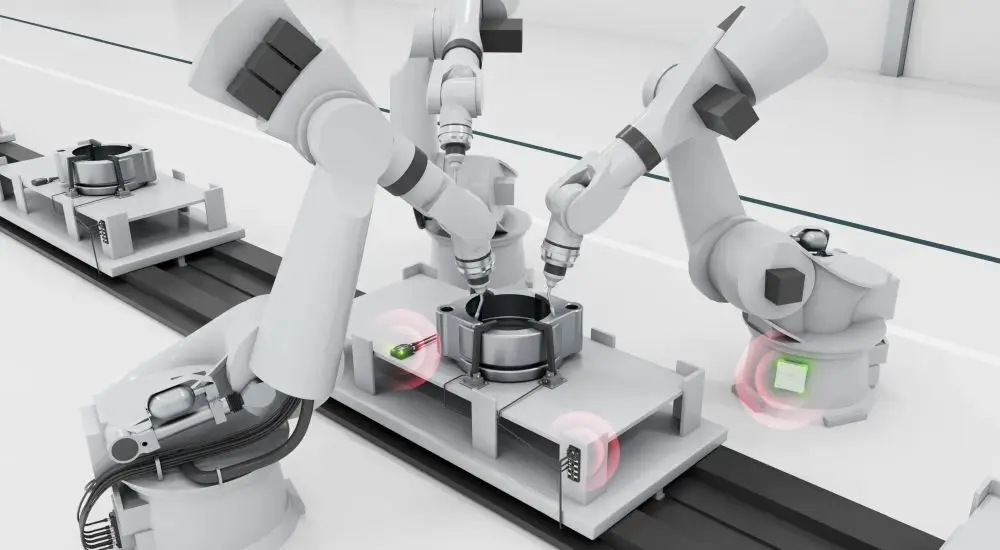
IO-Link Wireless extends proven sensor communication into areas where cables become a weak point, opening new possibilities for robotics, retrofits, and harsh industrial environments.
In industrial automation, cables have long been treated as a given. But in many applications, they are also a limitation. Dynamic motion, tight installation spaces, repeated bending, and harsh operating conditions all put pressure on wired communication.
Balluff addresses this challenge with IO-Link Wireless, a technology that brings the benefits of IO-Link into machine areas where cables are difficult, costly, or unreliable.
What makes the approach relevant is that Balluff is not positioning wireless as a replacement for wired IO-Link. Instead, IO-Link Wireless is designed as a practical extension of the existing standard. That means users can expand proven IO-Link systems without rebuilding their architecture, replacing sensors, or compromising compatibility.
Wireless where wired reaches its limits
For companies already using IO-Link, that is a strong message. The installed setup stays intact, while wireless communication adds a new level of flexibility.
Existing IO-Link devices can be connected through an IO-Link Wireless bridge, while the IO-Link Wireless master handles communication with the PLC. A wireless hub adds another option by connecting up to eight digital I/Os. In other words, Balluff offers a modular path into wireless automation rather than a disruptive system change.
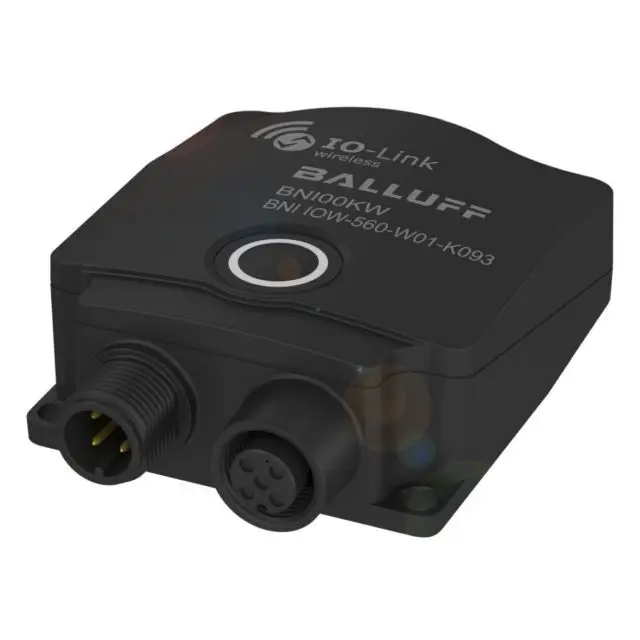

The real value becomes clear in motion-heavy applications. In robotics, robotic arms, grippers, and transport systems, cable wear is a constant issue. Twisting, bending, and repetitive movement can shorten cable life, increase maintenance effort, and create unplanned downtime. Wireless communication removes that weak point and enables machine concepts that would be far more difficult to implement with fixed wiring alone.
This becomes even more interesting when IO-Link Wireless is combined with inductive couplers for contactless power transfer. In that setup, both data and energy can be transmitted without physical contact, creating new options for highly dynamic end effectors, moving platforms, and compact machine zones.
Industrial-grade wireless, not consumer radio
Wireless in the factory is often viewed with skepticism, especially when reliability and latency are critical. Balluff addresses this directly by positioning IO-Link Wireless as an industrial communication technology rather than a variation of office WLAN or consumer Bluetooth.
The technology supports a transmission rate of 1 byte per 5 milliseconds, a packet error rate of 10⁻⁹, and ranges of up to 10 meters, or 20 meters with a single-track master. Frequency hopping helps the system use available spectrum efficiently, while a blacklisting mechanism supports coexistence with other wireless systems.
With a 5-track master, up to 40 IO-Link devices can be connected, giving the system the scalability needed for demanding machine and plant-level applications.
A practical answer for retrofits
Balluff also makes a strong case for IO-Link Wireless in brownfield environments. In many existing plants, the biggest obstacle to adding more sensors is not the automation concept itself, but the effort involved in routing cables through complex machinery.
Wireless IO-Link changes that equation by allowing targeted upgrades without redesigning the whole system.
That makes the technology especially relevant for retrofits where downtime must be minimized and the existing architecture should remain untouched. Instead of replacing a complete setup, users can add wireless communication exactly where conventional wiring has been too complex or too expensive.
From food processing to welding cells
The application range goes well beyond robotics. In food and beverage, fewer cables can support cleaner machine designs and reduce potential contamination points. In welding environments, where harsh conditions often damage cables and connectors, wireless communication can reduce maintenance needs and improve uptime.
These examples show the broader role IO-Link Wireless can play. It is not simply about eliminating cables. It is about making automation more adaptable in environments where traditional wiring creates operational and economic constraints.
Balluff’s broader message is clear: IO-Link Wireless expands the reach of a standard that industry already trusts.
For machine builders, it creates more freedom in design. For operators, it opens new options for modernization and optimization. And for industrial automation as a whole, it shows how wireless communication can move from niche use case to structured extension of an established ecosystem.
With IO-Link Wireless, Balluff is bringing sensor communication to a new level by making established IO-Link systems more flexible, more scalable, and better suited to the realities of modern machine design.
Interested in bringing wireless flexibility to your IO-Link system? Contact Balluff to discuss applications, retrofit opportunities, and integration options for your machines and plants.