2026 federal budget gives battery researchers in Germany renewed hope
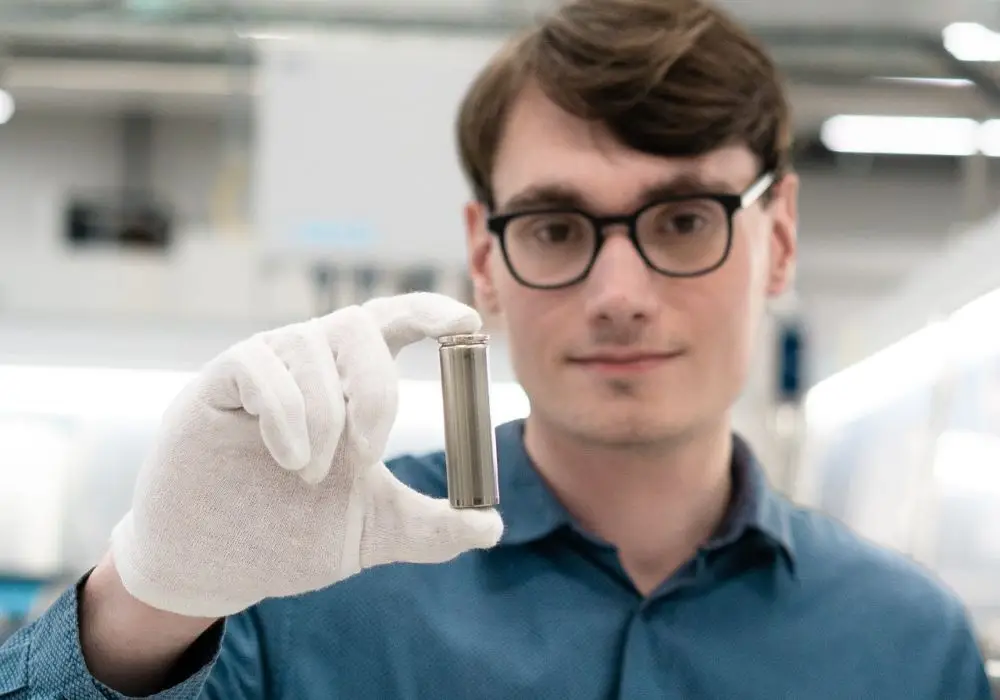
Fraunhofer IGCV: "We must regain lost expertise in order to remain competitive on the global stage."
The global race for technological innovation poses major challenges for Germany and Europe. In battery technology in particular, reliable framework conditions are crucial to securing research, transfer, and industrial value creation in the long term. Against this backdrop, the 2026 federal budget is providing new confidence: at the Battery Forum in Berlin (January 20–22, 2026), it was announced that funding for the development and expansion of battery technology would resume.
Rüdiger Daub, director of the Fraunhofer Institute for Casting, Composite and Processing Technology IGCV, welcomes the new perspective – while also pointing out the consequences of the past two years of stagnating funding.
"We have lost valuable time, which has set us back in global competition. We must regain lost expertise in order to remain competitive on the global stage."
Prof. Dr.-Ing. Rüdiger Daub, Director of the Fraunhofer IGCV
Planning security restored – but delay until effects are felt
From the perspective of Fraunhofer IGCV, the funding commitment is an important signal for greater predictability in economically difficult times. However, it will take time for funding calls to be published, projects to be submitted, and approvals to be granted. The first approved projects are not expected to be ready until the end of 2026.
Competitive pressure: strategy instead of stagnation
Daub emphasizes that batteries – together with key technologies such as AI – are central to future product innovation and value creation. At the same time, the environment is highly competitive: overcapacity and price pressure make it difficult for European players to survive in the market. Germany and Europe must therefore consistently adapt their strategy to the reality of global competition – with the aim of not being squeezed out of a key technology.
Fraunhofer IGCV: Bridging the gap between research and application
For small and medium-sized enterprises in particular, getting started with battery technologies can be complex – for example, due to the interactions between cell chemistry, cell design, and storage concepts. Fraunhofer IGCV provides support here with a research and development platform that translates new findings into product concepts more quickly and develops them further in collaboration with partners with a view to scaling. The aim is to create tailor-made solutions for a variety of applications – from tools to mobility- or energy-related systems.
-v2-responsive.webp)

Call to action: Energy for billions of devices
For large-scale IoT, it is not only capacity that matters, but also maintenance-free operation: low-power battery and energy concepts for BLE/Active RFID labels – combined with energy harvesting – are key for billions of networked assets. Europe is showing strong momentum in this area, with companies such as BTRY, Dracula Technologies, Truvami, and Zinergy. These approaches should now be specifically guided from research and piloting to broad industrial rollouts.