
EIC Accelerator Backs Perovskia Solar’s Indoor PV Scale-Up

Perovskia Solar has received a €2.25 million EIC Accelerator Grant to advance digitally printed perovskite photovoltaic cells for indoor IoT and smart devices. The funding targets efficiency, manufacturing capacity, lifetime and IP development as battery-free device architectures move towards volume deployment.
EIC Funding for Indoor Energy Harvesting
Swiss Empa spin-off Perovskia Solar has secured a €2.25 million non-dilutive grant from the European Innovation Council. In addition, the EIC Fund has indicated an intention to co-invest in the company’s next financing round, potentially matching up to 50 percent of the round, subject to due diligence.
The EIC Accelerator supports deep-tech companies developing technologies with international market potential. According to Empa, 38 start-ups were selected in the latest funding round, following a multi-stage assessment involving scientific, industrial and investment experts. The reported selection rate was below five percent.
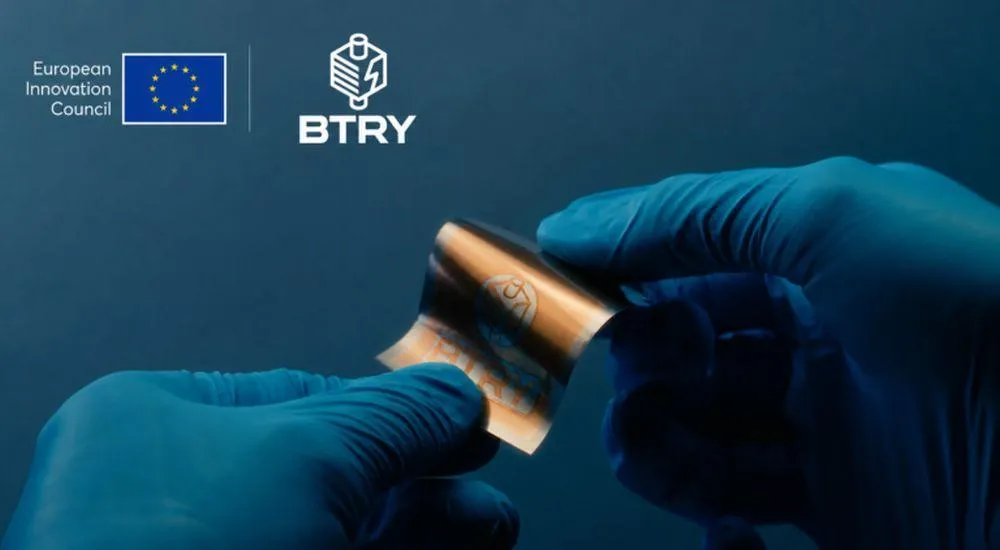
Perovskia Solar and battery developer BTRY, also an Empa spin-off, both received EIC Accelerator Grants in the same round. Together, the two companies secured more than €4.4 million in public innovation funding for energy storage and energy-harvesting technologies aimed at connected electronics.

Custom Photovoltaics for Low-Light Electronics
Perovskia Solar develops digitally printed perovskite photovoltaic cells designed for indoor and ambient-light conditions. Rather than relying on standardised panel formats, the company’s approach is intended to allow customised cell shapes, dimensions and electrical outputs for integration into specific electronic products.
This is relevant for device manufacturers seeking alternatives to disposable batteries in applications with low average power requirements. Target sectors include smart-home systems, electronic shelf labels, asset tracking, medical wearables and consumer electronics. The cells are already being supplied to international customers in these markets.
For system integrators and product developers, indoor photovoltaics can support device architectures that reduce battery-replacement cycles and associated maintenance. The practical value depends on the available light conditions, the device duty cycle and the total energy budget of the application.
From Laboratory Development to Volume Production
Perovskia Solar states that it has progressed from laboratory-scale development to volume production and has secured recurring contracts with device manufacturers in Europe, North America and Asia. The company is also expanding into specialised applications, including space-related use cases.
The EIC-funded project is intended to strengthen several technical and industrial areas. These include higher power-conversion efficiency, increased automated manufacturing throughput, improved operational lifetime and durability, and an expanded intellectual-property portfolio.
The company’s manufacturing approach is based on digital printing, which is intended to support scalable production of photovoltaic cells tailored to device-level integration. This manufacturing flexibility is a key distinction for electronics applications where available surface area, form factor and power requirements vary substantially between products.
Funding Supports the Next Industrialisation Phase
BTRY and Perovskia Solar illustrate two complementary approaches to powering connected devices. BTRY is developing thin-film solid-state batteries for IoT, MedTech, wearables and consumer electronics, while Perovskia Solar focuses on harvesting indoor light to reduce dependence on disposable batteries.
For the wider wireless IoT market, both approaches address a central engineering constraint: supplying energy to distributed devices without increasing maintenance effort, product size or electronic waste. Perovskia Solar is now preparing for its next growth phase, focused on manufacturing scale-up and international expansion.
“Securing the EIC Accelerator grant is a tremendous validation of our technology, our team, and our market vision,” said Anand Verma, CEO and Co-Founder of Perovskia Solar. “We believe that the era of disposable batteries in electronics is coming to an end. Every connected device should be self-powered by environmental light.”