
N-ERGIE Builds Hybrid mioty and LoRaWAN Water Metering Network
N-ERGIE and Diehl Metering are building a hybrid LPWAN network for automated water meter reading in Nuremberg. The project keeps existing LoRaWAN devices in operation while adding mioty for scalable household metering and future smart city use cases.
From Existing LoRaWAN to Hybrid LPWAN
N-ERGIE supplies drinking water and energy to the city of Nuremberg. As part of its digital infrastructure strategy, the utility is moving household water meters toward fully automated remote reading.
Before the project, N-ERGIE already operated a LoRaWAN network for selected applications, including heat meters and shaft water meters. For the next development stage, however, the existing setup was no longer sufficient to support the fully automated collection of all household water meters across the city.
The technical objective was therefore not to replace LoRaWAN. The goal was to integrate the existing infrastructure and add a more scalable radio technology for the next rollout phase. Diehl Metering implemented this as a hybrid network architecture combining LoRaWAN and mioty.
“N-ERGIE already had a LoRaWAN® network in place. Naturally, we wanted to continue using this while also investing in scalable future technology. The challenge was to find a solution that would intelligently combine the old and the new without having to completely rebuild everything from scratch,” said Anja Scheckenbach, Multiconnectivity Order Coordinator & Project Management at N-ERGIE.
Why mioty Was Added
mioty was introduced for the large-scale expansion of the metering network. The technology is designed for high device numbers, long range and efficient data transmission in large IoT infrastructures.
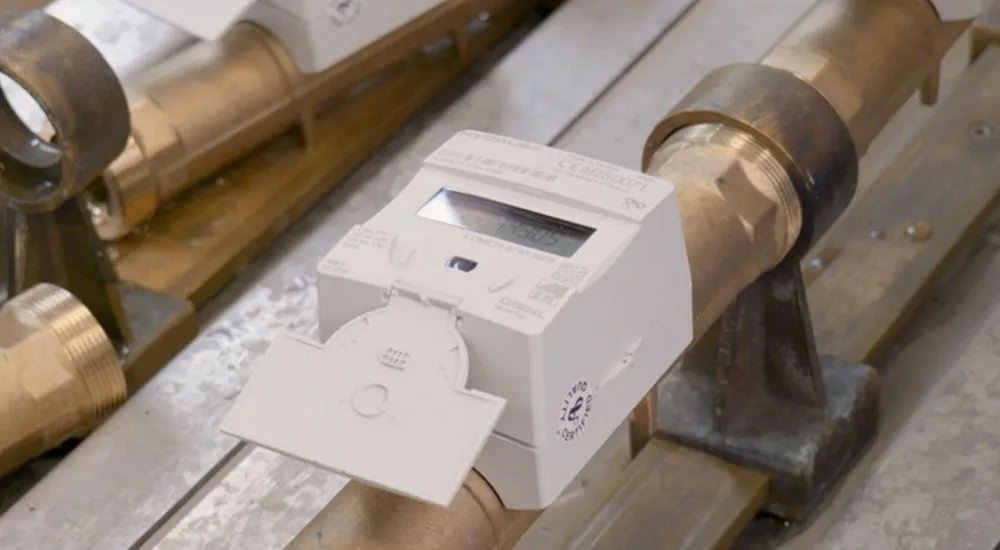
For N-ERGIE, this is relevant because the water meter rollout has to scale beyond the first connected devices. By March 2025, around 21,300 HYDRUS 2.0 ultrasonic water meters had already been connected to the network. The system is designed to grow to around 80,000 meters without adding further gateways.
The project also uses mioty4OMS, the mioty-based standard optimized for metering applications. This supports backward compatibility and future readiness in an OMS-based (Open Metering System) metering environment.
Where LoRaWAN and mioty Data Come Together
The integration point is Diehl Metering’s IZAR IoT GATEWAY Premium. The gateway collects data from different radio technologies and transfers it into the central metering system.
This means that LoRaWAN and mioty remain separate communication technologies in the field. Existing meters can continue to transmit via LoRaWAN, while new HYDRUS 2.0 meters use mioty4OMS. Their data streams come together at the gateway and are then processed in the software environment.
The IZAR IoT GATEWAY Premium supports wM-Bus, LoRaWAN and mioty4OMS. In this architecture, the gateway is the technical bridge between installed devices, new meter generations and centralized data management.
Network Rollout in Nuremberg
In the first project stage in 2023, 30 new receiving stations were installed across Nuremberg, with five additional locations in Fürth. These stations replaced the previous receiving infrastructure. Additional locations are already planned.
The use of mioty increases radio range and reduces the number of installation sites needed for wide-area coverage. For utilities, this is a practical factor in dense urban deployments where gateways, installation points and long-term maintenance must be planned efficiently.
Operational Value Beyond Meter Reading
The first application is automated water meter reading for billing. Meter values no longer have to be collected manually or submitted by customers. The utility receives current consumption data and can use it for more efficient operational processes.
The HYDRUS 2.0 ultrasonic water meters also provide additional information such as water temperature, leakage alerts and diagnostic data. This allows the metering network to support fault detection and network monitoring, not only billing.
The hybrid architecture also creates a basis for further smart city applications. Diehl Metering and N-ERGIE describe possible extensions for district heating monitoring, parking space occupancy and water level monitoring in underpasses during heavy rainfall.
Relevance for Utilities and Integrators
For utilities, the N-ERGIE project shows how existing LoRaWAN infrastructures can be extended without a disruptive migration. Installed devices remain usable, while new metering applications can be added through mioty.
For system integrators and solution providers, the case highlights the role of multiconnectivity gateways in large IoT rollouts. The value is not created by one radio technology alone, but by the ability to combine device fleets, protocols and metering data in one operational infrastructure.
To learn more about the N-ERGIE hybrid water network, visit the Diehl Metering source page: https://www.diehl.com/metering/en/customer-cases/n-ergie-hybrid-water-network-ami-drinking-water-supply/