Leuze outlines seven-step process for compliant machine safety inspections

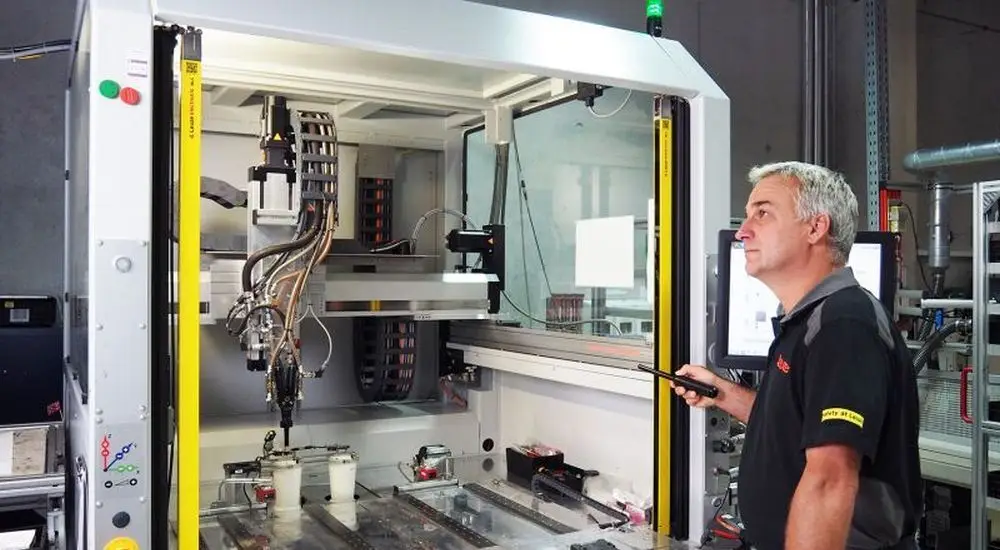
Leuze has published a structured seven-step methodology to support machine operators in preparing for safety inspections in industrial automation. The approach focuses on risk identification, standards-based assessment, and validation, helping ensure compliance, reduce safety gaps, and maintain operational reliability.
Structured safety approach for industrial environments
Leuze electronic GmbH + Co. KG presents a systematic framework to improve machine and system safety across industrial applications. The methodology is based on practical experience from safety services and addresses recurring issues such as overlooked risks, time constraints, and insufficient documentation.
According to the company, many safety deficiencies originate well before formal inspections. A structured and continuous process is therefore required to ensure compliance and avoid operational disruptions.
Step 1 and 2: Risk identification and assessment
The first phase focuses on identifying all relevant risks within a system. This includes mechanical and electrical hazards, as well as the condition of protective devices such as safety sensors and control systems. Documentation plays a central role in detecting wear, tampering, or misconfiguration.
Following identification, risks are assessed according to EN ISO 12100. This step provides a standardized basis for classifying hazards and defining mitigation measures. The resulting risk analysis informs all further technical and investment decisions.
Step 3 and 4: Developing and refining safety concepts
A formal safety concept translates identified risks into concrete measures. It serves as a reference for all stakeholders and supports alignment on feasibility and usability. This step is essential to avoid misinterpretation during implementation.
In complex automation environments, conventional safety concepts may not be sufficient. Applications with dynamic processes, such as changing pallet configurations at muting stations, require more advanced and application-specific safety architectures. Leuze emphasizes the importance of integrating tailored safety solutions at this stage.
Step 5: Implementation and commissioning
The implementation phase requires a detailed understanding of the system layout. Based on this analysis, suitable safety components such as sensors or switches are selected and configured.
Commissioning is supported by on-site expertise, ensuring that system parameters are correctly set and that personnel are trained in operation and maintenance. This step reduces integration risks and improves long-term system reliability.
Step 6: Verification and validation
To ensure compliance and functional safety, all implemented measures must be verified and validated. This includes testing safety functions, performing measurements, and documenting results under real operating conditions.
This proof of effectiveness confirms that the system meets the required safety standards and performs as intended in practice.
Step 7: Documentation and continuous inspection
Comprehensive documentation forms the final step. This includes risk assessments, test reports, and declarations of conformity. These documents define the current safety status of the system.
Regular inspections and recurring risk assessments are required to maintain compliance with evolving technical standards. Continuous monitoring ensures both operator safety and system availability over the full lifecycle.
Relevance for integrators and operators
For system integrators and solution providers, the seven-step model provides a structured framework for designing and validating safety architectures. It supports compliance with established standards and facilitates communication between stakeholders.
For operators, the approach reduces uncertainty during inspections and helps ensure that safety measures are implemented proactively rather than reactively.
Get in touch with our experts
Planning a safety assessment or preparing for an upcoming inspection? Discuss your requirements with experienced specialists and identify potential risks early. Reach out to explore how structured safety processes can be applied to your specific system or application.