NXP UCODE X Advances RFID Performance in Checkpoint Inlays

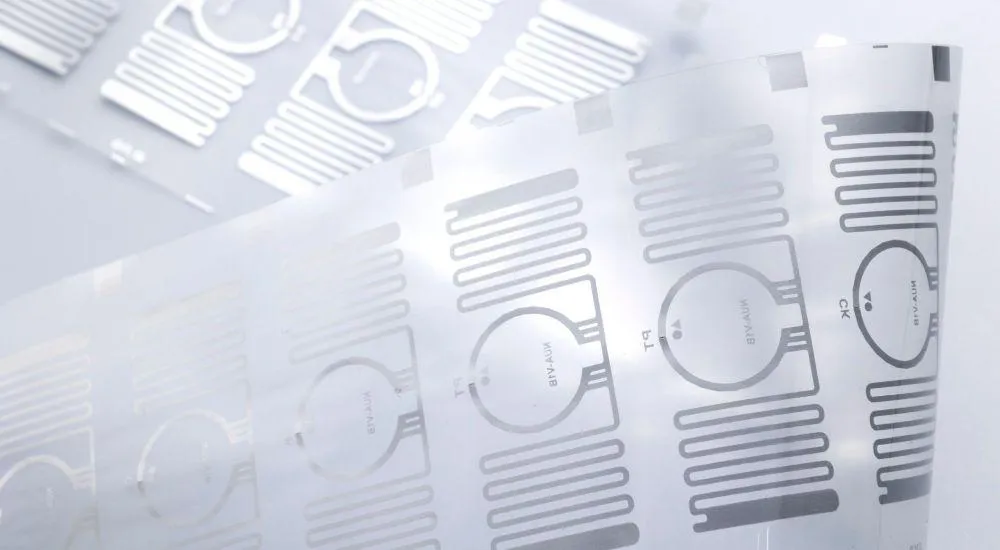
Checkpoint Systems integrates NXP’s UCODE X chip into selected advanced RFID inlays and smart labels for retail, logistics and supply chain applications. With −26.2 dBm read sensitivity, the chip can respond to very low received RF power. This supports longer read ranges, smaller inlay designs and more stable reads in demanding RFID environments.
Measurable Performance Step for RAIN RFID
UCODE X is a RAIN RFID integrated circuit developed by NXP Semiconductors for deployments that require high read performance, flexible data handling and compatibility with EPC Gen2 infrastructures.
The chip offers −26.2 dBm read sensitivity, −23 dBm write sensitivity and 32-bit write speed in 1.9 ms. Read sensitivity describes how little RF power the chip needs to respond to a reader signal. The more negative the dBm value, the more sensitive the chip is.
For RFID applications, this matters when distance, orientation, packaging materials or dense item environments reduce the received signal level. In selected Checkpoint inlay models, UCODE X enables performance gains of up to −3 dBm. This can extend read ranges and improve data reliability in inventory management, product traceability and logistics optimization.
From Chip Performance to Inlay Performance
RFID performance is not determined by the chip alone. Chip sensitivity, antenna geometry, inlay architecture, materials and the application environment define how reliably a tag can be read in practice.
Checkpoint Systems combines UCODE X with RFID inlay engineering to translate chip-level performance into practical tag performance. The reported improvement applies to selected models and depends on the inlay design and use case. It should be understood as a targeted performance upgrade, not as a general statement for every RFID label or inlay.
Several Checkpoint RFID inlays equipped with UCODE X have achieved ARC certification from Auburn University RFID Lab. ARC certification validates inlay performance against defined industry test specifications and is relevant for retailers, solution providers and system integrators that require predictable performance across product categories and operational environments.
Flexible Memory for Retail and Logistics
A key feature of UCODE X is its configurable memory architecture. Companies can adjust the allocation between EPC memory and user memory according to application requirements.
This allows additional data to be stored directly on the RFID tag, including product identifiers, batch information, logistics data or authentication-related information. At the same time, the chip remains standards-based and supports integration into existing RAIN RFID infrastructures.
For system integrators and solution providers, this flexibility is important because RFID projects increasingly go beyond simple item identification. Retailers, logistics providers and industrial users need tags that support inventory accuracy, traceability, compliance processes and product lifecycle documentation without disrupting existing infrastructure.
RFID Under Real-World Conditions
Retail and logistics environments are technically demanding for RFID systems. High tag density, dense shelving, metallic surfaces, liquids, multilayer packaging and constant product movement can reduce read consistency.
These conditions are common in stores, stockrooms, distribution centers and supply chain processes where thousands of items must be captured quickly and accurately. A tag that performs well in a controlled test environment must also remain reliable in mixed product environments and under operational pressure.
UCODE X addresses these challenges at chip level through higher sensitivity and flexible memory. Checkpoint Systems combines this with optimized antenna design and inlay architecture for selected smart labels and inlays.
Checkpoint and NXP Collaboration
Checkpoint Systems works with NXP to integrate advanced RFID ICs such as UCODE X into high-performance RFID labels and inlays. The collaboration combines chip-level performance with application-specific inlay design.
This topic was highlighted at EuroShop in Düsseldorf, where Avneet Singh, RFID Inlay Portfolio Manager at Checkpoint Systems, discussed RFID inlay and chip technology with Kurt Bischod, Director of Marketing for RAIN RFID Retail Solutions at NXP.
The rollout of NXP UCODE X will cover several Checkpoint solutions starting in 2026. This makes the integration relevant as a targeted performance upgrade for selected RFID inlays and smart labels in retail, logistics and industrial identification.
Applications in Retail and Smart Logistics
In retail, UCODE X-based Checkpoint inlays can support faster cycle counts, improved stock visibility and better product availability across stores and omnichannel operations.
In distribution centers, improved sensitivity can support more reliable scanning of large product volumes during inbound, outbound and internal logistics processes.
For supply chain traceability, configurable memory can support additional product or logistics information directly on the tag. This is relevant for authentication, compliance, batch tracking and lifecycle documentation.
Contact Checkpoint Systems
Checkpoint Systems offers RFID labels and inlays for retail, logistics and industrial applications, including selected solutions based on NXP UCODE X.
To learn more about Checkpoint RFID solutions, UCODE X-based inlays and application-specific RFID label design, contact Checkpoint Systems directly.