

Bluetooth SIG Positions Bluetooth LE for Ambient IoT

Bluetooth LE is emerging as a connectivity option for Ambient IoT devices powered by light, radio waves, motion or heat. Battery-free and battery-assisted smart labels and sensors could reduce maintenance, but their performance depends on the complete energy and system architecture.
Ambient IoT Changes the Power Architecture
Ambient IoT describes connected devices that obtain part or all of their operating energy from sources already available in the environment. These sources can include indoor or outdoor light, RF energy, motion and heat.
Harvested energy can supply the electronics directly or be stored temporarily for sensing, processing and wireless transmission. Depending on the application, devices may operate without a conventional battery or combine harvesting with capacitors, rechargeable microbatteries or other compact storage technologies.
The Bluetooth SIG positions Bluetooth LE as a suitable communication layer for this device class because of its low power requirements, comparatively low IC costs and support for flexible network topologies.
Smart Labels Become Sensor Nodes
Bluetooth smart labels can combine item identification with information about temperature, humidity, movement and handling events.
ABI Research forecasts that annual shipments of Bluetooth smart labels will reach 138 million units by 2030. A growing subset is expected to operate with little or no conventional battery by harvesting energy from the surrounding environment.
In logistics and supply-chain applications, these labels could help determine whether goods have been exposed to damaging temperatures or improper handling. More precise condition data can support targeted interventions, improve recall accuracy and reduce precautionary disposal caused by missing information.
However, the label is only one component of the solution. Receivers, gateways, software platforms and interfaces to warehouse, transport or enterprise systems are required to turn sensor readings into operational decisions.
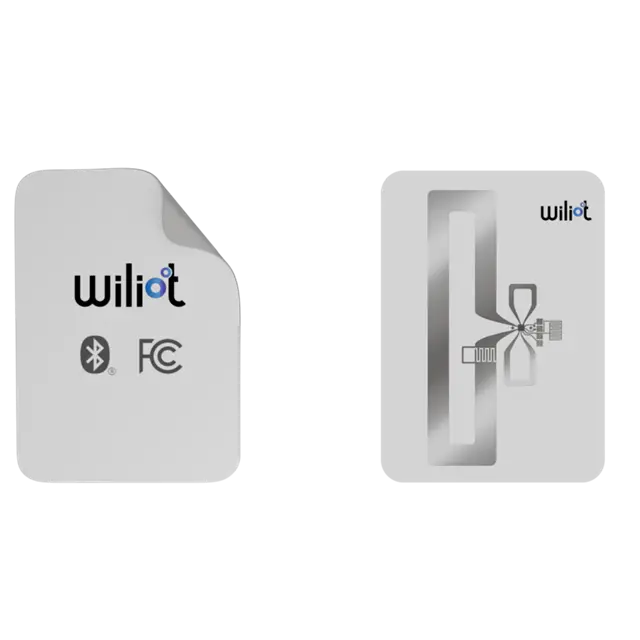

ID-Pixels 3.0 - Energy-Harvesting BLE Label
ID-Pixels 3.0 offers a secure, energy-efficient BLE labeling solution for enhancing visibility in IoT-enabled supply chains.
Available Energy Defines Device Performance
The feasibility of an Ambient IoT device depends on its complete energy budget. Sensors, processors, memory and radio transmissions must operate within the energy available under real environmental conditions.
Harvesting performance, storage capacity, sensing intervals and communication frequency are directly connected. More frequent measurements and transmissions increase energy demand, while fluctuating light, temperature or RF conditions can limit update rates.
Ultra-low-power batteries can play two different roles in this architecture. They may operate as standalone power sources for devices with very low energy demand or store harvested energy until sufficient power is available for sensing and radio transmission.
For system integrators, the relevant question is therefore not simply whether a device is described as battery-free. The complete design must deliver the required data reliably throughout the intended operating period.
Applications in Buildings and Industry
Bluetooth-based sensing is already used in networked lighting, HVAC automation and condition monitoring.
Occupancy, daylight and environmental sensors can provide the data required for building systems to respond to actual usage rather than relying entirely on fixed schedules. The resulting savings depend on sensor placement, automation logic and integration with the wider building-management system.
In industrial environments, sensors can measure vibration, temperature, pressure and other indicators of machine condition. Connected analytics and maintenance software can use this data to identify changes before they lead to unexpected failures.
Energy-harvesting sensor nodes could extend monitoring to locations where cabling or repeated battery replacement is impractical. Their suitability depends on the available energy, required measurement quality, transmission rate and network coverage.
Sustainability Requires a System-Level Assessment
Bluetooth LE can support lower-maintenance smart labels, sensors and control systems, but the radio technology alone does not make an application sustainable.
A complete assessment must include device production, energy harvesting, storage, batteries where required, receivers, gateways, data processing and maintenance. These factors must be compared with measurable reductions in energy consumption, waste, breakdowns or equipment replacement.
Ambient IoT is therefore not simply about removing the battery. Power supply, storage, sensing, communication and data processing must be designed as one integrated architecture.
Read the full Bluetooth SIG article: https://www.bluetooth.com/blog/how-bluetooth-technology-is-being-used-to-help-create-a-more-sustainable-world/