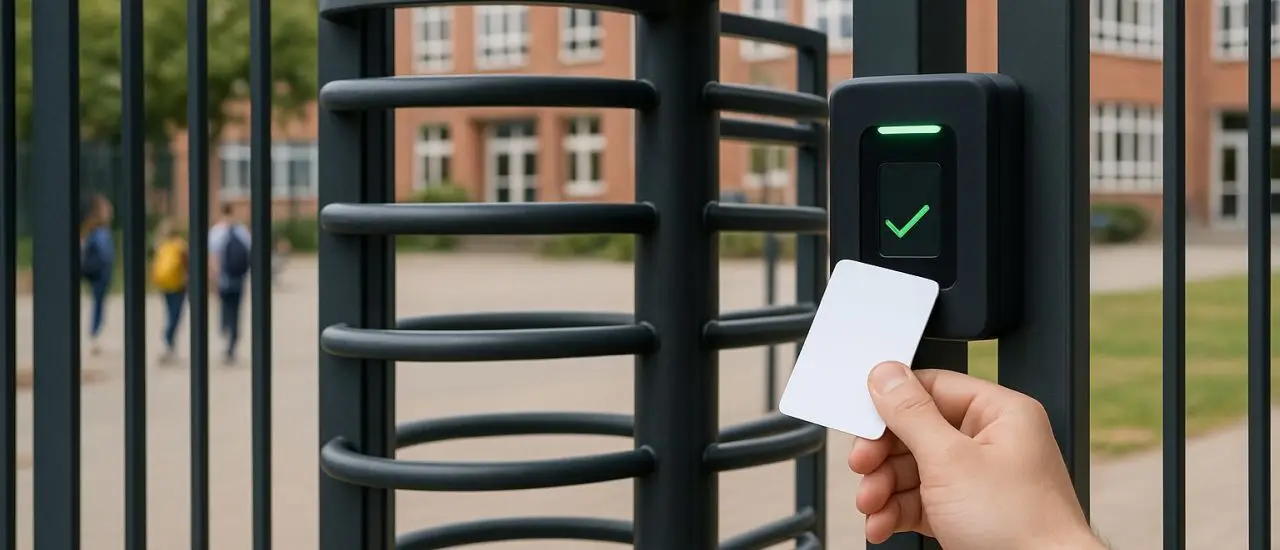

- Chip cards serve as a uniform access medium suitable for all students regardless of age or smartphone ownership.
- RFID technology operating at 13.56 MHz ensures secure short-range identification that prevents accidental or mass data capture.
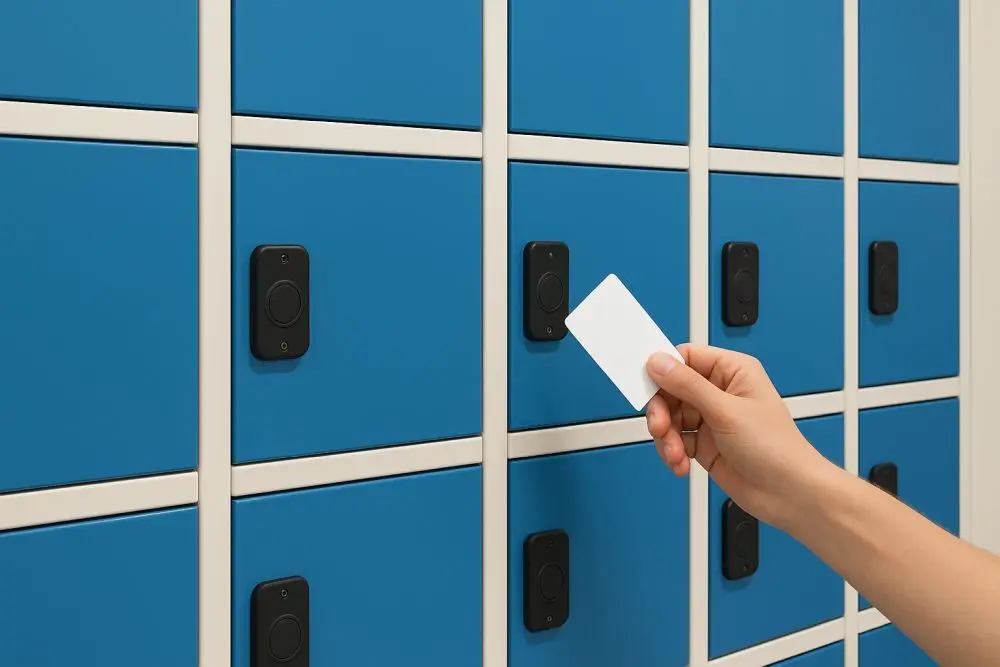
- Multi-functional capabilities allow a single card to manage cafeteria payments, library loans, and authorized printing access.
- Establishing a safety culture through transparent access protocols helps deter vandalism and unauthorized campus entry.
Schools should be open places of learning – while at the same time protecting against unauthorized access, vandalism, or strangers on the premises. Often, all that stands between a "campus atmosphere" and trespassing is an unlocked door or an open gate.
Modern access solutions help to secure school buildings and sensitive areas such as specialist rooms, IT, or administration without turning the school into a high-security zone. In this interview, Steffi Lasch, Sales and Marketing Manager at Thales DIS BPS Germany, explains why contactless chip cards form the basis for a well-designed access concept in schools.
Access control in schools: goals, risks, and security culture
Chip card instead of smartphone: a uniform medium for everyone
Many school administrators are currently discussing access systems for school grounds. What are the advantages of a chip card compared to a smartphone?
Steffi Lasch: In my opinion, the biggest advantage of the chip card is that it is a uniform medium for everyone. From first graders to graduating classes, everyone uses the same card. This also works very well in elementary schools.
In addition, the chip card is a passive medium; it does not transmit signals on its own like a smartphone. Especially now, when many schools are discussing banning or at least restricting smartphones, the card is a simple, practical, and data-saving solution, for students as well as teachers.
Access security and more: what access systems can do
What is the core purpose of these systems – access security or even more?
Steffi Lasch: Essentially, it's about securing the school grounds so that only those who are supposed to be there can enter: students, teachers, and staff. The aim is to prevent unauthorized persons from sneaking in, causing problems, or simply causing mischief. This can include vandalism, theft, or even a threat situation.
Many school buildings are still very "open" today. Of course, chip cards alone do not completely solve security issues, but they can be an important component in an overall system.
Study situation: Violence and vandalism in schools
You mentioned studies on security in schools. What developments do you see there?
Steffi Lasch: There is a very interesting study by the BHE (Federal Association for Security Technology) entitled "More Security in Schools." It is already a few years old, but more relevant than ever. It systematically assesses security risks in schools and describes measures that can be taken.
If you follow the news, you can see that violence in schools is on the rise – both physical violence and property damage, i.e., vandalism. A chip card cannot prevent insults or conflicts, but it supports a system in which access and attendance are clearly regulated and traceable.
Safety culture instead of "playground" thinking
You already mentioned vandalism. What role does "safety thinking" play in schools?
Steffi Lasch: For me, it is important that safety thinking is firmly established and that people don't say, "A schoolyard is like a playground."
A uniform access system can create awareness – among both students and teachers. Everyone notices that we are actively concerned with protecting people and property. When it is clear that only authorized persons can enter the premises and that access is controlled, this also acts as a deterrent to vandalism.
So it's not just about technology, but about a culture of awareness and responsibility.

Technology and application: How student chip cards work in everyday life
RFID technology: Contactless chip cards for schools
What technologies are typically used on such student chip cards?
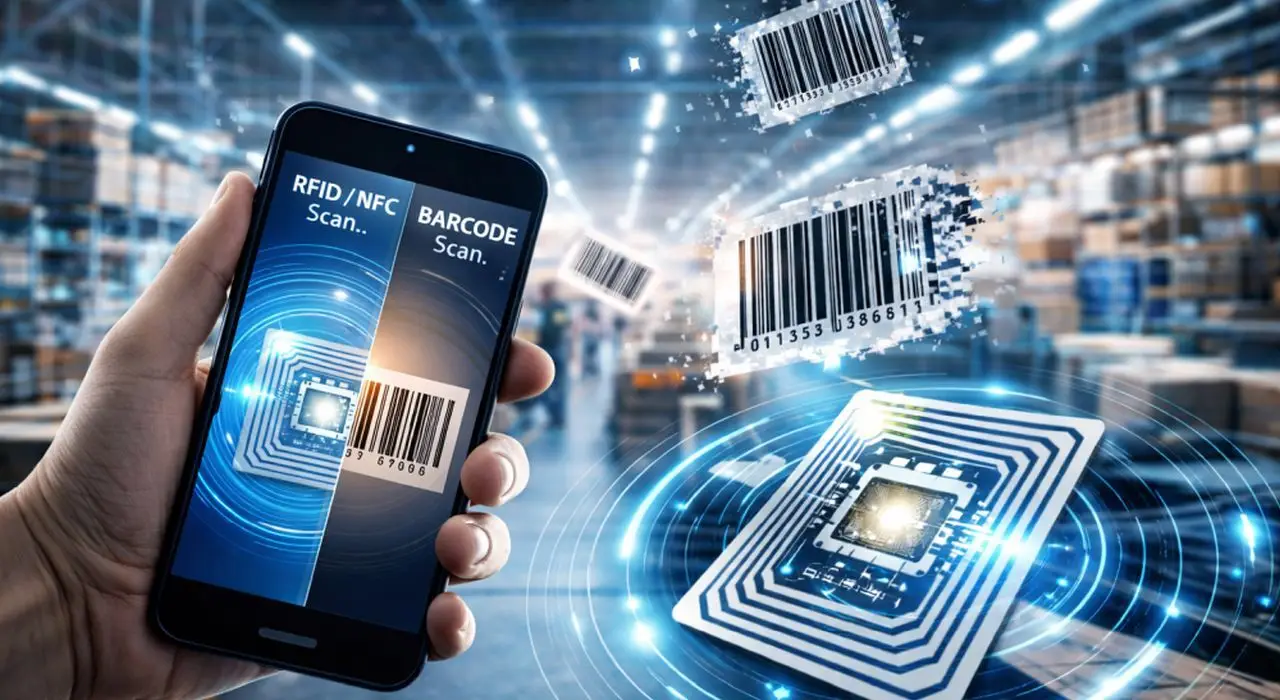
Steffi Lasch: Based on our project experience, these are mostly contactless RFID cards. They are particularly well suited for larger groups of people because they allow for quick passage and are sufficiently secure at the same time.
Technically speaking, we are talking about high-frequency cards at 13.56 MHz – this is the usual standard in access control, comparable to ID cards or passports. I would deliberately choose a short range, i.e., a reading distance of no more than about ten centimeters. This ensures that many people are not "accidentally" recorded at the same time, but only the person who actively holds the card up to the reader.
Focus on main entrances: Where access control begins
Is access control limited to the entrance gate, or are classroom doors also secured with it?
Steffi Lasch: In most of the projects I am familiar with, the focus is initially on the main access points: i.e., the entrances to the building or campus. Large groups of people have to pass through these entrances in a short period of time, for example in the morning before classes begin.
Technically, the time and card are recorded when access is granted – so you know, for example, that at 7:05 a.m., student X entered the building.
Checking in and out: making attendance traceable in an emergency
Would it make sense to "check out" again when leaving the school grounds?
Steffi Lasch: Yes , I would definitely advocate that. In dangerous situations – such as a fire alarm – it is very helpful to know who is currently on the premises and who is not.
Of course, this is not real-time tracking. Once someone is on the premises, you cannot "track" them. It is solely a matter of recording that the person has entered or left the premises. Real tracking would be sensitive in terms of data protection and would require an active medium – which is not the case with such chip cards. This also makes them easy to use for younger children.
Multi-application card: added value beyond access control
Can such cards also be used for other functions in everyday school life?
Steffi Lasch: Yes , and in my opinion, that's a big plus. The card can be used as a payment card in the cafeteria, for the library, for copiers and printers, for certain classrooms or activities that have to be paid for or booked separately.
Technically, this depends on the overall system: it requires readers, appropriate backend software, security doors, possibly video surveillance – this is where a system integrator is needed. But once a card is stored as an ID in the system, it can be activated for many applications. Students then no longer need cash or credit cards, but simply use their chip card.
Data protection, acceptance, and implementation of access control in schools
Personalization and data protection: How much data does the card need?
Are the chip cards usually personalized – for example, with a name and photo?
Steffi Lasch: They can be personalized; it is technically no problem to print a name and photo on the card. However, this does not make sense from a data protection perspective. It is perfectly sufficient to work with the unique chip ID that is already hard-coded into the chip by the semiconductor manufacturer. This ID is linked to the respective person in the system. This allows all functions to be managed without personal data being visible on the card itself.
Manipulation and misuse: How secure are chip cards?
How great is the risk of such a card being manipulated or copied?
Steffi Lasch: Basically, anything can be manipulated, it's always a question of effort. However, modern chip cards in combination with a well-designed background system offer very good protection mechanisms against copying and manipulation.
The educational aspect is also important: it is necessary to educate students about misuse and make them aware of the advantages of the system when everyone uses it responsibly. This increases acceptance and reduces the motivation to "cheat."
Creating acceptance: involving parents, teachers, and students
How important is it to involve parents, teachers, and students in such a project at an early stage?
Steffi Lasch: Extremely important. You can't just put a system in place and expect it to be accepted without a hitch.
All stakeholders – parents, students, teachers – should be informed and involved in advance. You have to explain the advantages, answer questions, take concerns seriously, and define the rules together. Once everyone understands that this will make the school safer, willingness to use the system and discipline will increase significantly.
Synergies with public transport: student cards as a means of access?
Could existing student cards, such as those used for public transport, also be used for school access?
Steffi Lasch: Yes , that is entirely conceivable. Many transport associations already use highly secure chip cards for student passes, often in high-frequency areas as well. It could be examined whether these cards could also be used for the school access system. However, this would have to be coordinated at the state level and among the parties involved. Technically, though, it would be an interesting approach because it would avoid the need for an additional medium.
Infrastructure as the biggest expense: more than just issuing cards
Where does the greatest expense lie in implementation – with the cards or with the infrastructure?
Steffi Lasch: Issuing the cards is relatively straightforward. The greater expense lies in the infrastructure: doors, access points, video surveillance, fences, software.
There are already schools, for example in southern Germany, that have set up such systems – including particularly sturdy doors that allow escape routes in an emergency, as well as video surveillance of the outdoor areas and monitored fencing. In combination with student access control, vandalism has declined significantly there because the deterrent is simply strong enough.
Of course, a comprehensive security concept involves much more: fire alarm systems, building alarms, organizational measures. The chip card is an important component, but only one component.
Conclusion: The most important arguments for contactless chip cards in schools
To sum up: In your opinion, what is the strongest argument in favor of contactless chip cards in schools?
Steffi Lasch: Contactless chip cards combine several advantages:
They can be used uniformly by all students, even without a smartphone.
They are passive and therefore more privacy-friendly than many active technologies.
They increase access security and make unauthorized entry significantly more difficult.
They raise awareness of attendance, responsibility, and property protection.
And they can be used as multi-application cards – from access to the cafeteria.
Especially against the backdrop of the smartphone debate and the fact that the youngest children should not have smartphones anyway, this is a very pragmatic, sustainable, and fair solution for all students.
Further information: BHE Bundesverband Sicherheitstechnik e.V. (2025). Access control in application (ZKT-14110-2025-01).