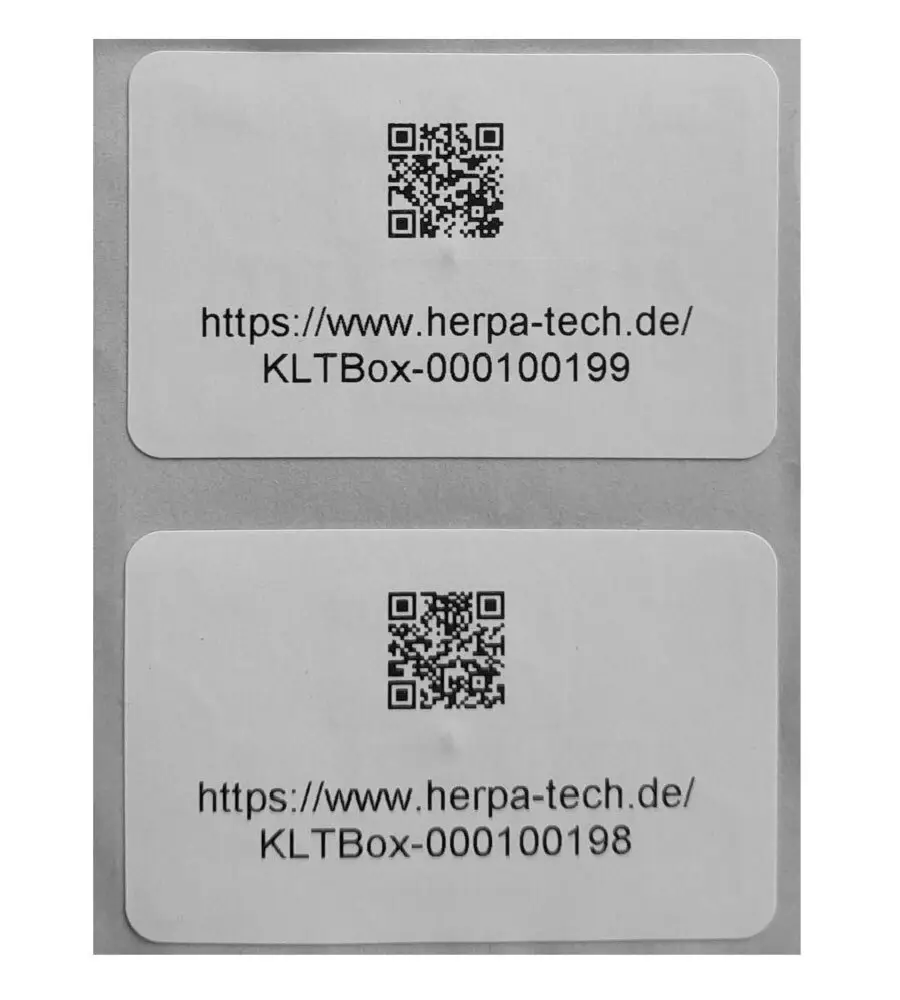

- The Dual Frequency Label integrates UHF and HF (NFC) RFID programming with barcode/QR printing in a single manufacturing step.
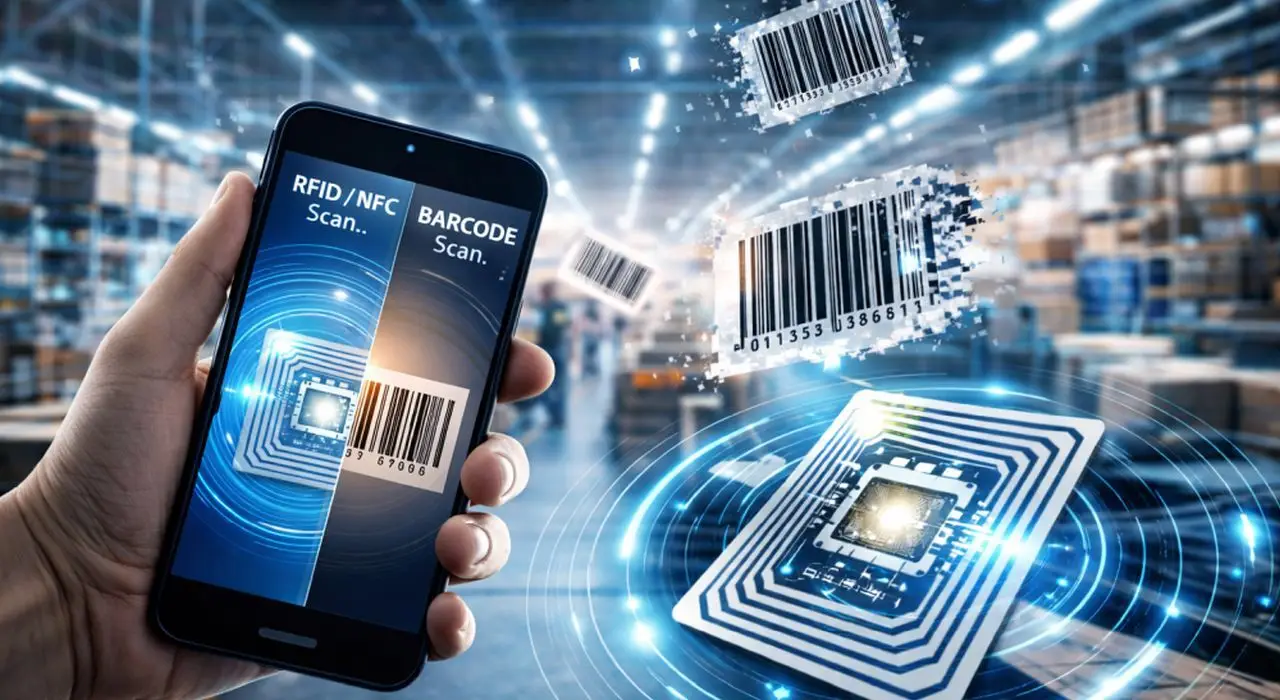
- It enables three identification modes: visual scanning, NFC close-range reading, and UHF long-range reading.
- Simultaneous printing and programming ensure consistent synchronization of visible and RFID data, minimizing errors.
- The label is applicable in industries such as logistics, healthcare, pharmaceuticals, luxury goods, and counterfeit protection.
Herpa Tech has launched a new product: a hybridRFID label that combines the advantages of UHF and HF (NFC) technology. The name of the new product is "Dual Frequency Label."
What makes this Dual Frequency Label special is that both frequencies are programmed onto the chip and the label is printed, e.g., with a barcode or QR code, in a single step.
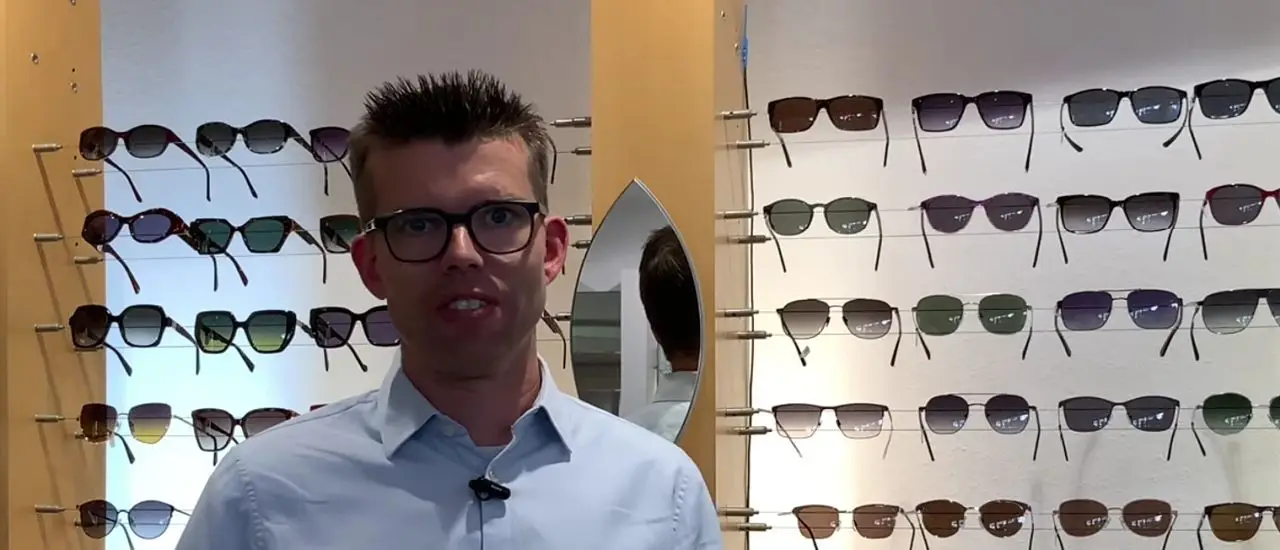
1. Mr. Lentzsch, why is this Dual Frequency Label so interesting? Is it true that Herpa Tech is the only company that can print and program this Dual Frequency Label in a single step?
Lentzsch: Let me give you some background information. At Herpa Print and Herpa Tech, we have repeatedly impressed our customers with innovative solutions over the past decades. That's in the DNA of both companies. We are a small medium-sized company that focuses on innovative development work, particularly in the areas of labeling solutions, RFID labels, printing technology, and special printing processes.
We are known for special solutions and innovations. With the increasing importance of hybrid labels, we have therefore decided to offer a UHF-HF dual frequency label that is efficient in production and printing.
We are not the only company to offer such a label, but we have managed to program both frequencies (HF and UHF) in a single step using anRFID thermal transfer printer.
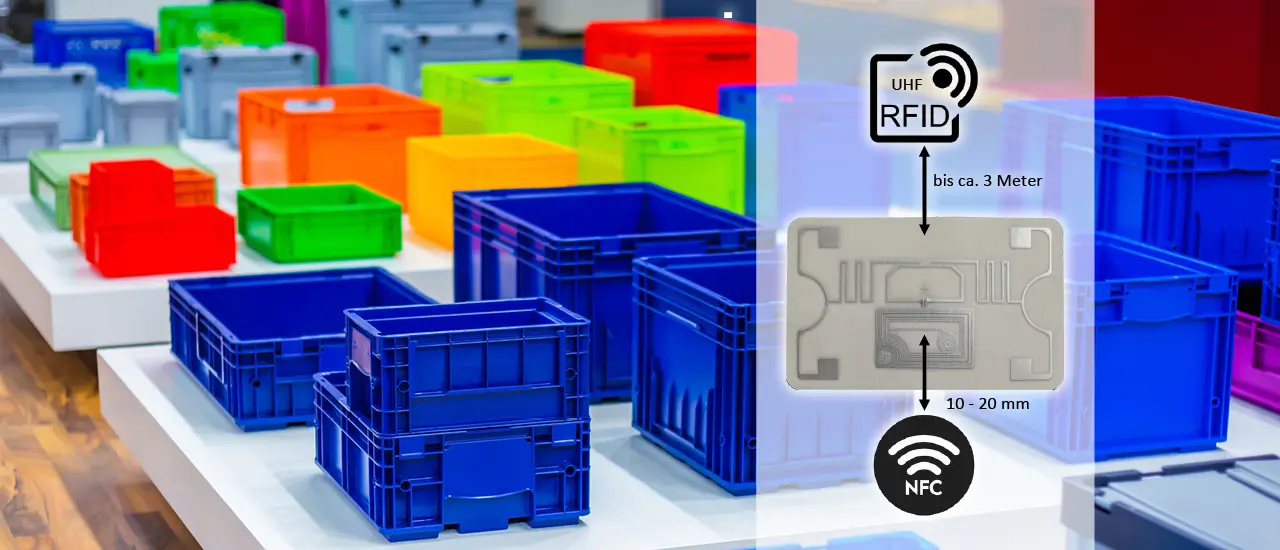
2. Dual frequency labels mean that different identification variants are possible, right?
Lentzsch: That's right. The barcode or 2D code on the label can be read with a cell phone or an imager, for example.
The second identification method is based on an NFC reading process with NDEF formats. This reading can be done with any NFC-enabled cell phone. Both solutions are used at close range.
The third solution is based on a UHF chip. The UHF chip enables reading from a distance of several meters. The UHF reader can be a stationary or mobile reader. It reads the label, for example, during order picking in the warehouse or during transport through a gate. The dual frequency label therefore opens up countless solutions in logistics, industry, and healthcare.
Technical data
Designation: HF—UHF combination label
Standard dimensions: 54 x 34 mm
Special dimensions: on request
Surface: printable with thermal transfer industrial printer
HF part: NFC 13.56 MHz / NDEF formats
UHF part: 868 MHz / EPC Gen 2 standard TID, EPC, and user memory
Delivery: on roll
Printing & in one job by coding: UHF RFID printer. We recommend the Sato CL4NX Plus UHF.
3. What exactly are the advantages of the new dual frequency label?
Lentzsch: It's quite simple. Thanks to simultaneous programming and printing, the stored RFID data and the visible information on the label are always synchronized. This means, for example, that the serial number or product name stored in the barcode and printed on the visible side of the label exactly matches the data stored on the RFID chip.
The entire coding and printing process takes place in a single step, in a single pass, so to speak. This makes the process much more efficient and faster. Programming and printing are no longer carried out in two separate steps, but are accelerated and concentrated in a single step. Overall, identification is made easier and the risk of confusion is reduced. This also saves on personnel and machine resources. This is particularly true for large quantities.

4. Keyword: quantities and formats. Is the new product already available in large quantities and what formats are possible?
Lentzsch: Yes, definitely. We can deliver large quantities immediately. Our purchasing department takes care of that. We are flexible when it comes to label size. We work with the customer to decide which format is best suited for the application.
5. For which markets and applications does Herpa Tech offer the dual frequency label?
Lentzsch: All solutions that use an NFC application together with a UHF application are optimized by the new dual frequency label. I would like to give an example from the field of counterfeit protection: Since the information is available both on the chip and physically, it is more difficult to counterfeit or manipulate the product.
The product is therefore very interesting for the pharmaceutical industry and also for the luxury goods industry. Employees and customers can identify the product both visually and digitally (via RFID readers), which enables double checking.
This is particularly practical for applications in warehouses or retail, as the information is readable by both humans and machines. But it is also useful in areas where smartphones can be used for fast and reliable service or maintenance documentation.