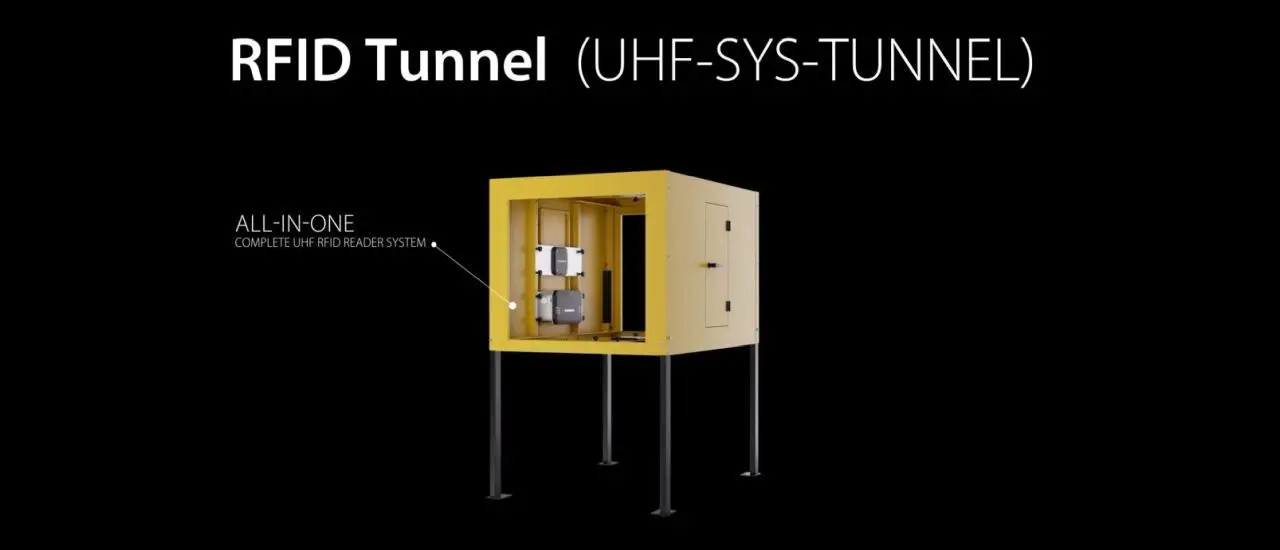


- Generation 4 UHF readers by Kathrein Solutions achieve read rates of up to 1,100 tags per second and support adaptive antenna technology.
- The Digital Product Passport emphasizes unique product identification and detailed data provision, including material properties and carbon footprint.
- UHF readers integrate via modern interfaces such as REST and MQTT, ensuring compatibility with existing IT infrastructures and DPP platforms.
- Sensor-integrated RFID tags offer enhanced monitoring capabilities but are optional additions to DPP implementations.
With its new Generation 4 UHF readers, Kathrein Solutions is setting new standards, from adaptive antenna technology to read rates of up to 1,100 tags per second. At LogiMAT, Kathrein Solutions will showcase these developments in Hall 2, Booth 2B23.
In an interview, Thomas Brunner, Managing Director of Kathrein Solutions, summarizes the impact of the Digital Product Passport (DPP) on readers and transponders:
“The requirements for reader features and software integration hardly differ from existing RFID applications due to the DPP. What is changing is the context in which they are used, and in particular the physical and mechanical requirements for the transponder itself.”
Some companies still view the Digital Product Passport as a bureaucratic project from Brussels. In your opinion, will it actually make a difference?
Thomas Brunner: First off, I consider this initiative adopted by the EU — which essentially stems from the European Green Deal — to be very sensible. Not only because, as a father of three, I believe we should plan and think more sustainably wherever possible, but also because I am convinced that we must use our technological capabilities to make the product lifecycle more efficient.
The goal is to track products from material sourcing through manufacturing and transport all the way to the end consumer and recycling. Labeling, sensor technology, identification, and data transfer can make this entire lifecycle more energy-efficient and resource-conserving.
The foundation for this is unique identification, what we call the Digital Product Passport. This is not just about identification itself, but above all about providing relevant information: material properties, the origin of the raw materials used, the carbon footprint, and ultimately recyclability. This makes the Digital Product Passport a true value-add for everyone.
In your opinion, which reader features are essential for reliably scaling UHF RFID as a data carrier technology for the DPP?
Thomas Brunner: Most UHF readers are fundamentally very well suited for the DPP due to their read range, multi-tag capability, and high integration density. They must integrate seamlessly into existing IT systems and offer open interfaces as well as standard compatibility, such as with GS1 standards or industry-specific protocols.
In addition, they should fully support current UHF standards such as Gen2v2, including all security features, be able to reliably capture large quantities of tags in parallel, and already have filter logic at the reader level to reduce data volumes and increase processing speed.
Equally crucial is future-proofing — for example, through clear update strategies and modular expansion options to respond to new requirements without having to replace the hardware. Our Gen 4 readers meet these requirements.
Can you tell us anything about connecting your readers to DPP-compliant data platforms via interfaces such as REST, MQTT, or LwM2M?
Thomas Brunner: Generally speaking, RFID readers are already connected to higher-level systems via a variety of interfaces — depending on the application, system architecture, and customer requirements.
Readers typically provide a manufacturer-specific low-level API. There are also a few cross-platform protocols, such as the so-called “Low-Level Reader Protocol” (LLRP), which is, however, very rudimentary and supports only basic functions. In practice, these APIs are usually connected to modern interfaces like REST or MQTT via middleware or customer-specific software solutions.
REST is frequently used as a programming aid to easily integrate readers into existing systems without having to deal directly with manufacturer-specific APIs. REST-based interfaces are modular, flexible, and integrate well into modern web or cloud applications.
MQTT, on the other hand, is an established messaging standard for IoT applications, particularly for transmitting telemetry data to cloud or edge platforms. Many of our readers already support MQTT natively or via software modules.
LwM2M is not currently integrated as standard in our products, but can be implemented via software solutions from partners who support LwM2M in their middleware and thus act as an intermediary layer.
Connecting to DPP-compliant platforms will not impose any fundamentally new requirements on the readers. The interfaces already established today — whether REST, MQTT, or others — cover the expected scenarios well. Typically, the specific requirements are dictated by the respective IT infrastructure, and as a manufacturer, we respond to this with modular software architectures and partnerships.
In short: Connecting reader systems to DPP platforms is not uncharted territory for us, but rather “business as usual.” The technological foundation is in place, what matters is the specific implementation and the concrete use case.

Let’s shift to the perspective of tagged products. What special considerations apply to specific product groups such as batteries, household appliances, steel, cement, or insulation materials in the context of DPP?
Thomas Brunner: The DPP implementation itself does not change the fundamental performance or logic of an RFID system. For example, if 50 coffee machines are to be automatically recorded on a pallet today, this works just as well with DPP as without it, provided the data formats and interfaces are appropriately adapted.
Let’s take the example of battery systems, such as those in electric vehicles: These often consist of robust, sealed stainless steel housings. This means that the transponder used must not only be “on-metal” capable but should also exhibit high resistance to temperature, vibration, humidity, and chemical exposure.
The same applies to applications in the building materials sector, such as steel, cement, or insulation, where transponders are integrated directly into harsh industrial processes or logistics environments.
Here, the right combination of mechanical robustness and compliance with digital standards is crucial. RFID tags must be adapted to the specific product environment. This means: on-metal capability, high temperature resistance, appropriate IP protection ratings, and a lifespan that matches the product’s lifespan.
Equally important are reliable adhesion to difficult surfaces or the ability to integrate tags directly into materials.
On the digital level, however, the interface remains largely identical. A UHF reader operates in compliance with standards even in DPP applications, such as ISO/IEC 18000-63 or EPC Gen2v2.
The new requirements imposed by the DPP primarily concern data depth and structure — that is, how information is read from the transponder, interpreted, and transferred to higher-level systems — for example, as a digital twin.
What role does sensor technology play in connection with the Digital Product Passport (DPP)?
Thomas Brunner: In my view, sensor technology in the strict sense is not a direct component of the DPP concept. A QR code, for example — often cited as a labeling method — is not sensor technology, but rather a visually readable digital identification method.
However, there are an increasing number of applications in which the DPP is combined with sensor-based data collection, especially when manufacturers want to capture and share additional information about the condition of a product or material. This includes, for example, measured values such as humidity, temperature, or pressure.
Technically, sensor-based RFID solutions can be divided into two basic types:
On the one hand, there are passive, i.e., battery-free sensor transponders. They only function when they are within the read range of an RFID reader. The energy required for this is provided inductively by the reader. As soon as the transponder leaves the read range, the measurement ends.
On the other hand, battery-powered, i.e., semi-passive sensor transponders are used, which have their own power source, such as a button cell. This allows them to continuously collect, temporarily store, and transmit sensor data as soon as they come within range of a reader.
Such technologies are by no means new — they have been available for more than ten years. However, their performance has improved significantly, particularly in terms of range and energy efficiency.
In the past, ranges were around 0.5 to 1.5 meters. Today, depending on the application and sensor, ranges of three to five meters, and in some cases even over 10 meters, are possible, for example with optimized humidity sensors.
And what does that mean for the DPP?
Thomas Brunner: Actually, nothing at first, because the Digital Product Passport currently does not mandate any sensor functions. Standardization focuses on unique identification, data structure, and traceability.
However, if a manufacturer implements DPP-compliant labeling anyway, it makes sense to combine it with additional functions — for example, condition monitoring in logistics or usage. In this sense, sensor technology can establish itself as a useful addition.
This means that a digital nameplate that both meets the DPP requirements and provides product-specific sensor data can offer added value in many cases. Technically, this runs parallel to the DPP, but strategically, it can be conceived and implemented together.