
The Battery Trap in BLE Labels: When Capacity Isn’t the Limiting Factor

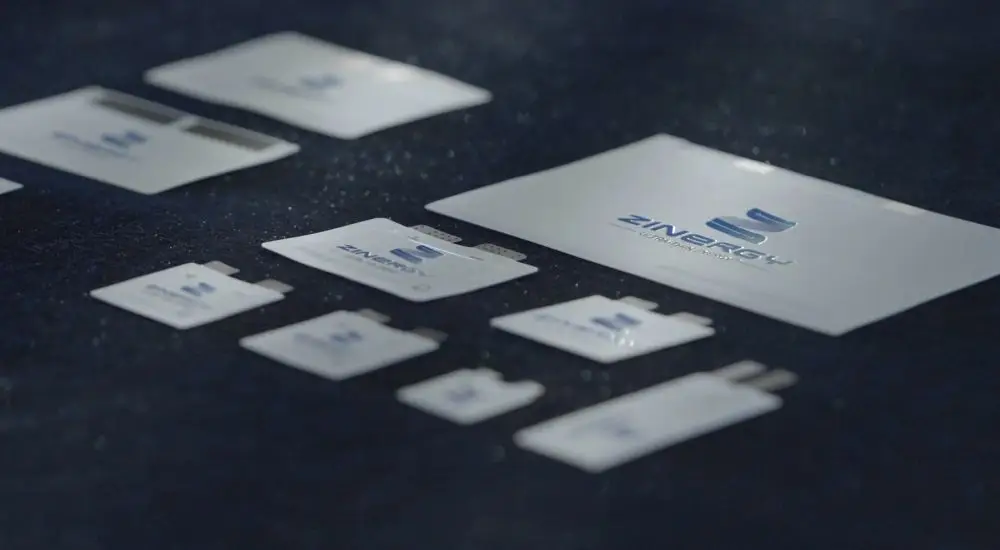
When engineers design BLE asset trackers, smart labels, or temperature loggers, battery selection often begins with a simple question: How many milliamp-hours are required? But according to a new whitepaper from Zinergy, capacity alone rarely determines whether a device will reach its intended operational lifetime.
In real-world deployments, parameters such as internal resistance, voltage stability under pulse loads, ageing effects, and operating temperature can be just as critical as nominal capacity.
The whitepaper, “Select the Right Battery for BLE Label Asset Trackers and Temperature Loggers,” highlights why overlooking these factors can lead to devices that work in the lab but fail prematurely in the field.
Voltage: Design for the Whole Discharge Curve
BLE device design typically starts with the minimum input voltage of the chipset. If the battery voltage falls below this threshold, the device can reset or “brown out,” interrupting tracking or logging.
However, battery voltage declines over time. A battery labeled “1.5 V” or “3 V” only delivers that voltage at full charge, meaning designs must consider the entire discharge curve, not just the starting value.
Power-management circuits can extend the usable range, but they add cost and complexity, often undesirable for high-volume devices such as smart labels or disposable trackers.
Internal Resistance: The Hidden Limiter
Another key factor is internal resistance (Rint), which determines how much the battery voltage drops during transmission pulses.
BLE devices transmit in short current bursts. During these pulses, the battery voltage temporarily drops according to Ohm’s law:
Vdrop = I × Rint
If the internal resistance is high, this voltage sag can trigger a reset, even when the battery still contains capacity.
According to Zinergy, differences in internal resistance between battery technologies can significantly affect real-world device reliability during these pulse loads.
Ageing, Shelf Life, and Temperature
Many BLE labels and loggers are stored for months before activation. During this time, batteries naturally age: voltage decreases and internal resistance increases, reducing available headroom for transmission pulses.
Temperature also plays a role. At low temperatures, ion mobility decreases, which increases resistance and deepens voltage sag under load. For cold-chain or logistics applications, battery performance across the full temperature range must therefore be considered during design.
Designing BLE Devices for Reliable Power
To avoid unexpected power failures, Zinergy recommends verifying several parameters early in the design phase:
minimum input voltage of the BLE chipset
peak current during transmission bursts
voltage drop based on internal resistance
sufficient margin across the full discharge curve
capacity versus duty cycle and expected lifetime
allowances for ageing, shelf life, and temperature
Addressing these factors early can significantly improve device reliability and reduce redesign cycles.
Zinergy develops thin, flexible batteries used in RFID, BLE, Sigfox, LoRa, Wi-Fi, and cellular IoT devices. As BLE tracking and sensing continue to expand across logistics and cold-chain monitoring, battery choice remains a critical design decision — one that goes far beyond simply choosing the largest capacity.
Have a BLE tracker or temperature logger in development? Share your chipset, transmit interval, and lifetime target with Zinergy, and our team will help you select the best-fit battery. Read the full whitepaper.