RFID Makes Reusable Tableware Scalable at the Mainz Wine Market

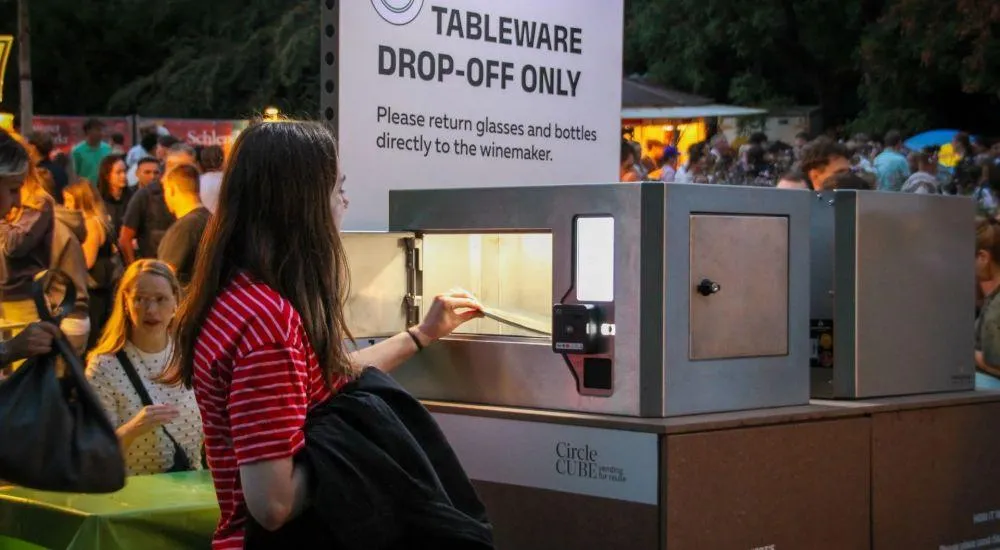
At the 2026 Mainz Wine Market, Share.Ware combined RFID-tagged reusable tableware with automated deposit return machines and centralized processing. Around 310,000 guests experienced how plates, deposits, and returns come together to form a digitally controlled cycle for large-scale events.
Reusable tableware has long been part of the event concept at the Mainz Wine Market. Reusable glasses have been used for wine for years. In 2026, the organizer mainzplus took a decisive step further with food: For the first time, all food stalls used reusable tableware.
Some of this tableware was integrated into Rent.Group’s automated Share.Ware system and could be returned via central deposit return machines. The system proved its worth on both event weekends. Around 310,000 visitors came to Mainz’s Stadtpark over a total of eight event days.
RFID Is Integrated Directly into the Tableware
Share.Ware brings several partners together within one circular system. The plates and bowls are supplied by Koziol and contain a passive RFID element. CircleCube developed the modular return machines, while Rent.Group provides the reusable tableware and manages the overall circulation and reprocessing process. mainzplus integrates the system into the event.
The RFID chip enables each tableware item to be identified automatically and without direct visual contact. No internal power source is required. According to the project partners, the route of an individual item can be tracked from the food stand through the return machine and on to the washing process.
The system therefore goes beyond a conventional reusable concept. The individual physical item becomes digitally identifiable within the circulation process.
Two-Euro Deposit and Centralized Return
For guests, the technical process remains largely invisible. The reusable tableware is issued at participating food service stands for a two-euro deposit per item. After the meal, plates or bowls do not need to be returned to the original stand. They are returned at one of the central return machines.
There, RFID technology scans the tableware contactlessly. The system identifies which item is being returned and whether the corresponding deposit has already been refunded. This prevents the deposit from being paid out multiple times for the same item.
The return machines thus handle a process that, in traditional deposit systems, is often performed manually at the sales stand. Especially at large events with many food and beverage vendors, this decouples the return process from the individual sales locations.
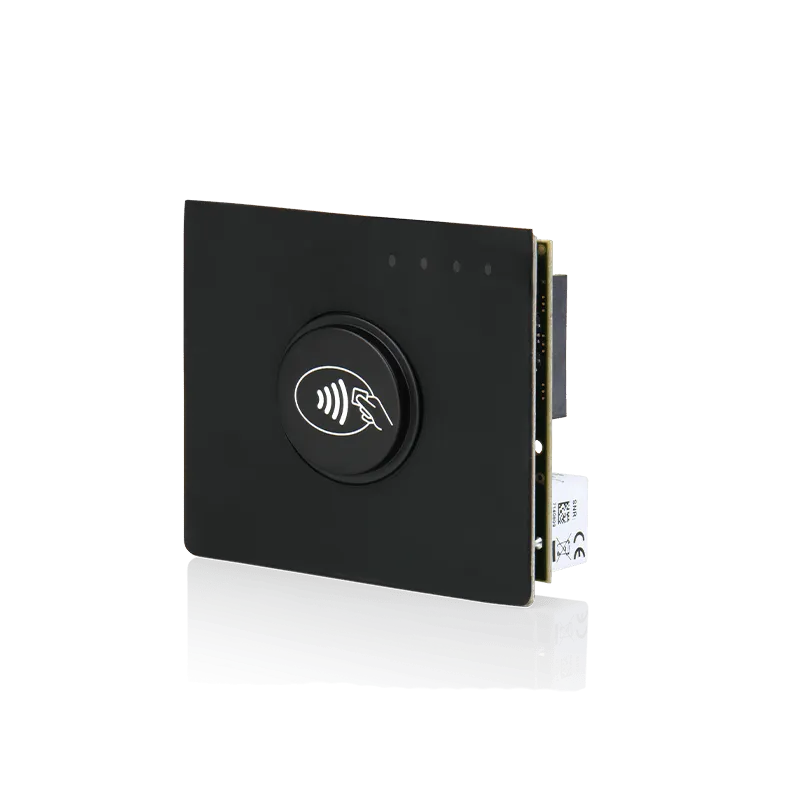
For cashless deposit refunds, the machines are equipped with the cVEND plug II payment terminal from FEIG ELECTRONIC. In conjunction with the PayServ.GatewaySolution, the deposit amount can be refunded directly via payment card or digital wallet.

From the return machine to the washing line
Once the items are returned, the next part of the cycle begins. Rent.Group provides the reusable tableware and handles its reprocessing. Used plates and bowls are removed from the event cycle, cleaned centrally, and then made available again for further use.
This organizes distribution, return, logistics, and cleaning as a single, integrated process. For food service operators, this eliminates the need to collect every piece of tableware they’ve distributed and wash it on-site.
It is precisely this centralized cycle that makes the model attractive for large events. Many individual vendor stands rely on a shared reusable system, while returns and reprocessing are organized centrally.
Trial Run Replaces 10,000 Pieces of Disposable Tableware
Share.Ware underwent its first major practical test back in May 2026 at the Mainz WeinUfer. Approximately 70,000 people attended the event. According to the project partners, the initiative saved about 10,000 pieces of disposable tableware and prevented roughly one metric ton of residual waste.
A significantly larger deployment followed at the Mainz Wine Market in late August and early September. For the first time, all food service stands there used reusable tableware. Some of the tableware used was integrated into the Share.Ware system and could be returned via the central deposit return machines. After the wine market concluded, mainzplus gave a positive assessment and deemed the use of the reusable system a success.
RFID Makes Reusability Scalable
The Mainz Wine Market demonstrates the added value that RFID can bring to a centrally organized reusable system. The technology links each individual piece of tableware to the automated return process, deposit refund, and the rest of the cycle through to processing.
This transforms reusable tableware into a digitally trackable circulating asset. Especially at large-scale events with high volumes, return processes can thus be centralized, accelerated, and organized more transparently.
For festivals, stadiums, convention centers, cafeterias, and other heavily frequented food service areas, this model opens up a practical way to automate reusable processes on a larger scale.
The next major event in Mainz is already on the horizon: the Mainzer WinterZeit markets kick off at the end of November. Following the successful wine market, this brings the next potential application for the further-developed reusable concept into focus.
Further information on the reusable pilot project at the Mainz Wine Market is available from mainzplus.
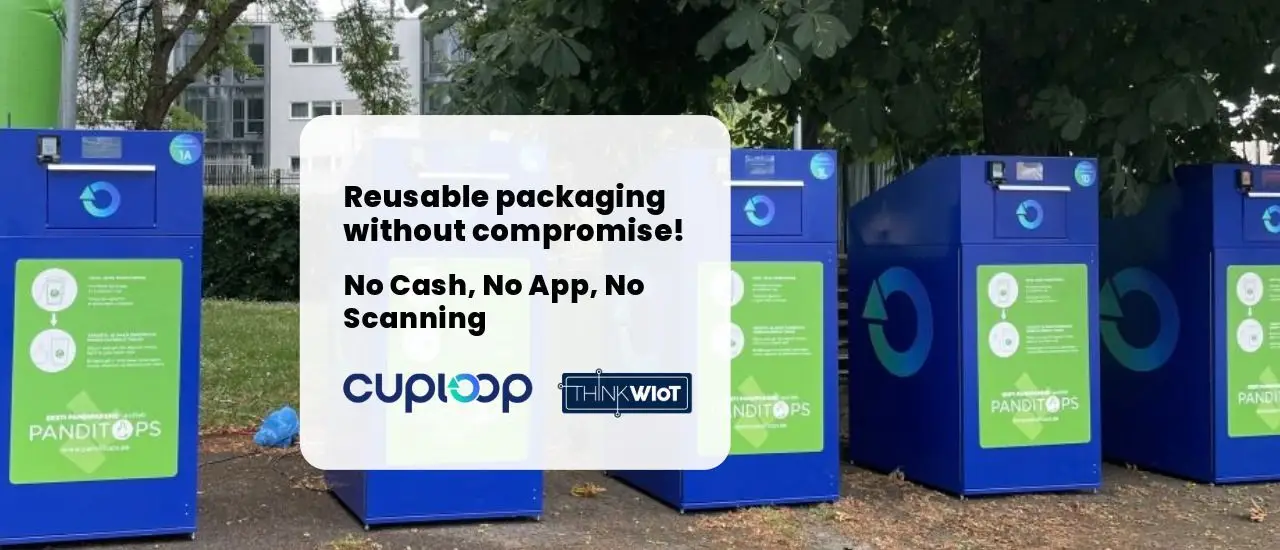
Read more: Another example of RFID-based return automation is Cuploop. The kiosk system automatically identifies reusable cups and packaging via RFID and enables deposit refunds directly to a payment card or smartphone.