RFID Is Becoming a Strategic Data Infrastructure for Retail

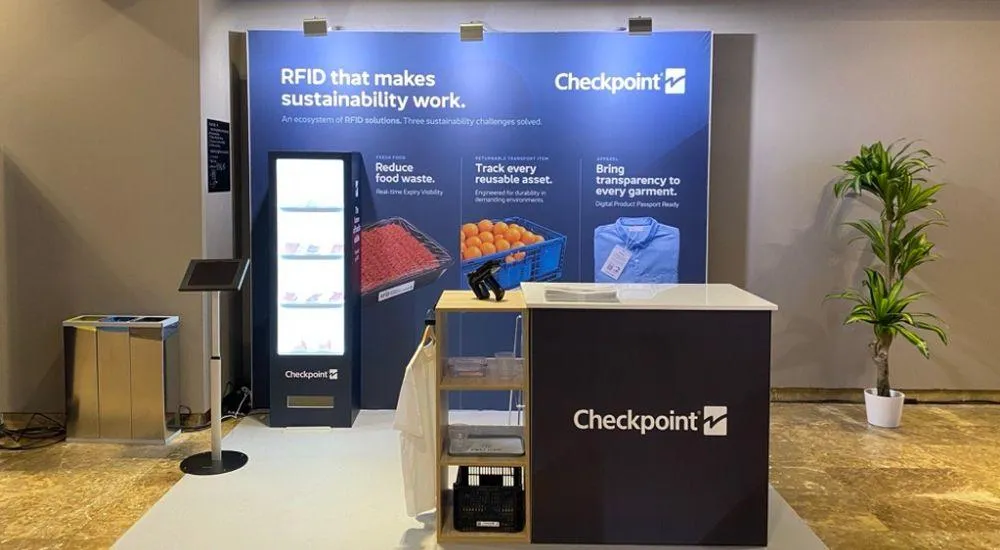
From inventory accuracy to automated workflows, supply chain visibility and digital product identity, RFID is taking on a broader role in retail operations.
RFID (RAIN UHF RFID) is moving beyond inventory management and becoming an integral part of retail operations and supply chains. At Checkpoint Systems, we see retailers increasingly focusing on scaling deployments, extending item-level identification into new product categories and turning RFID data into measurable operational improvements.
Three developments are shaping the next phase of RFID adoption:
its integration into everyday store processes,
expansion across the value chain and
growing importance for automation and data-driven decisions.
From Inventory Counting to Everyday Store Operations
RFID now supports a wide range of retail processes, including replenishment, product handling, automated sorting and loss prevention.
Retailers such as Inditex and VF Corporation demonstrate how RFID has become part of daily store operations. At Inditex, the technology supports faster replenishment and automated sorting of garments returned from fitting rooms, improving merchandise handling and product availability.
These applications show how inventory visibility, operational efficiency and product protection increasingly converge within the same RFID infrastructure.
As Inge Fleuren, our Global Product Solution Manager RFID, highlights, RFID has evolved into a foundation for visibility, traceability and operational intelligence.
Scaling these capabilities requires more than technology. Clearly defined responsibilities, standardized workflows, supplier coordination and management commitment are equally important.


RFID Expands Across Supply Chains and Product Categories
RFID is increasingly extending beyond the sales floor into manufacturing, distribution and logistics.
Examples from UPS and IKEA illustrate how item-level identification can support a more connected flow of information across the supply chain, improving receiving processes, inventory reconciliation and replenishment.
Adoption is also expanding beyond apparel into grocery, beauty and homeware. These categories introduce different technical requirements, particularly regarding product materials, packaging, tag placement and reading conditions.
Retailers must therefore consider source tagging, supplier onboarding and system integration when extending their RFID programs.
The focus is shifting from identifying potential applications to implementing RFID reliably and economically across different products and operating environments.
Turning RFID Data into Operational Intelligence
As deployments grow, retailers are generating increasingly valuable item-level information. The challenge is turning that information into meaningful actions.
Reliable RFID data provides a clearer picture of product availability, stock movements and merchandise flows. Integrated with operational systems, it can support automated replenishment, inventory management and faster responses to changing conditions.
Combining RFID with analytics, artificial intelligence and automation creates further opportunities to identify discrepancies, optimize workflows and support better decisions.
However, capturing data alone is not enough. Data quality, system integration and clearly defined objectives remain essential to achieving measurable business results.
Digital Product Identity and Traceability
We also see growing connections between RFID, Digital Product Passports, product traceability and circular business models.
Persistent item-level identification can connect physical products with digital information about their origin, composition, handling and lifecycle.
RFID is not a Digital Product Passport and does not create circularity on its own. It can, however, provide a reliable identification layer linking products to relevant digital records.
This opens opportunities for managing reusable packaging, supporting recycling processes, improving traceability and meeting emerging information requirements.
Turn RFID Data into Measurable Business Value
For retailers, the next phase of RFID adoption is about connecting applications across stores, distribution centers, suppliers and business systems.
Inventory accuracy remains an important starting point, but the potential value now extends into automation, logistics coordination, product protection and lifecycle traceability.
At Checkpoint Systems, we help retailers move beyond inventory visibility to unlock the full potential of RFID across stores, supply chains and product lifecycles. From scalable item-level identification to smarter automation and connected operations, our solutions support retailers at every stage of their RFID journey.
Ready to scale your RFID strategy, explore new applications or get more value from your existing deployment? Connect with our experts to identify the right solutions for your business and turn RFID data into measurable results.
Source: Checkpoint Systems – What’s Next for RFID? Key Insights from RAIN in Action and ECR Madrid 2026.