
RFID in Patrol Cars: North Rhine-Westphalia Police Digitizes Equipment Checks

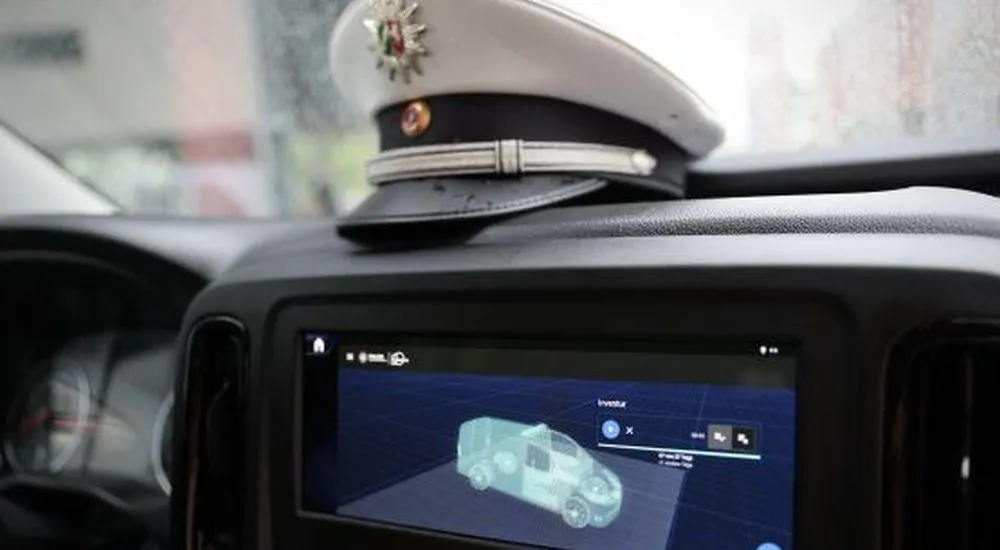
About 50 pieces of equipment are part of the standard inventory of a North Rhine-Westphalia police patrol car. In Duisburg, their completeness is now being automatically checked via RFID for the first time. Antennas in the vehicle detect tagged items and transmit their status directly to the infotainment system.
The North Rhine-Westphalia Police are introducing RFID into their operational patrol service. The State Office for Central Police Services of North Rhine-Westphalia (LZPD NRW), in collaboration with the Duisburg Police, has put the first retrofitted patrol car into service for a field test.
Until now, crews have typically checked the equipment in the trunk manually when taking over the vehicle at shift changes. About 50 items must be checked for completeness. In the future, an RFID-based system will handle this task in the test vehicle.
RFID tags enable automatic tracking of operational equipment
The equipment is fitted with RFID tags. Antennas installed in the vehicle detect the tagged items and transmit the information to a custom-developed application in the infotainment system.
This allows the crew to see immediately whether all the required equipment is on board. If, for example, a helmet or a broom is missing, this appears in the digital inventory list.
The system was developed by experts from the Innovation Lab and the Vehicle Development department of the LZPD NRW. The goal is to shorten the manual inspection process—which previously took several minutes—and to simplify vehicle handoffs.
On September 3, 2026, officers from the Ruhrort police station in Duisburg took delivery of the first patrol car modified with this system. Over the coming weeks, the system will be tested there under real-world operational conditions to assess its suitability for everyday use.
From the “Patrol Car of the Future” to Actual Operational Use
The idea is not new. As early as 2023, the LZPD NRW Innovation Lab was exploring RFID as a component of the so-called “patrol car of the future.” Even back then, the automatic inspection of vehicle equipment was among the applications being investigated.
The current pilot thus marks an important next step: a development concept is becoming a system that is being tested by police officers in their daily shift operations.
The focus is not merely on whether RFID tags can be read reliably. What matters most is whether the technology actually speeds up the inspection process and functions reliably during everyday vehicle operations.
RFID Tracking Becomes Part of the Vehicle’s IT System
From a technical standpoint, the integration into patrol cars is particularly interesting. RFID tracking is not performed using an additional mobile scanner. The antennas are built into the vehicle, while inventory information is displayed directly on the existing infotainment system.
This creates a permanently installed digital tracking zone for operational assets. Physical items are assigned a machine-readable identity; their presence status is automatically recorded and immediately linked to the vehicle’s user interface.
What was previously a manual inspection process is thus transformed into a digitally supported asset management process.
A Similar Approach for Fire Trucks
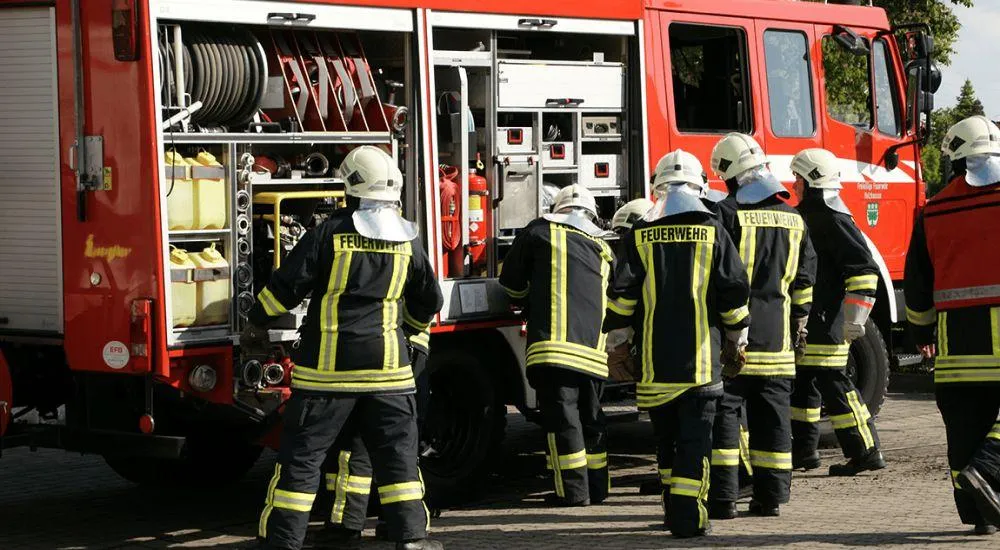
The automatic monitoring of emergency response equipment in vehicles is also a current area of RFID application in other sectors of emergency response. FEIG ELECTRONIC, for example, is showcasing a UHF RFID solution for fire trucks in which tagged hoses, breathing apparatus, rescue tools, and other pieces of equipment are automatically tracked.
Using a stationary UHF RFID reader and an antenna tailored to the detection range, it is possible to verify which items are in the vehicle and whether the intended load is complete. Missing equipment can be detected immediately. Additionally, the unique RFID identity can be used for maintenance, inspection, and cleaning processes.
This reveals a broad pattern of application: In emergency vehicles, RFID not only identifies individual items but also automates the completeness check of the entire load. The patrol car currently being tested in Duisburg applies this principle to everyday police operations and integrates the status display directly into the infotainment system.
More on the use of UHF RFID in firefighting equipment:

Field Test Will Determine the Next Step
For the Duisburg Police Department, the focus is initially on suitability for everyday use. The test in Ruhrort is intended to show how reliably the automatic tracking works during daily patrol duties and what practical time savings it enables when taking over the vehicle.
At the same time, the application demonstrates how RFID-based identification can increasingly be integrated directly into vehicles and their digital systems. The question of whether an item is present gives rise to an automated digital status of a patrol car’s entire equipment inventory.
If the system proves itself in daily use, this approach will essentially provide the technical foundation for extending automated equipment checks to other vehicles as well.