
Warehouse Tagging Starts Too Late: Why RFID Must Begin at the Source

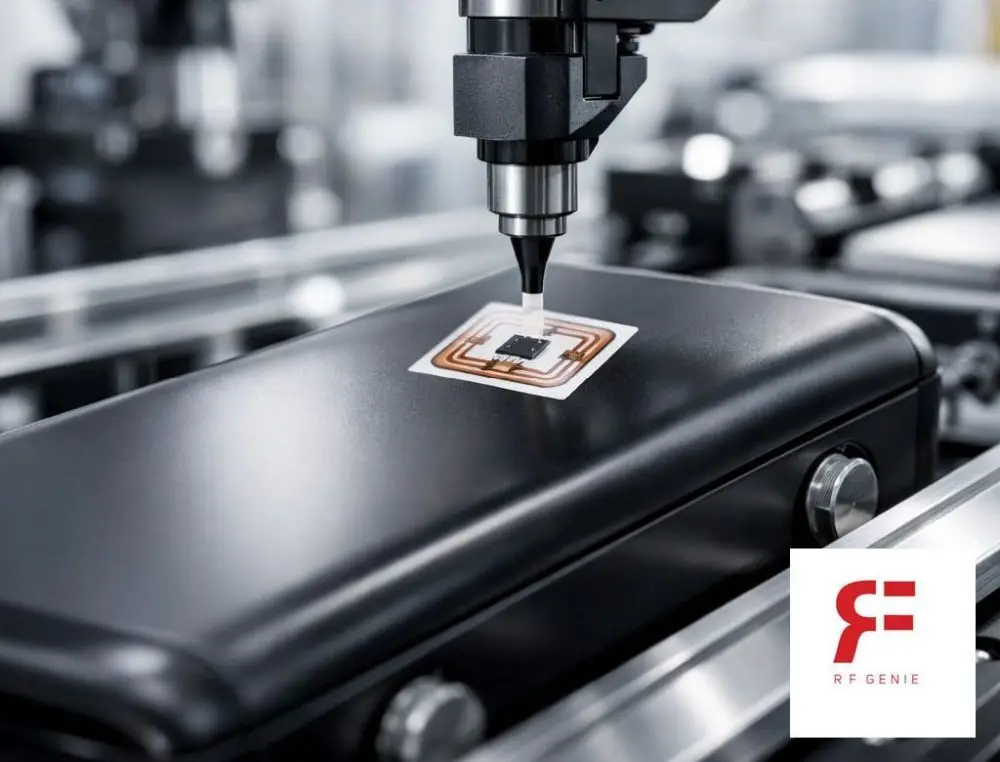
In many companies, warehouse tagging is still where digital visibility begins. Products arrive, pallets are tagged, and tracking starts in storage.
From our perspective at RF Genie, that is already too late.
Modern traceability should begin at the point of manufacture. That is why we see a clear shift toward source tagging — what we call the Birth Certificate approach. Products receive their RFID identity at the start and carry it through production, warehouse operations, and the entire supply chain.
Why warehouse tagging alone falls short
Warehouse tagging plays an important role in inventory management, but it does not create a complete digital record. If products are tagged only after they reach the warehouse, key information from earlier stages is already missing.
For industries like automotive, retail, and healthcare, this gap is no longer acceptable. Traceability, product history, and brand protection require continuous data from the very beginning.
Source tagging ensures exactly that: a consistent digital identity from day one.
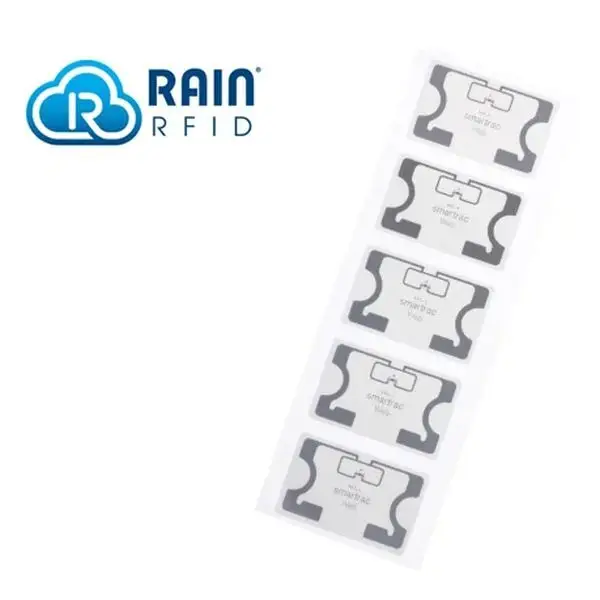

UHF RG-25 LABEL
The RG-25 UHF RFID label provides reliable, high-speed identification with extensive customization for diverse industries.
Smarter RFID warehouse management
While we strongly advocate starting earlier, the warehouse remains a critical part of the process. This is where inefficiencies are most visible.
In large warehouses, finding and placing materials is often time-consuming. Shift-based operations lead to inconsistent storage, resulting in misplaced items and operational delays.
This is where RFID warehouse management delivers real value.
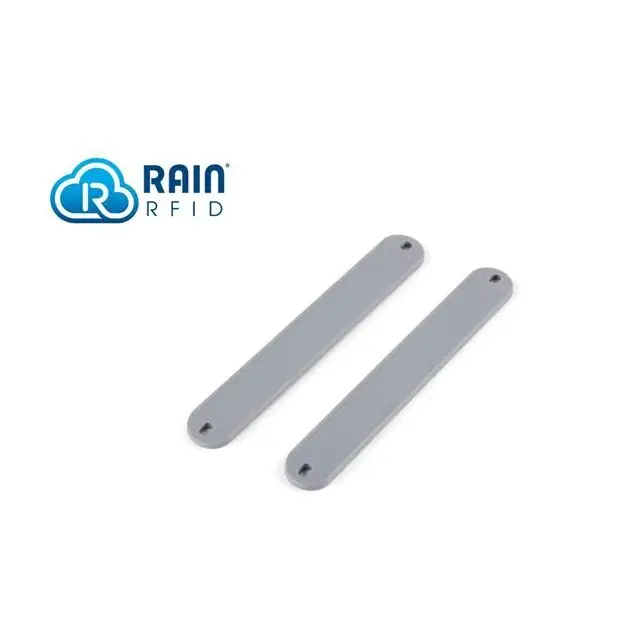
At RF Genie, we divide warehouse spaces into zones and equip them with industrial-grade UHF hard tags. These tags can be mounted on the ground and read by forklift-mounted readers, enabling automatic location tracking during daily operations.
Pallets and bins are identified with RFID tags on racks. By linking pallet tags with location tags, companies gain clear visibility of what is stored and where. This reduces search times, improves accuracy, and brings structure to warehouse processes.
Connecting Source Tagging with Warehouse Tagging
The real advantage comes from combining both approaches.
If products are tagged at the source, the warehouse does not need to create identity — it simply continues the tracking process. This transforms the warehouse from a starting point into a connected part of a larger digital system.
A product tagged only in storage can be tracked from that moment onward. A product tagged at manufacture can be tracked across its entire lifecycle.
That difference is critical for companies aiming to improve transparency, efficiency, and supply chain control.
Built for scale and real-world use
At RF Genie, we provide RFID solutions tailored to customer needs, with a strong focus on practical and economic implementation.
With our facility in Delhi NCR and experience delivering more than 26 million FASTags across India, we understand how to scale RFID solutions effectively — from production integration to warehouse deployment.
Our goal is simple: to help businesses build reliable, end-to-end visibility while improving their operations.
Build intelligence into the product
Warehouse tagging remains essential. But on its own, it is no longer enough.
The future lies in connecting source tagging and warehouse tagging to create a complete digital thread. Companies that build intelligence into their products from the beginning gain better control, stronger data, and more efficient processes.
Don’t wait for the warehouse to find your inventory. Build intelligence into the product itself. Ready to integrate RFID into your production line? Let’s talk.