Dracula Technologies to Present OPV Harvesting for Battery-Free Smart Labels

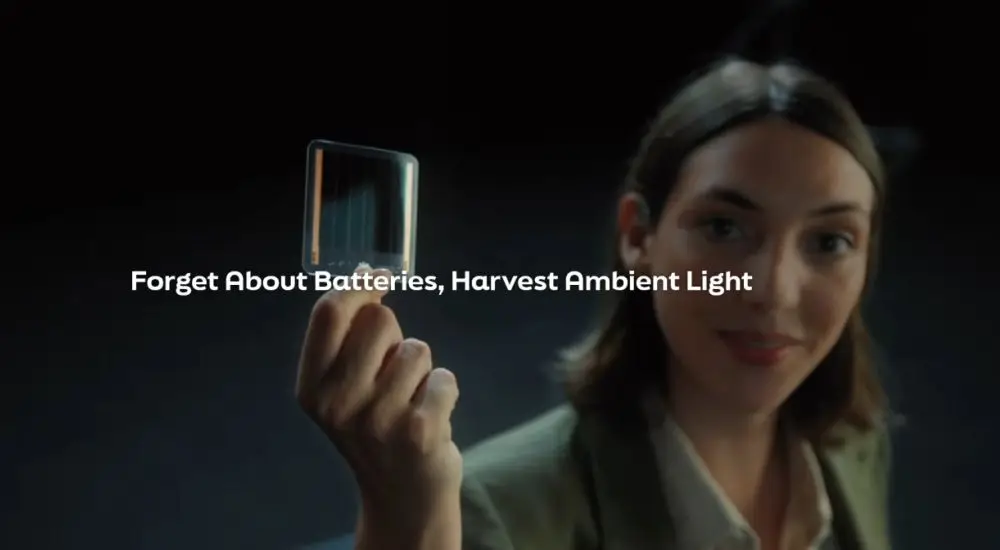
Ambient light can become a practical energy source for smart labels and low-power IoT devices. In the upcoming Think WIoT livestream, Dracula Technologies will explain how organic photovoltaic harvesting supports battery-free BLE, RFID and sensor applications when light profile, storage, chip and transmission strategy are aligned.
OPV Harvesting for Low-Power IoT
Dracula Technologies will take part in the Think WIoT livestream “Ultra-low-power design: harvesting & storage for tags & sensor nodes” on June 17, 2026. The session by Alain Jutant, VP Sales at Dracula Technologies, is scheduled for 13:30 to 14:00 CEST and includes a 25-minute presentation followed by a 5-minute Q&A.
The lecture, “Ambient Light Harvesting: OPV as an Energy Source for Battery-Free Smart Labels and IoT,” focuses on low-light organic photovoltaic technology and its role in powering smart labels and IoT functions without disposable batteries.
The technical premise is clear: OPV harvesting can reduce or eliminate battery replacement, but only if the available light, energy buffer, chip selection and communication interval match the application.
Why Indoor Light Becomes Relevant
Many IoT endpoints operate indoors, where direct sunlight is unavailable but ambient light from LEDs, fluorescent lighting or indirect daylight is present. OPV technology targets these low-light conditions and converts available indoor light into energy for ultra-low-power electronics.
For smart labels, BLE labels, RFID-related functions and sensor nodes, this shifts the design question. Energy harvesting is not only a component choice. It requires a system view: how much energy is available, how it is stored, how often the device transmits and which functions remain realistic within the power budget.
From Battery Replacement to Energy Autonomy
Battery maintenance is a major barrier for large-scale deployments. Replacing batteries across thousands of labels or sensor nodes creates cost, logistics effort and waste.
OPV harvesting offers an alternative where energy demand and light conditions can be matched. Dracula Technologies will show how energy-autonomous systems can support richer consumer experiences, real-time product information and more sustainable IoT deployments by reducing disposable power sources.
Relevant application fields include logistics, retail, healthcare and smart packaging. In these markets, connected labels must remain thin, cost-sensitive and easy to deploy while still supporting communication or sensing functions.
Design Limits: Buffers, Chips and Timing
Battery-free does not mean energy without constraints. Indoor light varies by location, installation and time. Energy buffers are needed to stabilize operation and cover power peaks.
Communication timing is equally important. A label that transmits too often may exceed its harvested energy budget. A carefully designed duty cycle can make battery-free operation feasible.
For OEMs, system integrators and solution providers, this is the central takeaway: battery-free IoT endpoints require co-design across energy source, storage, electronics, firmware and use case.
Speaker and Livestream Context
Alain Jutant brings more than 30 years of experience in sensors, semiconductors and electronic systems. Before joining Dracula Technologies, he held leadership roles at ITEN, Atmel and companies active in smart textiles, industrial technology and electronic systems.
The Think WIoT livestream also includes contributions from BTRY AG, EM Microelectronic and RheinMain University of Applied Sciences and Arts. The agenda covers solid-state batteries for BLE labels, OPV energy harvesting, sustainable Bluetooth LE scaling, Ambient IoT and chipless RFID as an alternative identification architecture.
Register for the Livestream
The Dracula Technologies session is especially relevant for OEMs, label developers, system integrators and solution providers working on smart packaging, retail, healthcare, logistics and low-maintenance IoT endpoints.
Register for the free Think WIoT livestream here: https://wiot-group.com/think/en/livestreams/think-wiot-livestream-harvesting-storage-for-tags-sensor-nodes/