Livestream on December 15: How AI & OPC UA Control Experiments in Space

OPC Foundation and Think WIoT announce joint livestream on mission-critical experiment control in microgravity.
The OPC Foundation and Think WIoT are inviting engineers, researchers and technology decision-makers to a special joint livestream on December 15, 2025 (14:00–15:15 CET): “Orbit as a Laboratory: Suborbital Missions, AI & OPC UA”
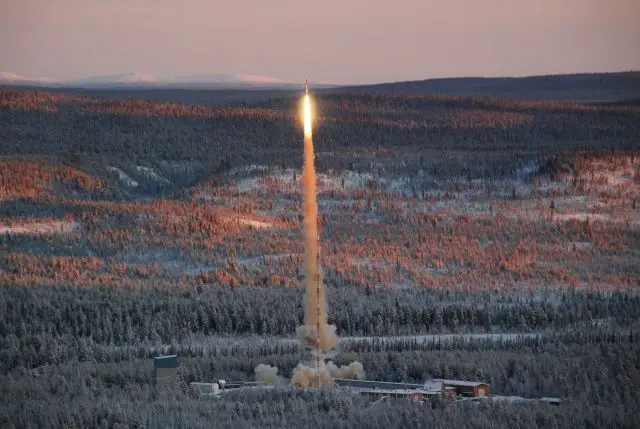
Using space as a laboratory is not just the domain of large, long-term ISS missions. Suborbital rockets such as those in the TEXUS program provide minutes of high-quality microgravity – enough time for complex, mission-critical experiments in physics, chemistry, biology and materials science.
The livestream shows how OPC UA and AI are being used to control these experiments in weightless conditions on board a rocket in flight – and how this technology improves transparency, safety and flexibility for scientists on the ground.
What the livestream is about
Weightlessness fundamentally changes how experiments behave. Buoyancy disappears, sedimentation stops, and chemical reaction fronts unfold differently than on Earth. At the same time, experiment modules on board a suborbital rocket have to be controlled precisely and safely under tight time constraints.
The livestream addresses questions such as:
What does weightlessness have to do with experimental design and safety?
How do engineers build and integrate complex experiment modules into rockets?
How do AI and OPC UA help scientists plan, monitor and adapt experiments in real time?
Using current work from the TEXUS program as a reference, the experts will show how OPC UA, web-based payload portals and AI agents are combined to make experiment control in space more intuitive, robust and explainable.
Key insights you will take away
Participants will gain practical, directly applicable insights, including:
Modernized experiment control in TEXUS
How TEXUS is updating its control technologies and interfaces – from ground systems to experiment modules in orbit – to match the growing complexity of scientific payloads.Chemical reaction fronts in microgravity
How an international science team studies chemical reactions without gravity, and what this means for:soil and groundwater remediation,
CO₂ storage, and
producing fine particles for advanced materials.
The experiments help to develop simpler and faster models for sustainable technologies on Earth – and new concepts for future reactors in space.
AI + OPC UA for explainable mission control
How combining OPC UA with LLMs (Large Language Models) enables secure, traceable and flexible interaction with complex payloads – with the workflows and questions of scientists at the center of the solution.Web-based OPC UA payload portal with AI agents
How a web-based payload portal with integrated AI agents allows researchers to control their experiment modules via natural language – safely and intuitively, without sacrificing transparency or control.
Meet the experts
Stefan Hoppe – President & Executive Director, OPC Foundation
Andreas Schütte – Program Manager for Suborbital Missions, Airbus Defence and Space
Dr. Karin Schwarzenberger – Scientist & Group Leader Interfacial Phenomena, Helmholtz-Zentrum Dresden-Rossendorf
Prof. Dr. Dezső Horváth – Scientist, University of Szeged, Department of Applied and Environmental Chemistry
Enrico Noack – Engineer, Airbus Defence and Space
Holger Kenn – Leader OPC UA for AI working group, OPC Foundation
Jan Lenk – Chief Technology Officer, HuMaTects
Mark Eilers – Principal Scientist, HuMaTects
Registration
Participation in the livestream is free of charge, but registration is required.
Secure your free spot for
“Orbit as a Laboratory: Suborbital Missions, AI & OPC UA” on December 15, 2025, 14:00–15:15 CET.Livestream agenda and registration are available on Orbit as a Laboratory: Suborbital Missions, AI & OPC UA.