
Gwen Reference Design Shows Battery-Free BLE Indoor Sensing

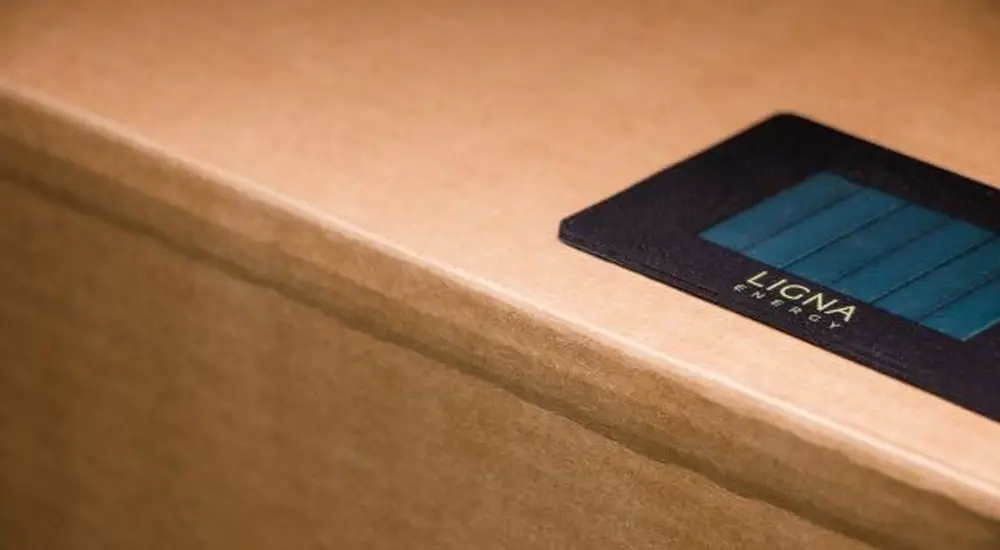
Ligna Energy has introduced Gwen, a battery-free indoor climate sensor reference design. The concept combines indoor light harvesting, supercapacitor-based energy storage, temperature and humidity sensing, and Bluetooth Low Energy communication.
Battery-Free Architecture for Indoor Sensors
Gwen is not a finished product, but a reference design for OEM partners. It shows how indoor IoT sensors can be developed when energy budget, form factor, cost efficiency and scalability are treated as primary design criteria.
The device measures temperature and humidity, harvests energy from ambient indoor light and transmits data via Bluetooth Low Energy. Instead of a conventional battery, Gwen stores harvested energy in a supercapacitor.
This architecture targets one of the main barriers in large-scale smart building deployments: maintenance. Battery-powered sensors are easy to install, but thousands of devices across offices, retail spaces or facility portfolios create recurring service work, replacement costs and battery waste.
Smart Card Principles Applied to IoT
Ligna Energy links the concept to its experience in smart cards and smart building systems. Both markets require compact designs, strict cost control and high reliability at scale.
Gwen transfers this design logic to indoor sensing. The sensor is slim and compact, which allows integration into indoor environments without making the device visually dominant. For building owners and system integrators, this matters because sensor infrastructure must often be deployed broadly without disrupting interior design.
According to Ligna Energy, Gwen has operated continuously for 12 months in an office environment without downtime during testing. For integrators, this is relevant because continuous operation and predictable maintenance are critical when moving from pilot projects to larger rollouts.
Energy Harvesting Components
The Gwen reference design combines components from several energy harvesting specialists. Indoor photovoltaic cells from Epishine capture ambient light. Ultra-low-power energy management from e-peas controls the power flow. Ligna supercapacitors provide the storage layer.
Epishine’s indoor photovoltaic technology is designed for low-light environments such as LED lighting, fluorescent lighting and indirect daylight. According to the provided Epishine material, its indoor solar cells can operate down to single-digit lux and generate up to 22 µW/cm².
This power level is not intended for high-power electronics. It is relevant for micro-power applications such as wireless sensors, remote controls, electronic shelf labels and asset trackers, where low-energy electronics and predictable duty cycles can make battery-free operation feasible.
Relevance for OEMs and Integrators
For OEMs, Gwen provides a technical starting point for battery-free sensor development. It demonstrates how indoor PV, supercapacitor storage, BLE communication and climate sensing can be combined in a compact device architecture.
For system integrators and solution providers, the reference design addresses the economics of sensor fleets. The key question is not only whether a sensor can measure reliably, but whether it can be deployed and operated at scale without creating a permanent battery replacement loop.
For end users, the potential value lies in lower maintenance effort, reduced downtime risk and fewer disposable batteries in building infrastructure.
Reference Design for Collaboration
Gwen should be understood as a collaboration platform rather than a commercial sensor. Its role is to demonstrate how battery-free indoor sensing can be designed with scalability, reliability and economic viability in mind.
More information is available from Ligna Energy at: https://www.lignaenergy.com/gwen-a-battery-free-indoor-climate-sensor/