

Snow chaos in Franconia: preventable in the future thanks to the latest innovations?

Local weather extremes such as heavy snowfall and icy roads show how crucial accurate, timely warnings are. Especially in the case of small-scale events, every minute counts when it comes to better managing winter road maintenance, traffic, and emergency services.
SMARTIES: Mini sensors for better models and faster warnings
This is where SMARTIES comes in. The name stands for SMART Integrated Electronic Sensors for quantifying atmospheric transport and mixing. In this research project, Fraunhofer IIS is collaborating with the Max Planck Institute for Dynamics and Self-Organization (MPI-DS) to develop a system of intelligent atmospheric tracers, known as SMARTIES.
The aim is to collect and evaluate atmospheric data locally at high resolution in order to better detect disturbances in the air. This information can be incorporated into prediction models – for example, to improve forecasts of extreme weather events or to assess environmental hazards.
Starting point: Why new measurement concepts are necessary
Natural disasters and extreme weather events are becoming more frequent, while at the same time the demand for fast, accurate situation reports is increasing. Atmospheric data is crucial for this, but collecting it is costly. Traditional weather balloons often rise quickly and spend only a limited amount of time in the air layers that are particularly relevant for local measurements.
Acute situations therefore require systems that measure more densely at the local level and deliver usable data more quickly.
How SMARTIES work
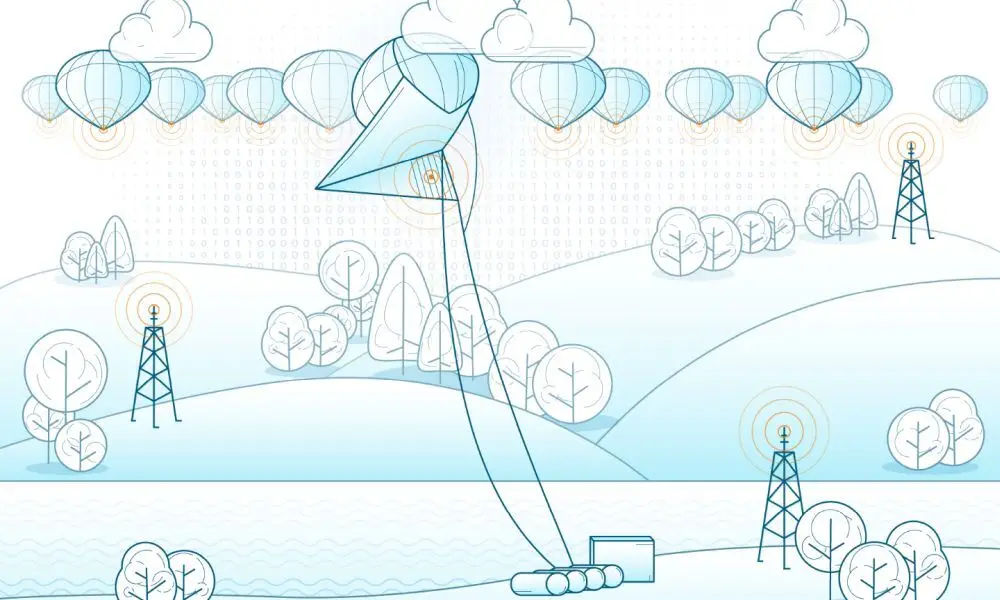
SMARTIES are miniaturized measuring instruments consisting of environmental sensors and a wireless communication unit integrated into a flying object. For measurement campaigns, several of these sensors ascend into the atmosphere and transmit their sensor data and position to a network of base stations during flight. There, the data is located, evaluated, and made usable for models in near real time.
A key factor is mioty: transmission is energy-efficient, robust, and scalable, allowing many sensors to deliver data in parallel. Localization can be done directly via the communication signals—an important advantage for lightweight, cost-efficient, and extensive measurements.
More than just weather: transport and dispersion of particles
SMARTIES does not only target weather parameters. Particularly relevant is its ability to better quantify atmospheric transport and mixing – i.e., how air masses and particles move. This allows, for example , dust, pollen, or pollutants to be better assessed after extreme weather or environmental accidents. If the spread can be predicted earlier, protective measures can be taken in a more timely and targeted manner.
Practical relevance: initial data and robust technology
At the end of 2025, the first measurement data was also recorded in the Nuremberg area. The Smarties are ultra-light and robust and, depending on the model, can work with GNSS or as pure mioty sensors. In tests, they were able to communicate over long distances even at high altitudes and very low temperatures, providing valuable weather information.
Why this is relevant for Franconia
Snow chaos often does not occur across the board, but locally. This is exactly where a denser, flexible measurement concept can bring new quality: more data where it is lacking, available more quickly, and thus better decisions – from winter road maintenance and traffic to crisis communication.
Are you interested in innovative technologies for improving weather forecasting and early warning systems? Get in touch with us and write to us.