


Access Network Metrics: WBA Brings Real-Time Wi-Fi Quality Control

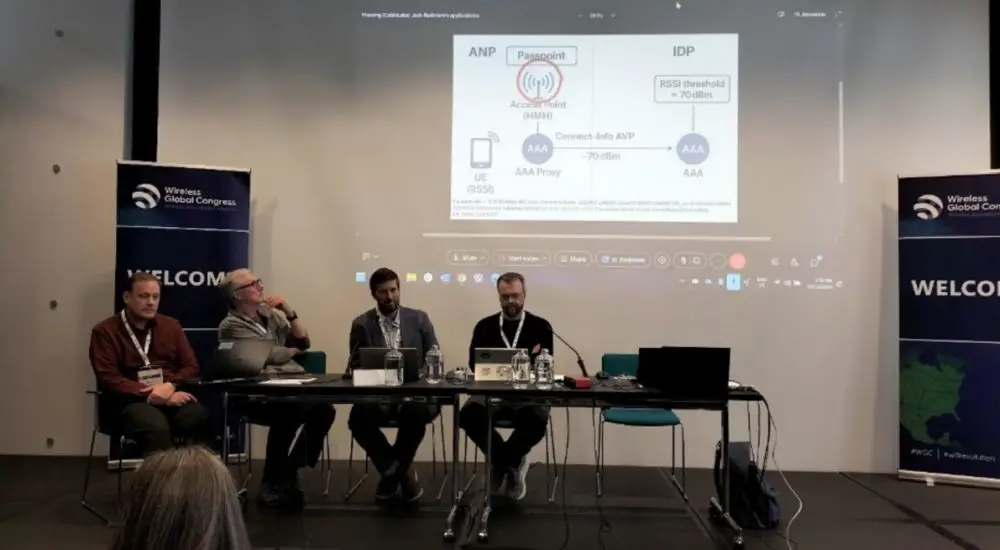
Wi-Fi quality has long been difficult to assess at the exact moment a device tries to connect, especially in roaming, guest, and public access scenarios. With Access Network Metrics (ANM), the Wireless Broadband Alliance (WBA) is now advancing a framework that allows Identity Providers to receive live access network performance data during association and use it to accept or reject a connection in real time.
In a recent blog post, Pedro Mouta, Senior Manager at the Wireless Broadband Alliance, describes ANM as a major step toward bringing Wi-Fi operations closer to the visibility and control often associated with cellular networks.
The key idea is simple: Identity Providers, including operators, should no longer have to trust Wi-Fi blindly. Instead, they can evaluate network conditions before a user is fully attached.
A Long-Standing Wi-Fi Roaming Problem
For years, Wi-Fi roaming has suffered from a structural issue. Public and guest hotspots are deployed by many different providers, often with limited central coordination.
Even with Passpoint, also known as Hotspot 2.0, enabling automatic and secure connection to Wi-Fi networks in a way that is similar to cellular roaming, operators and Identity Providers have still had only limited visibility into the actual quality of the Wi-Fi network at the moment of connection.
That lack of insight has restricted trust, particularly in scenarios where user experience is critical and poor Wi-Fi performance can reflect negatively on the operator’s service.
OpenRoaming is a global framework that enables automatic, secure, and seamless Wi-Fi roaming between different networks without requiring prior bilateral agreements between each provider. It helped solve the scale problem by combining Passpoint with Dynamic Peer Discovery and RadSec in a federated model. According to WBA, support for OpenRoaming is now widely integrated into access points and controller platforms, improving both adoption and usability.
But one question remained: how can an Identity Provider know whether a network is actually good enough for its users? ANM is intended to answer exactly that.
What Access Network Metrics Adds
ANM enables Wi-Fi performance metrics to be transmitted through RADIUS using a Connect-Info attribute. WBA says this capability has progressed through multiple phases of definition, validation, and production trials and is aligned with ongoing IETF work as an Internet Draft.
In practical terms, it creates a standards-based path for network owners to share selected real-time or historical performance information with Identity Providers at the moment of association.
This matters because it changes the decision model. Instead of allowing a connection first and dealing with poor quality later, an operator’s AAA server can use live metrics to make an immediate QoE-based decision. If network conditions fall below a defined threshold, for example because RSSI is too low, the connection can be rejected. Once conditions improve, the device can be accepted.
From Concept to Live Demonstration
WBA says this approach was demonstrated during its Members Working Session in Paris in October 2025. In the live setup, a AAA proxy forwarded network metrics to the Identity Provider’s RADIUS server while the user device attempted to associate. Based on those values, the Identity Provider either allowed or rejected the session in real time.
Phase 1 of the ANM work defined the scope and essential metrics in 2023, Phase 2 established Connect-Info delivery in 2024, and Phase 3 in 2026 focuses on validation through production deployments and real-time decisioning.
Why This Matters for Wi-Fi Offload
The broader implication is strategic. If operators can trust the quality of Wi-Fi at the point of association, they are more likely to use it confidently for offload and broader connectivity strategies. WBA argues that ANM does not slow Wi-Fi adoption.
It supports it by giving Identity Providers more control over user experience and more confidence in public and guest Wi-Fi environments. That could be especially important in managed roaming, wholesale roaming, and OpenRoaming-based ecosystems.
A More Controlled Wi-Fi Future
Access Network Metrics is still evolving, but the direction is clear. Wi-Fi is moving toward a more measurable, policy-driven model in which quality is no longer inferred after the fact. Instead, it can influence connection decisions in real time.
For operators, Identity Providers, and infrastructure vendors, ANM could become an important building block in making Wi-Fi more trusted, more controllable, and more viable as part of a seamless connectivity strategy.
Source: “Access Network Metrics (ANM): Real-Time QoE Decision by Identity Provider,” by Pedro Mouta, Wireless Broadband Alliance, published March 17, 2026.