


- Women bring diverse perspectives that lead to better decision-making and innovation in AIDC.
- Women of AIDC was founded to increase visibility, provide role models, and support professional development in the industry.
- Mentoring and networking are fundamental tools for career progression and retention of women in technology-driven roles.
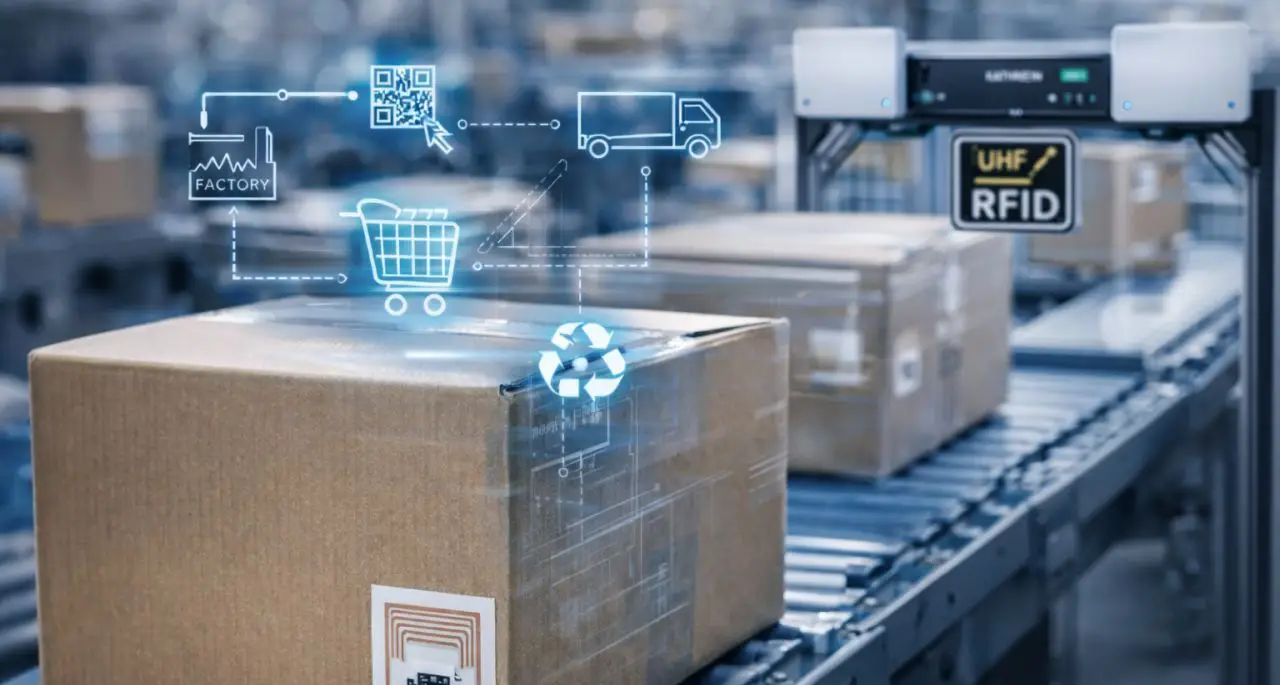
- The AIDC industry is evolving with technologies like RFID and AI, creating new opportunities for leadership and impact.
AIDC, short for Automatic Identification and Data Capture, does not need women as symbols, but as voices for better decisions. Julie McGill of Trustwell and Patti Blessing of Zebra Technologies share insights on careers, visibility, and opportunities in an industry driven by technologies like barcodes, RFID, and data capture.
Julie McGill and Patti Blessing are among the dedicated voices behind Women of AIDC, an initiative of AIM Global, the global association representing the AIDC industry.
In this interview, they reflect on their paths into the sector, the technological evolution from barcodes to RFID, and the importance of mentoring, networking, and visibility in encouraging more women to enter the field and thrive in it long term. Both are founding members of Women of AIDC, which was launched in 2025.
Why are women in AIDC important?
Julie McGill: Diverse teams ask better questions and achieve better results. Different perspectives lead to better questions, better decisions, and ultimately better results.
I originally came from the brewing industry, where most executive positions were held by men. That’s why a female CIO had such a profound impact on me. She actively promoted women, connected them, and facilitated mentoring. That sticks with you. And that’s exactly why many of us didn’t hesitate when the idea for ‘Women of AIDC’ came up.
What I see today: Many young talents simply aren’t familiar with AIDC. Yet it’s about far more than barcodes or scanners. It’s about transparency, processes, security, supply chains and how companies really function.
Women often bring an additional perspective to this. They think more holistically, see the impact on related processes, and actively drive implementation forward.
A lot is changing, especially in the food industry. Today, alongside IT, those responsible for quality, food safety, and compliance are also at the table. This creates new roles—and new opportunities to make an impact.
What goals has “Women of AIDC” set for itself?
Patti Blessing: When we launched the women’s group, it was never about segregating women or creating a separate space just for them. Rather, it was about making women visible—honoring successful women, telling their stories, and thereby creating tangible role models. Our goal from the very beginning was to create visibility, showcase role models, and provide guidance.
When young women see who is shaping the AIDC industry, an abstract idea becomes a real option. It’s important to us that the group isn’t a closed circle; men participate too. It’s not about separation, but about exchange and understanding.
Julie, how would you describe the mission of “Women of AIDC”?
Julie McGill: Our mission is simple: to connect people. To facilitate exchange. To foster development.
We bring individuals to the stage who share their journeys—with all the challenges, decisions, and experiences. These insights provide guidance. They show that there isn’t just one path. And often, a single connection, a spark, or a conversation is enough to set something in motion.
How international is “Women of AIDC”?
Patti Blessing: Very international. Members come from Asia, Europe, Latin America, and North America.
Many are experienced—but we also want to reach younger talent. That’s why participation is open and free. You don’t have to be an AIM member. This is especially crucial for students and those just starting their careers. The greatest value comes in everyday life:
When someone is about to take a career step, she can approach others directly and ask: How would you handle this? This network provides support—at exactly the right moment.
What motivates you to work in this group?
Patti Blessing: Honestly, the people.
Working with so many smart, dedicated women is something special. Genuine relationships develop—not just professionally, but personally.
And I’ve always enjoyed being a mentor. If I can help someone find their own path more quickly, that’s a real win for me.
Julie McGill: I’ve benefited greatly from the support of others myself. That’s why it’s important to me to give something back. Mentoring can make a huge difference at the right moment.
And the network helps. It’s easier to strike up a conversation; you immediately have a common point of reference. Especially today, when many connections are so goal-oriented, that makes a big difference.
This fosters genuine exchange—on equal footing.
Was there a moment in your career that had a decisive impact on your future path?
Julie McGill: One moment in particular shaped my career path. During my time at Coors Brewing Company, a mentor called me into his office for a conversation. I was working on a project with our sales network at the time, and he said to me, “I want you to start working with our network on EDI.”
My honest response was: “I don’t even know how to spell EDI. I don’t even know what it stands for.” That’s exactly what makes that moment so special to me to this day. He didn’t focus first on what I was still lacking in terms of technical skills. He looked at something else: the relationships I had already built, the trust that was there, and my potential.
In essence, he said: “I can teach you the technical side. We can send you to courses; we can show you how the software works and how to set up these processes. But the relationships with the distributors—that trust—I can’t just buy.”
The fact that someone back then saw something in me that I myself couldn’t even recognize yet changed a great deal. That opportunity opened a door for me and, looking back, steered my career in a whole new direction. He saw potential, not shortcomings.
These fundamentals remain relevant to this day. Whether it’s EDI, XML, or blockchain—much of it builds on this foundation.
Patti Blessing: I can’t say I had a specific “aha” moment, but I can tell you that I’ve had the pleasure of working for some incredibly professional and generous people in my life, all of whom were coaches outside of work. They coached soccer teams, basketball teams, or chess teams. And they all inspired me to constantly improve myself. And they saw something in me that could develop further. They motivated me to become better—both professionally and personally.
And that’s exactly what I want to pass on today.
“It’s a man’s world” - was there a moment that made you feel that way?
Patti Blessing: Yes. Very early on. After a successful deal, a manager asked me over dinner: “What’s it like to be a women in a man’s world?”
That was a defining moment for me. Back then, statements like that were even more commonplace in many industries than they are today. And I still remember exactly what that triggered in me. It lit a small fire. My first thought was: That’s not right. And I won’t let a statement like that define who I am.
At that moment, I knew for certain that I wouldn’t let my career be defined by others’ expectations, but that I would decide for myself who I am, what I’m capable of, and which path I take.
Julie McGill: Two examples come to mind. Early in my career, you'd walk into a conference and the majority of attendees were men. If I was standing in a room with 100 people, 10 of us were women. That stands out. At the same time, I see positive developments, with more women being promoted to executive roles, including at my own organization, where we have a female CEO.
We're moving in the right direction, and business groups such as "Women of AIDC" are providing opportunities to build key relationships and expand our networks.
What do companies need to do better today?
Julie McGill: It starts with culture. Companies need to create environments that are truly inclusive.
At the same time, we’re seeing a shift. At many universities today, there are more women than men.
The talent is there. Companies need to be present there, build connections early on, and offer clear career paths. Because it’s not just about attracting women—it’s about retaining them in the long term.
Your message to young women?
Patti Blessing: Get involved. Seriously. It’s worth it. AIDC is an incredibly exciting, dynamic, and fast-growing industry with enormous potential. And the great thing is: there’s no single path. Whether you want to work in product management, sales, development, marketing, or finance—the possibilities are endless.
When we talk about AIDC, we’re talking about technologies that have the ability to capture information, track products, and make processes transparent. And that’s exactly where a lot is happening right now. New technologies are emerging, existing ones are evolving—and everything is converging.
What excites me about this is that this industry has a real impact. In healthcare, it ensures greater safety. In the supply chain, it ensures greater efficiency. In retail, it ensures that products are available at the right time, in the right place, and at the right price. And those are just a few examples.
So it’s not just an interesting industry—it’s one that really makes a difference. The timing to get involved has rarely been better.
Julie McGill: We’re currently in a phase where a lot is changing. We’re seeing more women in leadership positions, greater visibility, and more opportunities.
I'm seeing more and more strong female leaders emerging from companies I've worked for, and I'm seeing that with our clients. They are achieving the highest heights, including CIO, CFO, and CEO. It's an exciting time for women in AIDC roles.
What’s also changing is the mindset: today, it’s more about supporting one another, sharing knowledge, and moving forward together. That’s exactly what we’re trying to foster with our community.
Ultimately, it’s about opening doors—and ensuring that the next generation can not only walk through them but also feel at home there in the long term and continue to grow.
Women of AIDC: A platform, network, and voice for women in the industry
Launched in 2025, Women of AIDC is an initiative designed to connect and empower women in the world of automatic identification and data capture. The network was officially announced in January 2025, and the kick-off meeting took place on March 28, 2025.
At its core is a clear mission: to empower women in AIDC through leadership, innovation, and inclusion. Networking, professional development, and advocacy are intended to help create more opportunities and provide sustainable support for women in technology, business, and global supply chains.
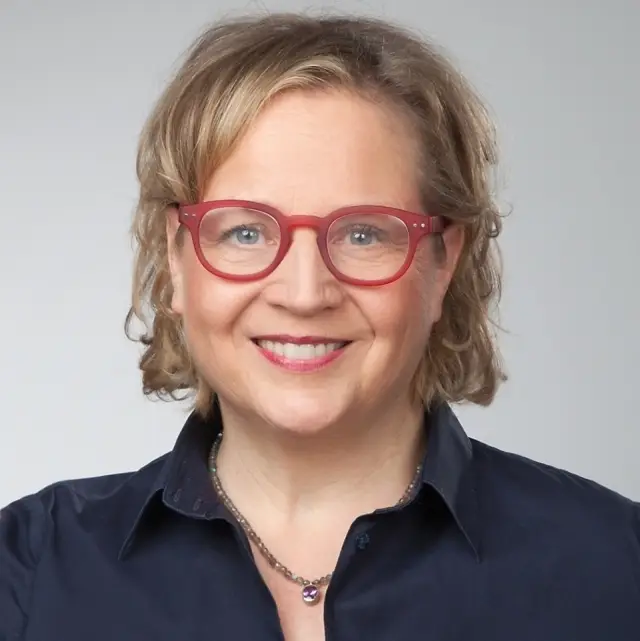
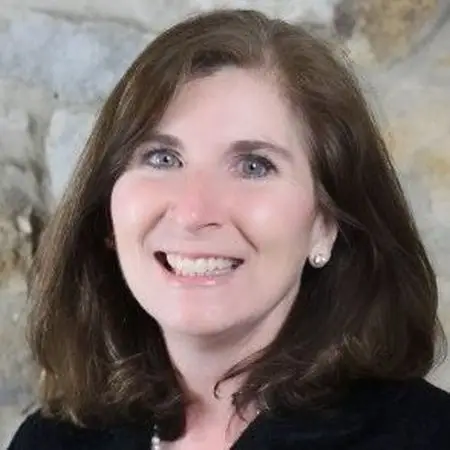
The initiative is led by experienced industry representatives, including Patti Blessing (Zebra Technologies), Julie McGill (Trustwell), Jeanne Duckett, Elizabeth Sinclair, and Sharmeen Khan (OpsSmart).
Shortly after its launch, Women of AIDC is already making a visible impact. At GS1 Connect 2025, Melanie Nuce-Hilton (GS1) was the first recipient of the Women of Distinction Awards. In addition, there is a podcast series featuring well-known voices from the industry, including representatives from Avery Dennison, Honeywell, Trustwell, BlueStar, SICK Sensor Intelligence, PLM Trustlink, TSC, and OMRON Automation.
The Community Dialogues also demonstrate that the network actively promotes exchange and new perspectives—with guests such as Leigh Marshall Dow (Mattermost), Purni Wickramasinghe (Chick-fil-A), and Hannah Bernard (Avery Dennison).
Women of AIDC aims not only to bring women in AIDC together, but also to give them greater visibility, reach, and influence.
About Julie McGill
Julie McGill, Vice President of Supply Chain Strategy and Insights at Trustwell, brings a unique perspective, as she knows the food industry from nearly every angle.
Trustwell itself emerged from the merger of two organizations—ESHA Research, known for nutrition labeling, and FoodLogiQ, focused on traceability, compliance, and supplier data. Today, the company bridges both worlds, combining recipe and nutrition information with seamless documentation throughout the entire supply chain.
McGill has been with Trustwell for about nine years and is closely connected to industry initiatives such as GS1 and the Produce Traceability Initiative. Her role: identifying developments early on and translating them into concrete product requirements—from new regulatory mandates to technological trends.
McGill finds the industry’s dynamics particularly exciting. More and more companies are testing new approaches like RFID or 2D codes to achieve greater data depth or end-to-end traceability from manufacturer to customer. For her, it’s clear that as requirements become more complex, automated data capture becomes more important—regardless of whether it’s done via barcodes, RFID, or future technologies.
Her own journey began long before smartphones: at Coors Brewing Company, with early data collection systems and handheld devices that still had to be synchronized manually. This was followed by a move to Transora, an early data platform for the supply chain. In 2005, Transora was acquired by GS1 US, and Julie worked in various roles, supporting food industry stakeholders with the adoption of GS1 identifiers, data carriers, and data sharing methods.
Today, she has arrived on the technology side—and aptly describes her career path: In the food industry, you never leave the table—you just change seats.
About Patti Blessing
Patti Blessing is the RFID and Engagement Manager for Retail and Hospitality at Zebra Technologies—and has been at home in the world of automatic data capture for over 20 years.
However, ending up in this field was anything but planned. Her career began in retail—at a time when sold products were still recorded by hand on paper. No barcodes, no systems, no real-time data.
The turning point came at NCR. There, she quickly realized the difference scanning could make: for inventory accuracy, checkout processes, and ultimately for business success. What began with barcodes back then has evolved over the years into a comprehensive understanding of data and transparency.
Today, her focus is on RFID—but her projects always revolve around the interplay of various technologies: barcodes, QR codes, machine vision, and increasingly, AI. For Blessing, this is precisely the most exciting development: the transition from isolated data collection to intelligently networked systems that enable real-world decisions.
The food industry, in particular, demonstrates just how crucial this transparency has become. Knowing where a product is located and what happens along the supply chain is not just a matter of efficiency today, but is central to safety and trust.
What began as a chance entry into the field has now become a firm conviction: automatic data capture creates visibility, reduces effort, and improves processes—and is thus becoming one of the most important enablers of modern supply chains.