
RAIN RFID antennas you can rely on
Effective RAIN RFID antenna design is essential to achieving accurate, stable, and context-sensitive read zones critical for real-world operational success.
February 17, 2026 Times-7

President & Executive Director
Profile
Format: Video on demand
Source: Think WIoT Livestream (Issue 02/2025) – Orbit as a Laboratory
Title: Orbit as a laboratory: Suborbital missions, AI & OPC UA
Scope: 4 presentations
Organizer: OPC Foundation & Think WIoT
Date: December 15, 2025
Language: English
What does weightlessness have to do with industrial digitalization? More than you might think at first glance. The livestream "Orbit as a Laboratory: Suborbital Missions, AI & OPC UA," hosted by the OPC Foundation and Think WIoT, focused on how space experiments can be controlled not only more safely and efficiently, but also made significantly more accessible to researchers and mission teams.
The focus was on suborbital missions in the TEXUS program, modern control concepts, secure data and command exchange between ground station and experiment – and a particularly exciting outlook: AI-supported interaction with payloads via OPC UA, including operation via natural language.
Andreas Schütte (Airbus Defence and Space) showed how TEXUS, as a globally established long-term program for microgravity, is continuously renewing its infrastructure: Outdated technologies are consistently replaced to maintain high reliability and performance. Particularly relevant: the crucial connection between ground control and space-based experiments – where robust systems, clear data models, and secure communication determine success or risk.
Dr. Karin Schwarzenberger (HZDR) and Prof. Dr. Dezső Horváth (University of Szeged) explained why research in microgravity is so valuable using chemical reaction fronts as an example: When buoyancy and sedimentation are eliminated, effects can be observed that are often masked on Earth. This not only provides basic knowledge for new reactor ideas in space, but also impetus for sustainable technologies on Earth, for example in areas such as CO₂ storage, soil regeneration, or particle production for high-performance materials.
Enrico Noack (Airbus Defence and Space) and Holger Kenn (OPC Foundation) showed how complex payloads can not only be controlled, but also made explainable and flexible to operate: Combining OPC UA with LLMs (Large Language Models) creates an approach that makes interaction more understandable – without compromising security, traceability, and controllability requirements. Particularly important: the solution was consistently designed along real scientific workflows – i.e., based on how researchers actually work, ask questions, and make decisions.
Finally, things got very concrete: Jan Lenk and Mark Eilers (HuMaTects) showed how a web-based OPC UA payload portal with AI agents is being created. The goal is an operating concept that allows researchers to control their experiment module intuitively and securely – including AI-supported assistance functions. The core benefits: fewer hurdles, greater clarity, and interaction that remains scalable even as complexity increases.
The livestream impressively shows how space experiments are evolving: away from isolated island solutions toward standardized, secure interfaces that connect mission operations, research, and IT/OT worlds. OPC UA provides the robust foundation for this—and AI opens up a new level of comprehensibility and usability, especially where many systems, roles, and security requirements come together.
Effective RAIN RFID antenna design is essential to achieving accurate, stable, and context-sensitive read zones critical for real-world operational success.
February 17, 2026 Times-7
Solid-state thin-film batteries uniquely combine high peak currents, rechargeability, and thermal robustness to enable advanced energy storage solutions for compact wireless IoT labels.
February 10, 2026 BTRY
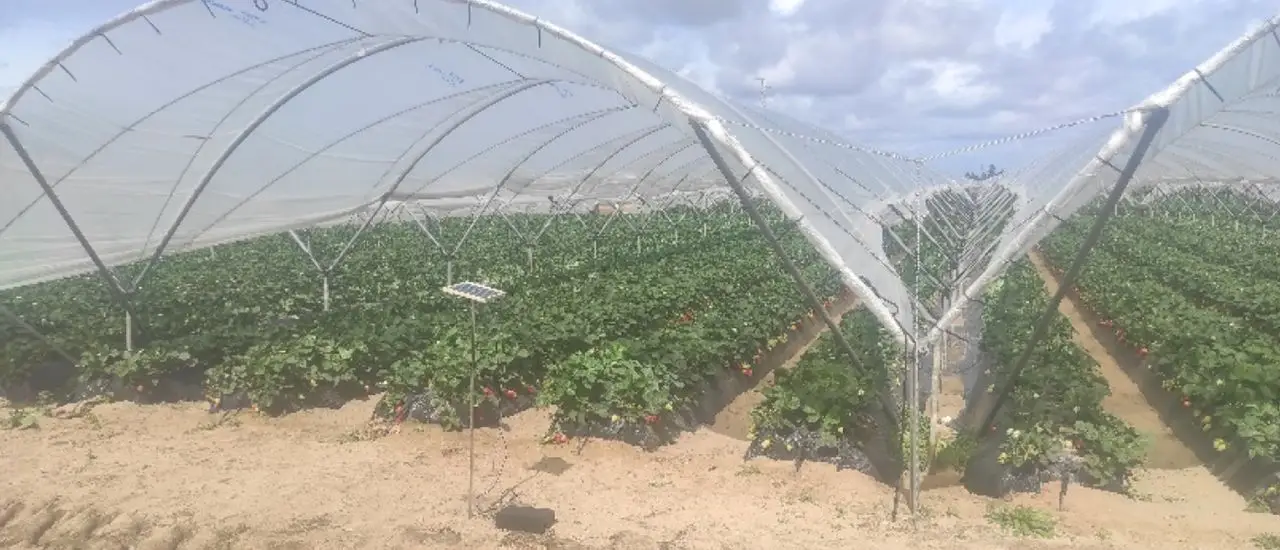
A scalable, low-cost IoT irrigation system can be effectively realized by integrating hybrid wireless technologies with energy autonomy and comprehensive sensor data processing.
February 06, 2026 University of Huelva

Light powered asset tracking significantly reduced total cost of ownership and environmental impact by eliminating the operational overhead of battery management.
February 04, 2026 truvami
The Digital Product Passport will accelerate adoption of digital identification and hybrid tagging approaches by enabling standardized, technology-neutral product information that enhances circularity and supply-chain efficiency.
January 21, 2026 Kathrein Solutions

The integration of ambient light powered hardware and full-stack software solutions is transforming the sustainability and efficiency of global asset tracking in the logistics sector.
January 21, 2026 truvami
SIVA IoT is adapting to a market shift from NFC to UHF by combining high-volume UHF deployments with NFC's secure capabilities and expanding IoT integrations through customer-centric product development.
January 14, 2026 SIVA IoT