
- Fulda University will inventory about 38,000 fixed assets using a combination of RFID labels and barcode prints.
- The inventory process aims to become faster and more efficient through contactless RFID technology.
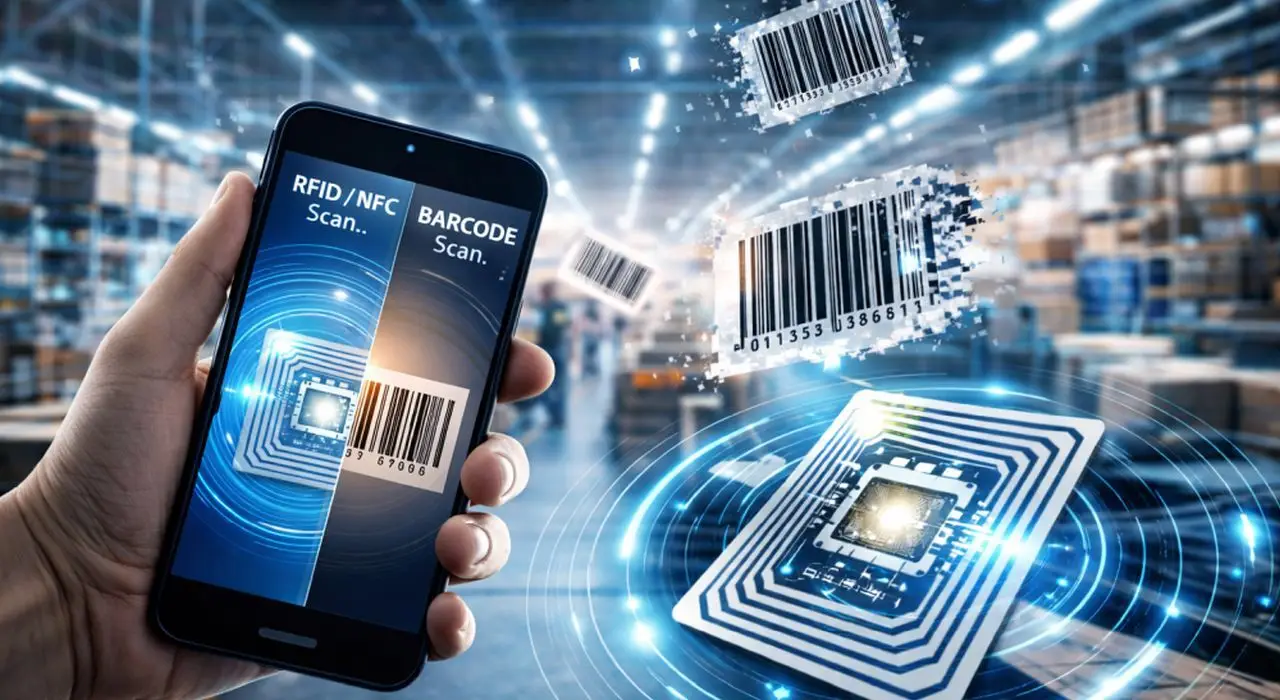
- The hybrid RFID-barcode system improves occupational safety by enabling scanning without direct line of sight and reducing physical strain.
- An app connected to the SAP system facilitates automatic location tracking and real-time data updates during inventory.
Fulda University of Applied Sciences (HS Fulda) plans to inventory all of its approximately 38,000 fixed assets usingRFID labels with an additional barcode print. The aim of introducing RFID is to optimize the legally required inventory process.
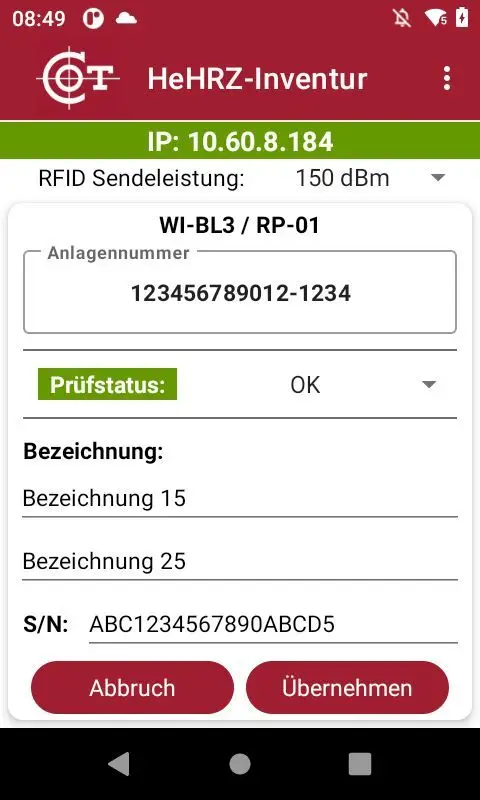
The university is currently conducting tests with various RFID labels in collaboration with solution provider COT in order to identify the best possible labeling solution. COT has also developed an inventory app for HS Fulda that records all fixed assets and their locations.
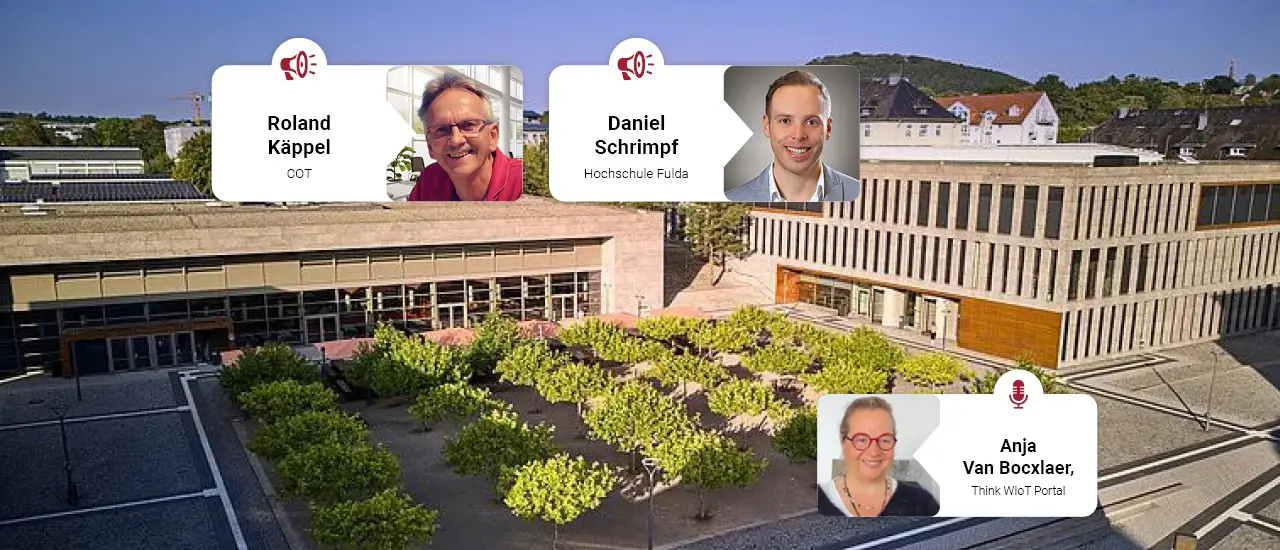
Interview with Daniel Schrimpf and Roland Käppel
1. Mr. Schrimpf, what were the reasons for digitizing the inventory at Fulda University of Applied Sciences?
Daniel Schrimpf: Until now, we have been using a barcode system. At the end of 2022, we installed an RFID test scenario in the electrical engineering department. In the test, just over 200 assets were inventoried and completely recorded in only a few minutes.
The successful test influenced the decision to optimize the inventory processes with RFID technology. We will carry out the RFID project in collaboration with the solution provider COT and the Hessian University Computer Center (HeHRZ).

2. Mr. Schrimpf, what are your expectations for contactless inventory?
Daniel Schrimpf: The main reason we are implementing an inventory solution with RFID is to speed up inventory processes. In short, inventorying should become very fast in the future. In direct comparison to the existing barcode system, we also expect more efficient processes.
In addition, room occupancy and the resources of those responsible for the rooms will benefit from RFID inventory.
3. Are there any other positive expectations for RFID technology?
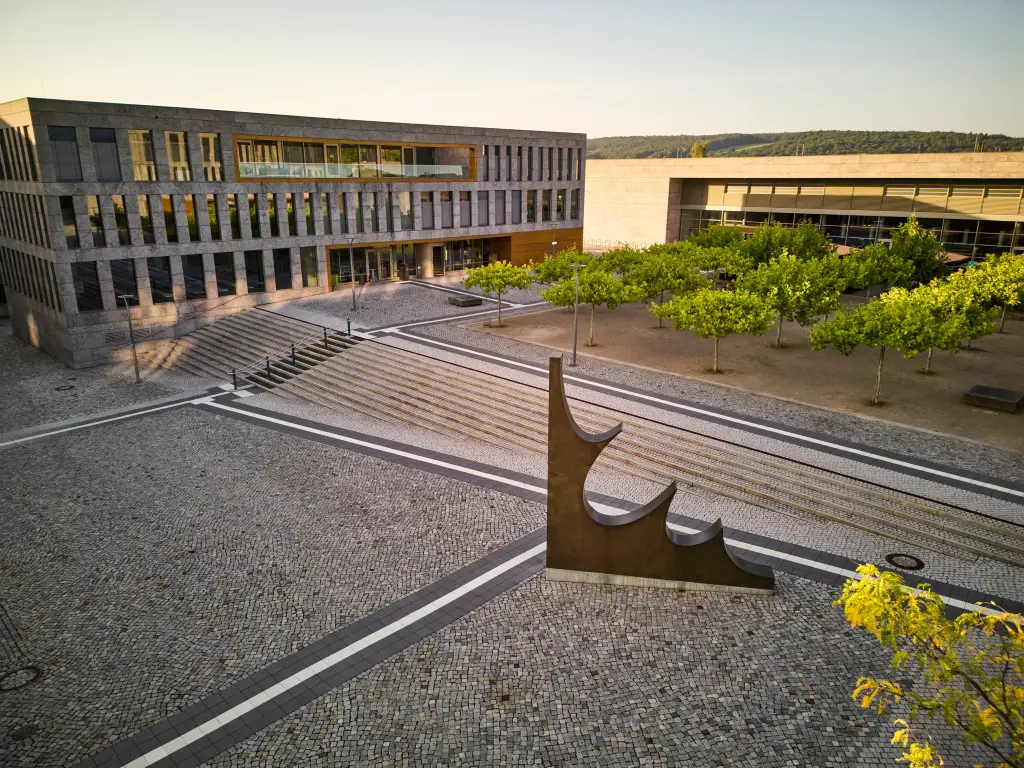
Daniel Schrimpf: Yes, definitely. Fulda University of Applied Sciences has a large number of lecture halls and laboratories that are equipped with a wide variety of assets. These include, for example, projectors that hang from the ceiling or cabinets that stand against the walls. The barcode labels are not always attached in accessible places and are not always in the field of vision.
The inventory team therefore has to regularly move furniture or climb ladders to scan labels that are out of reach. With contactless inventory, the labels no longer need to be in the field of vision and can be up to 6 meters away from the RFID reader. This means improved occupational safety.
Fulda University of Applied Sciences
Campus University of Applied Sciences
Founded in 1974
8,814 students in over 60 bachelor's and master's degree programs
8 departments with more than 160 professors
Almost 38,000 assets belong to the inventory
Current inventory with barcodes
Future inventory with hybrid solutions (barcode and RFID)
4. How many assets are there in each room?
Daniel Schrimpf: That depends on the room. We have rooms with more than 200 assets. This is the case in the laboratories, for example. As of December 31, 2023, we have almost exactly 38,000 assets in the fixed assets of Fulda University of Applied Sciences.
5. Which assets are inventoried?
Daniel Schrimpf: We inventory all assets with a net value of EUR 800 or more. The university has around 24,000 fixed assets in the area of technical equipment and machinery. In the area of operating and office equipment, we have 11,000 items in inventory, including office chairs, desks, cabinets, and notebooks.
For several years now, the approximately 300,000 media items in the university and state library have been subject to permanent inventory using RFID technology. The experience has been positive.
The basic idea behind this is classic: the inventory that we are required to carry out under commercial law. The aim is not so much to know immediately where a particular device is located, but rather to correctly report the university's assets in the annual financial statements, even if some of them have already been depreciated. It is important to ensure a secure procedure and to make sure that the fixed assets are fully inventoried. One of the top principles of inventorying is completeness, and in the course of the inventory, it may also happen that losses are discovered – this is not unusual.
Daniel Schrimpf – Financial ManagementDepartment , Fulda University of Applied Sciences
6. How will the RFID solution be rolled out?
Daniel Schrimpf: We will introduce RFID technology gradually. New fixed assets will be labeled with barcodes and integrated RFID tags, while existing assets will continue to be recorded with barcodes.
Over the next five to eight years, many assets will be written off or discarded, so that well over half of all assets will then be equipped with RFID.
7. What challenges need to be considered with the RFID solution?
Roland Käppel: When metal is involved, the RFID signal is shielded. That's why we also print barcodes on the labels so that we can switch to the barcode if there are reading difficulties. This keeps the inventory flexible.
To ensure that both technologies can be used in parallel for inventory, we use scanners from Zebra Technologies that can read barcodes and RFID. Thanks to their larger display and intuitive handling, even inexperienced employees can work directly with the new devices without additional training. The new scanners are significantly faster than the old devices.

8. How and where are the RFID tags prepared?
Roland Käppel: The RFID tags are printed directly at the university. The printer is connected to the SAP system so that it can print both barcodes and RFID tags on a label.
9. What tests still need to be carried out before the project starts?
Daniel Schrimpf: We still need to test which RFID tags are most suitable, as materials such as metal, wood, or plastic play a role. We also need to integrate with SAP so that the print data for both barcodes and RFID is processed correctly. The app is already finished and the scan function has been successfully tested. Now it's just a matter of selecting the appropriate RFID tags and attaching them to the goods.
MC3330xR UHF RFID reader
Manufacturer: Zebra Technologies
Scan type 1D imager, 2D imager, RFID
Drop resistance of 1.5 m
Protection class: IP54
Reading range: Up to 6 m
Areas of application: Inventory management, retail, logistics
Distributed by: COT
11. Mr. Käppel, please tell us more about the specially developed app for the RFID application at Fulda University of Applied Sciences. How does it work?
Roland Käppel: The specially developed app for the RFID application automatically records the location of the scanned items. If an object is found in a room other than the one originally assigned to it, the new location is saved immediately. When taking inventory, you select a room in advance and scan the items. If an object is in the wrong place, the data record is updated accordingly without having to enter the new location manually. Later, you can decide whether the object stays in its new location or is returned.
12. Could you explain more about the software used from an IT perspective?
Roland Käppel: The software is connected to the SAP system to import data and start the inventory. The user selects a building and a room, scans the inventory, and can immediately check whether everything is in order. Notes on damaged or misplaced items can be easily added. Once the inventory is complete, the data is transferred back to the SAP system, including new finds that were not yet in the inventory.
The software is flexible and expandable. If necessary, additional features such as real-time localization or sensor data collection can be easily integrated. Customizations such as additional data columns or special functions for specific universities are also possible. The app can also be switched between RFID and barcode operation, depending on the needs of the individual locations.