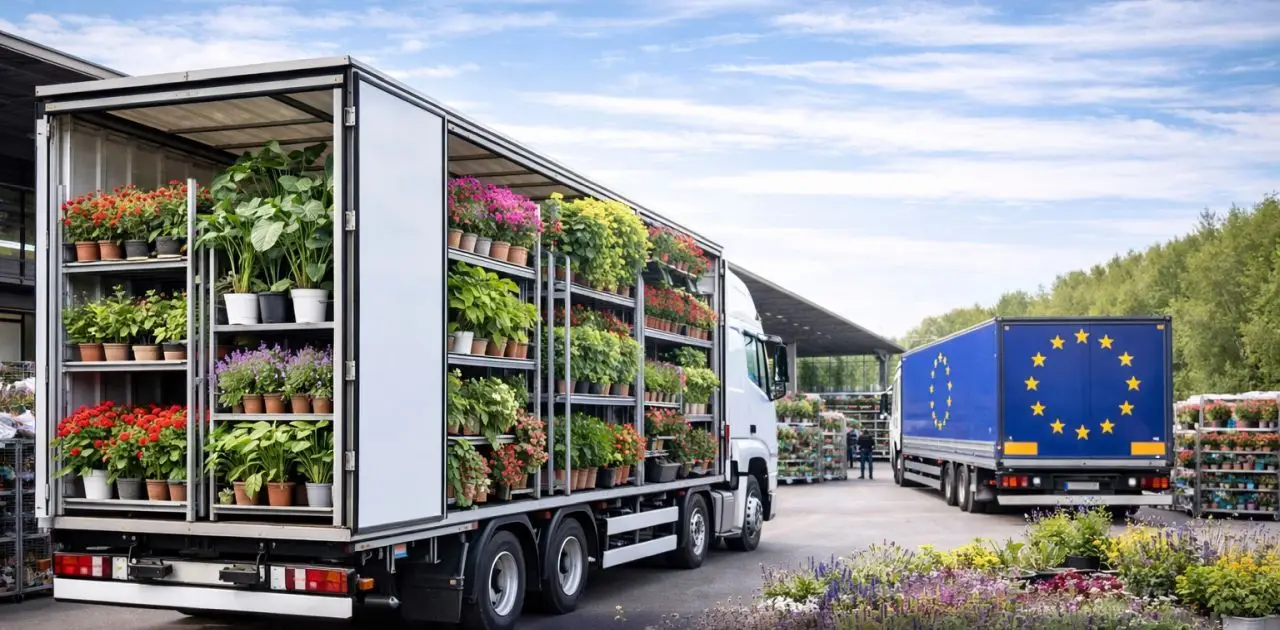

- EPT replaces 700 million single-use trays annually with RFID-enabled reusable plastic trays in a European-wide pooling system.
- In-mold RFID labels provide durable, long-term traceability across several supply chains and countries.
- The initiative supports compliance with EU Packaging and Packaging Waste Regulation targeting waste reduction by 2029 and 2040.
- Data infrastructure under development enables lifecycle analyses and sustainability reporting accessible to SMEs and large retailers.
How an industry initiative aims to replace 700 million single-use trays with RFID and reusable containers
Three years ago, a project was launched that is now considered Europe’s largest reusable initiative for plant transport. Thirty-three companies from six countries are now working together to create a digital and sustainable infrastructure for the green sector.
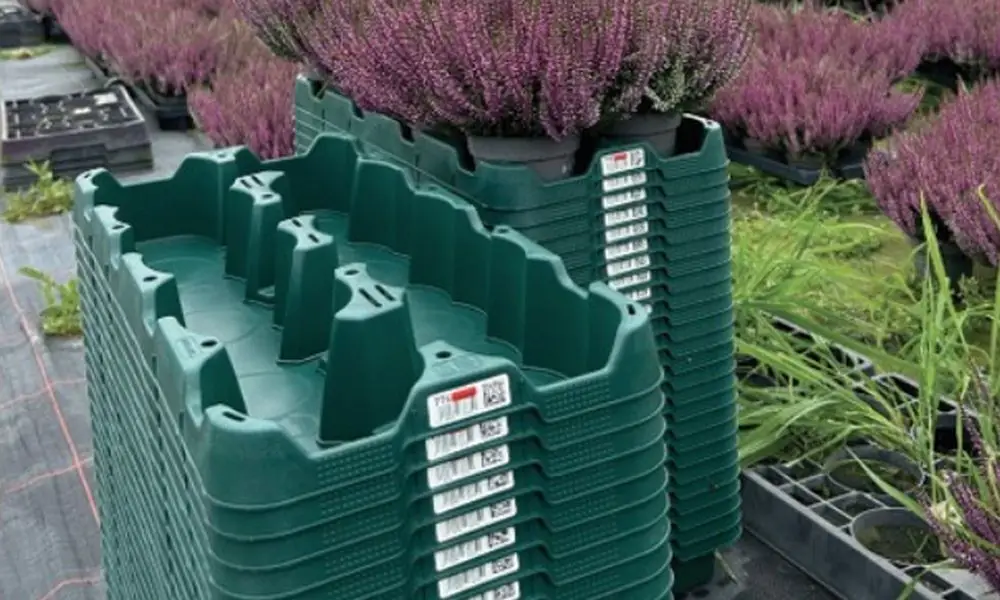
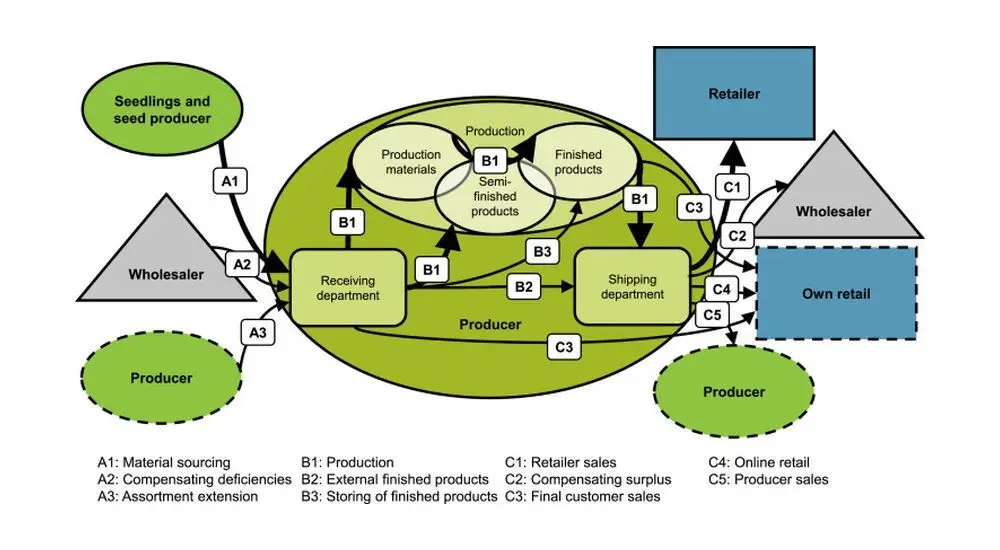
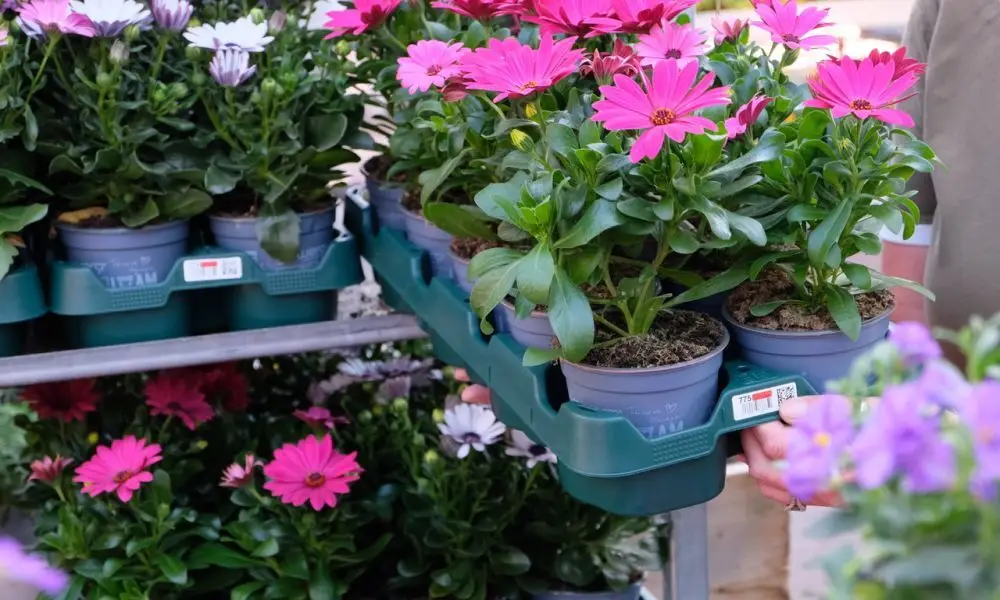
The name of this initiative is Euro Plant Tray (EPT). It operates a circular pooling system for trays in the European plant trade and transport sector. The trays are standardized and made of plastic. They are used by nurseries, garden centers, and plant wholesalers. After the plants are sold, the trays are returned, cleaned, and inspected.
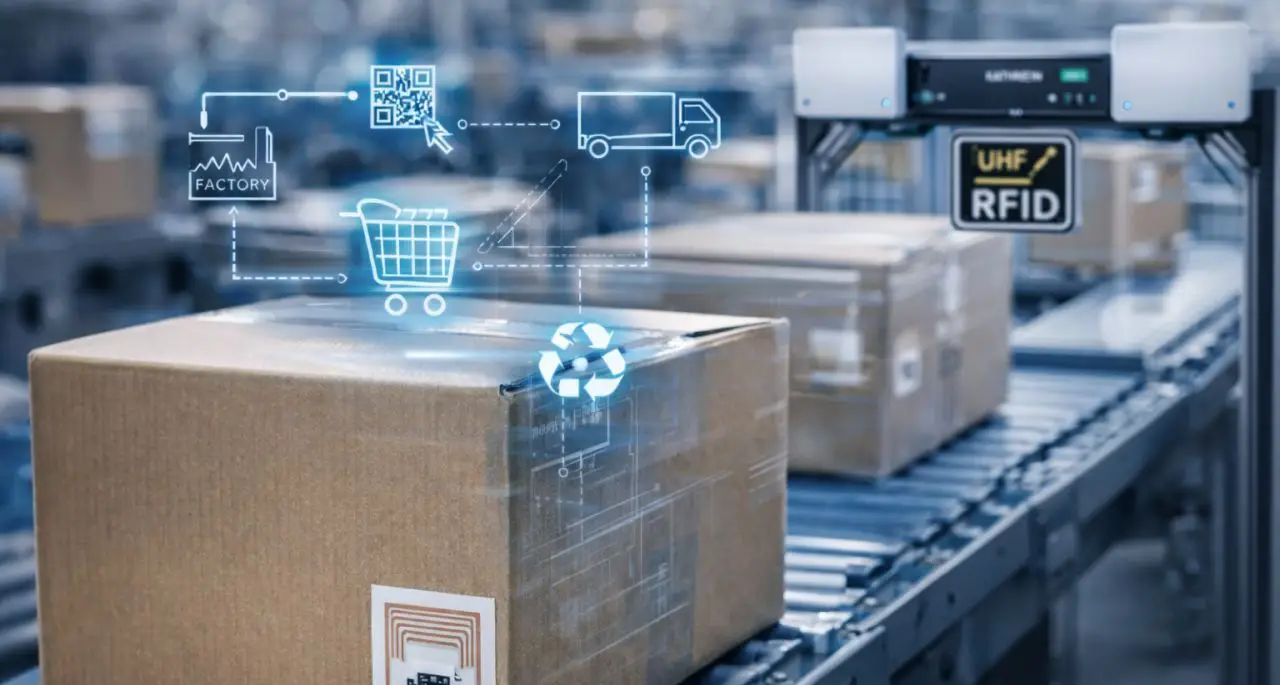
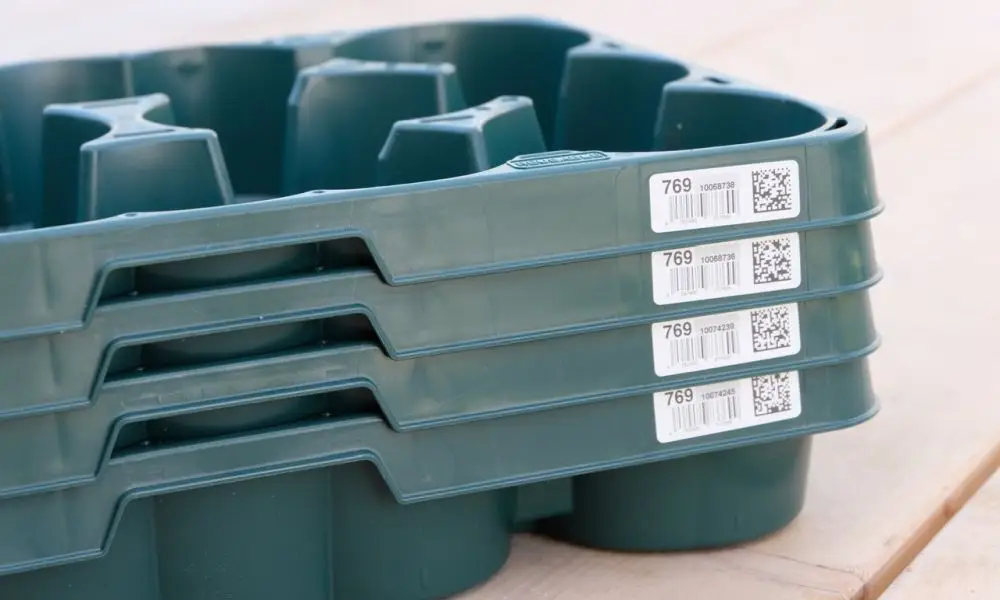
They are then returned to circulation. These automated processes work because each tray is equipped with a barcode, a 2D data matrix, and an RFID label. The trays are available in different sizes—depending on the plant pot and weight class.
“Three years ago, we made a conscious decision: If we’re going to do this, we’re doing it on a European scale—anything else doesn’t make sense,” explains Dirk Bansemer, Managing Director of EPT GmbH and initiator of the project. “Our supply chains don’t stop at national borders. Plants come from northern Germany, the Lower Rhine region, the Netherlands, France, Belgium, Italy, or Spain—and are then sold all over Europe. This requires a system that functions just as seamlessly across borders.”
Today, companies from Norway, Germany, the Netherlands, France, Switzerland, and Austria are involved, and another member is also active in Belgium. The initiative is now set to expand further in Southern Europe.
Why does Europe need a common solution?
There are two answers to this question. First, the plant industry is highly interconnected internationally. Depending on the crop, production centers are located in northern Germany, the Lower Rhine region, the Netherlands, France, Belgium, Italy, or Spain. Sales take place across Europe — through home improvement stores, garden centers, and wholesalers. National isolated solutions therefore do not work.
Second, in December 2024, the EU legally adopted the Packaging and Packaging Waste Regulation (PPWR).
The PPWR is part of the Green Deal
The goal of the European regulation is to significantly reduce waste from the packaging sector across Europe. Most provisions of the regulation take effect in August 2026. However, a transition period until December 2029 has been granted for plant packaging. After this date, the use of single-use plastic packaging in the B2B sector for domestic transport and transport within a corporate group will no longer be permitted.
For transport from one Member State to another, the use of 40 percent reusable packaging will suffice from 2030 to 2040. After that, the regulation will apply to 100 percent of packaging. Cardboard packaging is currently still exempt.
From the concept of reusable packaging to digital infrastructure
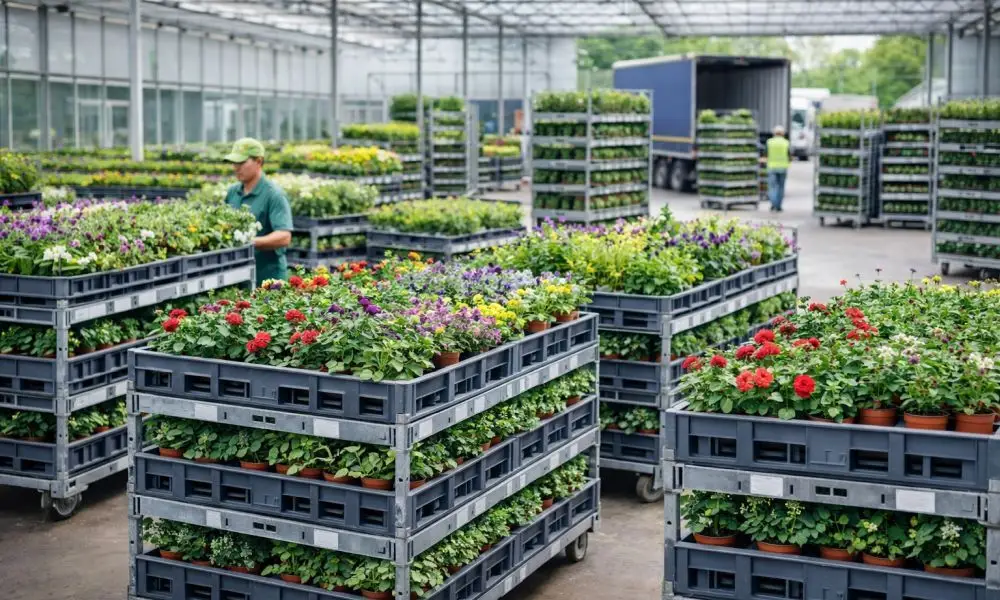
The starting point was a simple but powerful figure: around 700 million single-use trays are disposed of annually in Europe.
“That was the key driver for us,” explains Bansemer. “We didn’t want to build yet another isolated solution, but rather create a genuine alternative—available across Europe, standardized, and sustainable in the long term.”
But it quickly became clear: A modern reusable solution needs more than just sturdy plastic. It needs transparency. So, alongside the reusable concept, the question arose from the very beginning: How can cycles be efficiently tracked and managed?
“We therefore realized early on that we can only manage cycles if they are transparent and measurable or quantifiable.”
The strategic decision was difficult
“To be honest: At the beginning, we assumed that RFID wasn’t economically feasible for us,” Bansemer recalls. “As is so often the case, everything sounded simple and inexpensive in the initial discussions. When it came down to specifics, it turned out that the investment was actually larger.”
So EPT explored implementing a pooling solution using Bluetooth Low Energy (BLE). They were looking for a solution that was as barrier-free and cost-effective as possible, he reports. “But the deeper we delved into it, the clearer it became that RFID was, after all, more technologically advanced than we had originally assumed.”
By a large majority — around 85 to 90 percent in favor — the founding members decided to integrate RFID directly into production. Not as a retrofit add-on, but as an in-mold label, permanently molded into the plastic tray.
Retrofitting at a later stage would have been virtually impossible, they say. The trays circulate for years through various supply chains and do not regularly return to a central location. Adhesive labels would have offered neither the necessary durability nor process reliability.
“We asked ourselves point-blank: Do we want to save money now—or do we want to be future-proof? And it was clear to everyone: Retrofitting is practically impossible. Our trays circulate for years in a wide variety of cycles. They don’t come back to us regularly, so we couldn’t just stick a label on them later.”
That’s why the decision was made to use in-mold RFID labels, permanently embedded in the material, despite higher initial costs.
“If we’re going to do it, we’re going to do it right. We wanted a solution that would work for ten years or more — under all weather conditions, in all supply chains.”
Here we go!
The pilot phase began in the spring of 2023. 40,000 trays were tested in the real-world supply chain, from production to retail in Germany and the Netherlands. The goal was to test the entire handling process, including traceability within the pooling system. Ten producers, six wholesalers, and around 50 retail locations were involved.
During the pilot, the trays were counted using handheld scanners. “That sounds trivial, but it’s enormously helpful. If you have 300 trays on a pallet and count them by hand, you know what that means. With the scanner, it takes seconds—and is error-free,” says Bansemer.
Live operations began in August 2024. 1.5 million trays were put into circulation. Currently, six supply chains are actively using the reusable system, and three more are preparing to integrate RFID processes.
Partners include major retail companies such as Hornbach, Bauhaus, OBI, and Globus. This allowed the pooling system to launch directly with high-volume operations. According to Bansemer, high volumes are the best way to achieve efficiency. Projects are running in parallel to set up automated booking, scanning, and tracking processes.
An important next step followed in the fall of 2025: a funding project from the state of North Rhine-Westphalia with a budget of over two million euros was approved.
In a consortium of six partners — Fraunhofer UMSICHT, EECC (European EPC Competence Center), R-Cycle, GreenDelta, SIM (Stiftung Initiative Mehrweg), and Euro Plant Tray — data structures for applications such as real-time LCAs are being developed and implemented. The goal is to make reliable, standardized data available throughout the entire value chain.
The foundation for this was already laid in the previous phases: Through early data collection in the pilot and in live operation, practical data models were established and processes were tested. The funded project builds on this and translates these experiences into scalable, interoperable systems.
“That was a strong signal for us,” emphasizes Bansemer. “It shows that we don’t just have an idea, but are building a sustainable infrastructure.”
In the long term, EPT expects several hundred supply chains to switch to the system.
Database to Support Reporting Requirements
Since 2023, an IoT infrastructure has been under development in which RFID data is collected in a structured manner and stored in an open database.
“We don’t just want to collect data; we want to make it usable — for life-cycle analyses, for CO₂ assessments, for sustainability reporting. And we want to do so in a way that even small and medium-sized enterprises can work with it.”
Bansemer emphasizes that while many SMEs are not formally required to report, in practice they do indeed have to provide data.
“The large retailer asks the wholesaler, the wholesaler asks the manufacturer — and suddenly a reporting obligation arises through the back door. We want to create an infrastructure that meets these requirements in a straightforward way.”
Integration Instead of Parallel Worlds
“It was important to us not to build redundant technological silos. RFID applications already exist in our industry, such as on Danish plant carts. So we asked ourselves: How can we create synergies instead of building new silos?”
The solution is deliberately kept open for further development. Suppliers from Austria, the Netherlands, and southern Germany regularly contribute new ideas — such as flashing labels or combinable sensor technologies.
“Exchange rarely makes you any dumber,” says Bansemer with a smile. “On the contrary, that’s exactly where innovation happens.”
Looking Ahead: Sensors and AI
Temperature and humidity sensors were on the wish list right from the start. Full integration directly into the plastic has so far failed due to physical limitations — sensors cannot withstand the in-mold process.
However, additive solutions are in the works. A combination of RFID tracking and environmental sensors would be particularly relevant for exporters. With increasing data depth and AI-supported matching, transport conditions, cycles, and sustainability metrics could be evaluated even more precisely in the future.
Reusability as a Political Mission
The initiative is now also gaining political traction. Discussions with North Rhine-Westphalia’s Environment Minister Oliver Krischer (Bündnis 90/Die Grünen) show that reusable models are also becoming increasingly important in the public sector.
“Our main driving force is waste prevention,” explains Bansemer. “The technology is not an end in itself. It simply helps us demonstrate our environmental impact, and document it transparently.”
Success is becoming visible
What began as a reusable packaging initiative has now evolved into a cross-border digital infrastructure for European plant logistics. Currently, 33 companies from 6 countries are participating in the system. Six supply chains are currently active, while three more are in preparation. The expansion is accompanied by a million-euro investment in IoT and a data platform. RFID forms the future-proof backbone of the system.
“We never wanted to just bring a product to market,” the initiator concludes. “We wanted to create a system that truly transforms cycles — ecologically, economically, and technologically. And that is exactly what is now beginning to become visible.”