- Philipp Gutmann became managing director of the AMA Association in January 2025, succeeding a 17-year tenure of Dr. Thomas Simmons.
- The AMA Association connects science, industry, and politics to promote sensor technology, with a strong focus on supporting small and medium-sized enterprises.
- Key 2025 initiatives include publishing the "Sensor Trends 2030" study and hosting the SENSOR+TEST trade fair.
- Digital modernization and targeted communication are priorities to engage younger professionals and maintain the association’s relevance.
In January 2025, Philipp Gutmann took over as managing director of the AMA Association for Sensor and Measurement Technology, which has around 420 members. In this interview, Gutmann explains why he decided to take on this position and what his vision for the future is. In addition to the publication of the "Sensor Trends 2030" study, he also talks about his goals and perspectives for the association.
Dr. Thomas Simmons, who successfully led the AMA association for 17 years, will be taking a well-deserved retirement after a transition period. Gutmann brings fresh ideas and new perspectives to the table—and builds on the solid foundation of Dr. Simmons' many years of experience.
Interview with Philipp Gutmann
1. Mr. Gutmann, what motivated you to take on the position of managing director of the AMA association?
Philipp Gutmann: I have always been enthusiastic about technology – especially when it comes to applications with real practical benefits. I find sensor technology particularly exciting because it permeates almost all areas of life and is a key driver of technological innovation. Whether in industry, medicine, or everyday life, sensors provide the data on which modern systems are based.
It is precisely this cross-sectional nature that makes the role at the AMA Association so appealing to me: sensor technology is a key technology at the interface between business, science, and politics. The association is in a unique position to connect these areas – especially with regard to innovative small and medium-sized enterprises. In economically challenging times, it is particularly important to offer small and medium-sized enterprises a platform where they can network, exchange ideas, and grow together.
Despite difficult conditions, our current AMA quarterly industry survey forecasts growth of 3 percent—a clear signal of the strength and relevance of our industry. In my role, I would like to promote the further development of sensors in areas such as robotics, automation, and quantum sensor technology. The combination with artificial intelligence and edge computing will also be crucial in opening up new fields of application and strengthening the innovative power of the industry.

2. The AMA Association plays a central role in the sensor industry. What makes it special, and how does it support companies, especially small and medium-sized ones?
Philipp Gutmann: The AMA Association plays a special role in the sensor technology industry because it specifically bridges the gap between science, sensor technology, and user industries. In close cooperation with renowned research institutions, we transfer scientific findings into industrial applications. In this way, we support companies in developing new technologies and benefiting from the current state of research.
A central function of the association is to provide a platform for exchange and networking—especially for small and medium-sized companies, which are often highly innovative but do not have direct access to universities or research networks. It is precisely these companies that form the backbone of our association.
3. What challenges do you see for the AMA Association and the sensor industry in the coming years?
Philipp Gutmann: One of the biggest challenges for the AMA Association is to remain relevant and future-proof in an increasingly digitalized world. Tomorrow's experts are digitally savvy "digital natives" – and the association must evolve to remain attractive to this target group.
A key goal is therefore to modernize our IT infrastructure and increase the efficiency of internal processes. At the same time, we want to focus our communication more on younger generations and establish new, digital formats.
This is not just a matter of technical infrastructure, but also of clear communication of added value: we want to understand the needs of our members even better and consistently tailor our offerings – for example, in continuing education or through targeted specialist lectures – to these needs. In this way, we create real benefits and strengthen our role as the central platform for the industry.
In addition, it remains our task to promote close cooperation between science, industry, and politics—as a basis for innovation and technological progress in sensor technology. It is crucial to understand the needs of our members—especially small and medium-sized enterprises—to identify developments at an early stage and to respond flexibly to them. Only in this way can we continue to position the sensor technology industry, which is dominated by small and medium-sized enterprises, strongly and effectively in the future.
4. What are the most important milestones for the AMA Association in 2025?
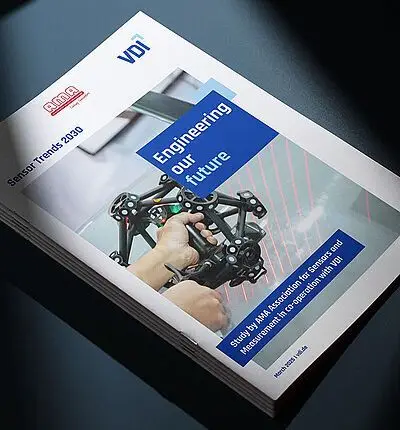
One significant milestone is undoubtedly the publication of the "Sensor Trends 2030" study, which took over two years of intensive work to complete. The broad commitment of the numerous experts from science and industry who contributed their specialist knowledge was particularly impressive. Another highlight is coming up in May: our SENSOR+TEST trade fair in Nuremberg—a central industry meeting place and important source of inspiration for the sensor technology community.
5. How do German sensor manufacturers compare internationally?
Philipp Gutmann: Sensor technology is a field in which Germany remains internationally competitive and plays a key role. According to the "Sensor Trends 2030" study, which was conducted in collaboration with 69 experts from science and industry, Germany remains a major player in sensor technology. Many of the sensor systems used worldwide are based on developments by German manufacturers – an impressive sign of the technological strength and precision of our industry.
Sensor technology is the "unseen champion" of modern technologies – mostly invisible, but essential for the function and further development of numerous applications.
I look forward to the new and varied tasks ahead and to supporting our members in their challenges and working together to develop solutions.
About Philipp Gutmann
Philipp Gutmann holds a degree in business administration and studied business at Goethe University in Frankfurt am Main. After working for Siemens VDO, in the advertising industry, and in strategic communications consulting—including for Infineon, Siemens, and Mercedes—he gained international experience at Jung von Matt in China. Back in Germany, he was responsible for brand communication for Immobilienscout and A. Lange & Söhne. He then went on to advise medium-sized companies. Today, he is involved in the AMA Association for the further development of sensor technology in Germany.