Rinas Strengthens Quality Control in RFID Card Personalization


Integrated encoding verification, barcode inspection and automated rejection help ensure consistent data quality in industrial card production.
Herdwangen-Schönach, Germany, November 2026 – In automated card personalization, successful encoding is only one part of producing a reliable finished card. RFID data, magnetic stripe information, printed barcodes and visible identifiers must correspond to the correct production record. Rinas Gerätetechnik highlights the importance of integrating verification and clearly defined acceptance criteria throughout the personalization process.
Armin Rinas recently addressed this challenge in a LinkedIn statement, emphasizing that the requirement for a card to be “correct” involves several independent checks. Encoded data must match the intended record, printed codes must be readable, and visible information must belong to the same card. Production systems also need defined procedures for rejected cards and documented inspection results.
Combining RFID Encoding with Inline Verification
Rinas develops modular systems for personalizing RFID, magnetic stripe and chip cards, including the LWR universal encoding module and the SRM personalization system with optional optical inspection. These technologies can be integrated into automated production lines, combining card encoding, printing, data verification and quality control within a coordinated process.
For RFID cards, verification involves reading back the encoded information and comparing it with the intended production record. Optical inspection adds another layer of quality assurance by checking printed identifiers, barcodes and visible card information against the corresponding data.
This distinction is essential in automated card personalization: electronic verification confirms that the correct data has been written to the RFID chip, while optical inspection ensures that the printed information matches the intended card record.
As highlighted in Think WIoT's interview d-you Launches in 2027: Why Secure Cards Will Remain Technologically Relevant, Armin Rinas explains how RFID readers, camera systems and production software work together to prevent data mismatches. With digital identity wallets and physical RFID, NFC and chip cards evolving in parallel, reliable personalization remains essential for secure identification systems.
By combining electronic and optical verification, manufacturers can identify inconsistencies during production, reject defective cards and improve the reliability of finished products.
Related Hardware
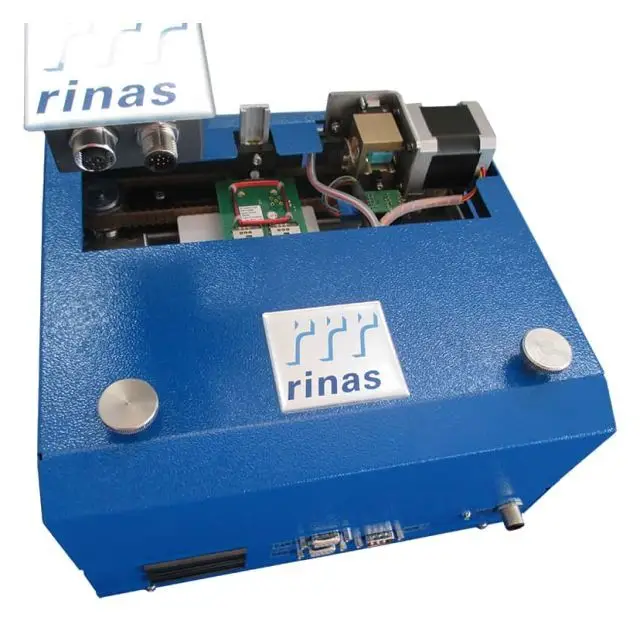

Barcode and OCR Inspection at Production Speed
Rinas offers scanner technology for inspecting one-dimensional barcodes, two-dimensional codes and printed text during card transport. Supported formats include Code 128, GS1-128, DataMatrix, QR codes and OCR.
The scanner features integrated LED illumination, configurable inspection parameters and pass/fail evaluation. According to Rinas, the system supports up to 50 inspections per second in high-resolution mode or 100 inspections per second in high-speed mode, depending on the operating configuration.
Inspection results are communicated to the production controller through TCP/IP interfaces, enabling automated responses when a barcode, printed character or identifier fails verification.
Combined with encoding checks, optical inspection helps manufacturers validate both machine-readable and visible information before a card enters the finished production batch.
Defined Acceptance Criteria Improve Production Reliability
For card manufacturers, verification quality also depends on how inspection results are interpreted. Armin Rinas recommends establishing acceptance criteria alongside the processing steps, specifying which information must be checked, where verification takes place and how rejected cards are handled.
Such criteria are particularly relevant in the production of access cards, payment cards, customer identification cards and transport tickets, where incorrect personalization can affect downstream systems and users.
Rinas systems support inline inspection, automated sorting and process logging. These functions allow manufacturers to identify defective cards during production and maintain records of verification results.
The combination of encoding, optical inspection and documented acceptance criteria provides a structured approach to quality assurance in high-volume card personalization.
Rinas: Modular Card Personalization Since 1984
Founded in 1984, Rinas Gerätetechnik GmbH develops and manufactures card encoding machines, OEM modules and personalization equipment for international markets. Its portfolio covers magnetic stripe, RFID and chip card encoding, printing, laser marking, inspection and automated card handling.
The company's modular approach enables manufacturers and system integrators to combine processing and verification technologies according to their production requirements.
Looking to Improve Your Card Personalization Process?
From reliable RFID encoding to automated inspection and quality control, Rinas helps you build a personalization process where every card meets your requirements.
Whether you are developing a new production line, integrating OEM encoding modules or upgrading existing inspection capabilities, the Rinas team can help identify the right technology combination for your application.
Contact Armin Rinas to discuss your card personalization requirements and explore the available solutions.
Sources: Armin Rinas, LinkedIn; Rinas Gerätetechnik GmbH.