
Spain Tests 133 LoRaWAN Sensors for Wildfire Prevention

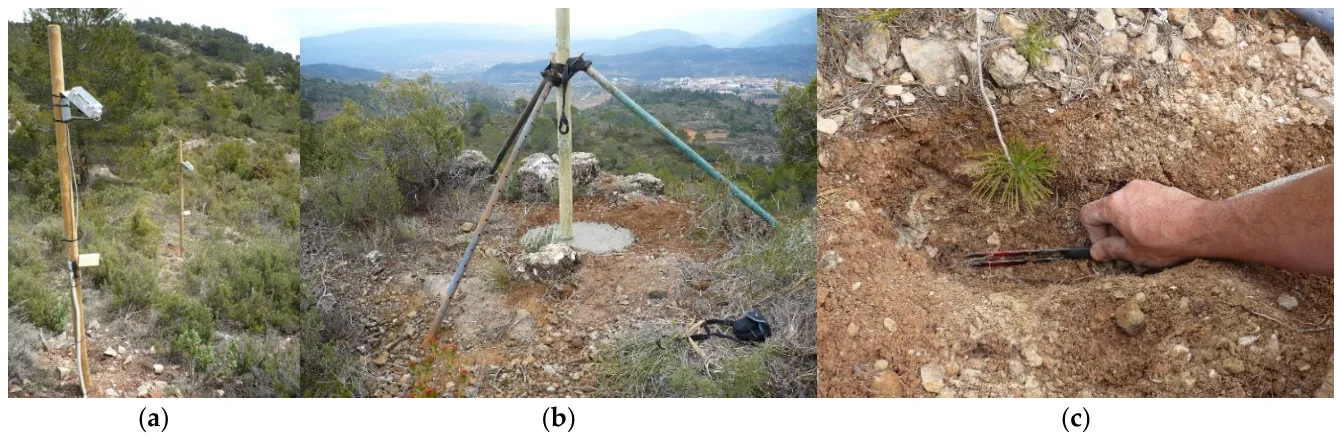
Can wireless IoT help forest managers identify vulnerable areas before wildfires break out? In Spain’s Valencia region, researchers have deployed 133 solar-powered LoRaWAN sensor nodes to monitor soil moisture and local environmental conditions. A study published in the scientific journal Sensors on November 25, 2026, reveals both the potential of the technology and the practical challenges of operating a wireless sensor network in a Mediterranean forest.
From 224 Planned Sensor Nodes to 133 in Operation
The research project was conducted by Marcos A. Martínez-Peiró and Rubén Torres-Curado from the Institute for Instrumentation in Molecular Imaging (I3M), a joint research institute of the Spanish National Research Council (CSIC) and the Universitat Politècnica de València (UPV).
The installation around Pico del Remedio near Chelva was originally designed for an area of 7,854 hectares. The initial concept envisaged 224 sensor nodes, but only 133 were operational during the study – approximately 41 percent fewer than planned.
The researchers considered the smaller deployment technically and economically feasible while retaining representative measurements across different soil types. The study does not, however, provide a detailed breakdown of the reasons for the reduction.
LoRaWAN in the Forest – Coverage, Costs and Energy
With cellular coverage unavailable at most sensor locations, the researchers selected a private LoRaWAN network. Zigbee would have required additional relay infrastructure, while NB-IoT and Sigfox depended on network availability. LoRaWAN offered long-range, low-power communication without recurring operator connectivity fees.
The longest deployment branches extend 4.3 kilometers from the central observatory, compared with the original five-kilometer design radius. Valleys and steep slopes obstructed radio communication in the southeastern part of the forest, requiring a second gateway.
Each node measures soil moisture at multiple depths, reaching 60 centimeters at selected locations. Air temperature and humidity measurements supplement the underground sensor data. The standard reporting interval is 15 minutes.
The estimated hardware cost of the 133 sensor nodes was €54,830, excluding other deployment and operational expenses.
Energy autonomy also proved challenging. Despite the use of generously dimensioned solar panels, six nodes experienced persistent low-battery warnings during winter due to shading. The researchers adjusted panel orientations, extended reporting intervals to one hour or relocated individual nodes.
What the Forest Sensor Network Revealed
Data collected in April and May 2025 showed considerable differences in how soils retain water. Average volumetric soil moisture ranged from 13 to 20 percent, with some soils drying considerably faster than others following rainfall.
Such localized information could help forestry authorities identify areas susceptible to drought, select tree species better adapted to local conditions and determine suitable planting periods for reforestation.
The researchers also developed an experimental dryness-stress indicator combining soil and atmospheric measurements. Its intended role is to complement established wildfire danger indices rather than replace them.
Wildfire Detection Remains Unproven
The network supplies data to the Valencian environmental authority’s analytics platform, alongside information from other early-warning systems linked to emergency services and forest firefighting brigades.
During the two-month research campaign, the sensors generated 37 environmental alarms. Of these, 31 reflected actual changes in environmental conditions, while six were classified as false alarms. This corresponds to approximately 16 percent of the recorded environmental alarms, not a validated wildfire false-alarm rate.
No wildfires occurred during the observation period. Consequently, the study cannot establish the system’s ability to detect fires or determine its wildfire detection accuracy.
Detailed network performance data, including packet loss and transmission latency, were not made available to the researchers for analysis. Further investigations during the Mediterranean summer are needed.
For the IoT industry, the Spanish project offers a valuable real-world example of environmental monitoring beyond conventional weather stations. It also illustrates why successful large-scale deployments depend on more than radio range and low power consumption: terrain, vegetation, maintenance requirements and access to operational data can ultimately determine their effectiveness.
Source: Martínez-Peiró, M. A. and Torres-Curado, R. – A Large-Scale Environmental Sensor Network for Forest Fire Prevention and Reforestation Monitoring, Sensors, November 25, 2026.